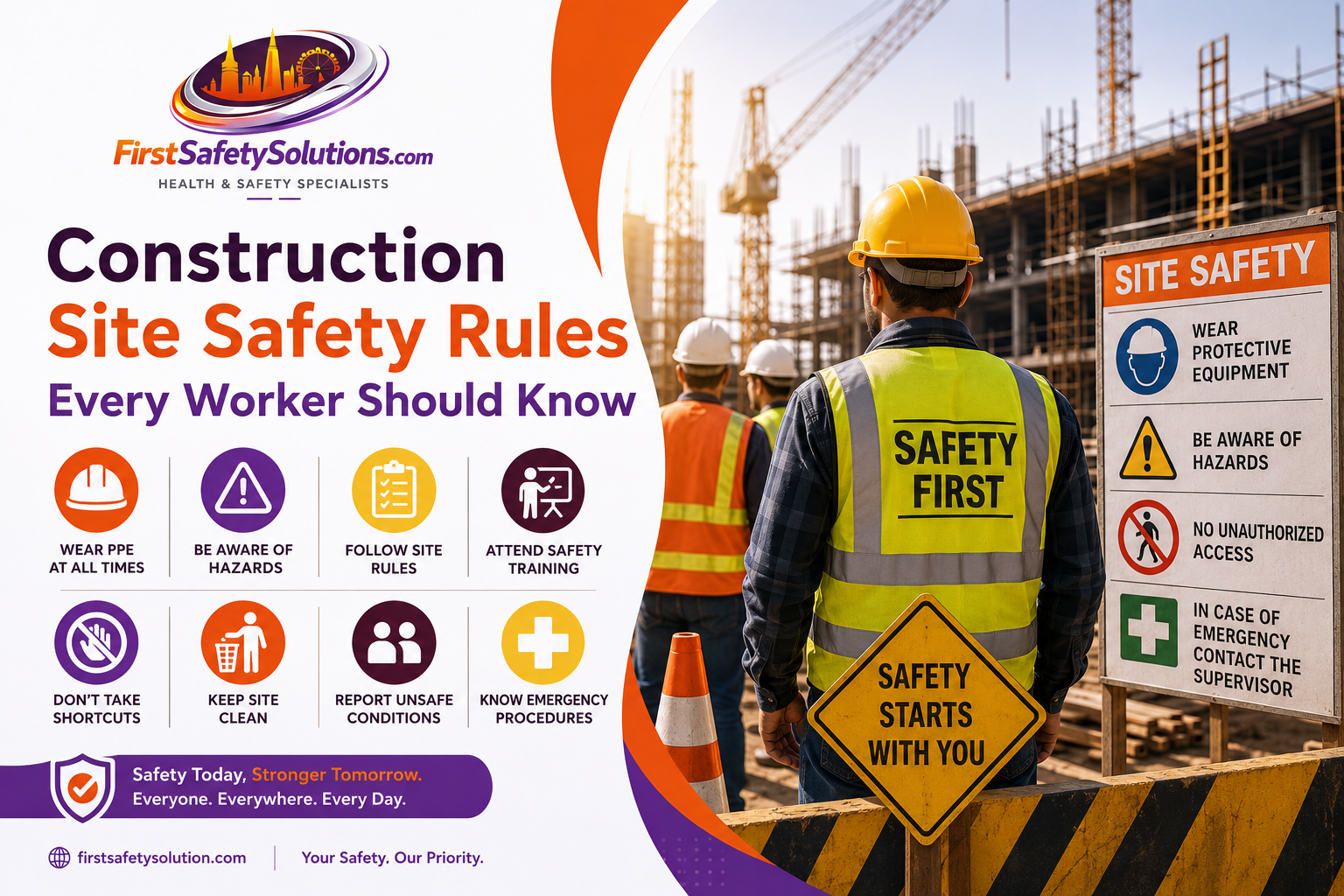
Construction Site Safety Rules Every Worker Should Know
Construction sites are among the most dangerous workplaces in the UK. Workers face risks every day from heavy machinery, falling objects, electrical hazards, slips, trips, and unsafe working conditions. Because of these dangers, following proper construction site safety rules is extremely important. Every worker should understand construction site safety rules before entering a site. Many business owners, site managers, and workers search online for practical ways to improve construction safety and reduce workplace accidents.
Parents also worry about the safety of family members working in construction because injuries on sites can seriously affect health, income, and future careers. Construction safety is not only about following rules. It is about protecting lives, improving productivity, and creating safer workplaces for everyone involved in building projects. Professional health and safety consultancy services can help businesses improve site safety, reduce risks, and maintain compliance with UK regulations. In this guide, we explain the most important construction site safety rules every worker should know to stay safe and protected.
Why Construction Site Safety Matters
Construction work involves many high-risk activities. Workers often operate heavy machinery, work at heights, use electrical equipment, and handle dangerous materials. Without proper safety measures, construction sites can quickly become unsafe environments.
Poor safety practices can lead to the following:
- Serious injuries
- Fatal accidents
- Financial losses
- Project delays
- Legal penalties
- Increased insurance costs
- Emotional stress for families
Parents often search online about workplace safety because they want assurance that loved ones working in construction are protected. Good construction site safety rules help reduce accidents and improve worker well-being. Businesses that follow construction site safety rules usually experience fewer accidents and better compliance. According to the Health and Safety Executive (HSE), construction remains one of the highest-risk industries in the UK, making safety compliance essential.
Wear Proper Personal Protective Equipment (PPE)
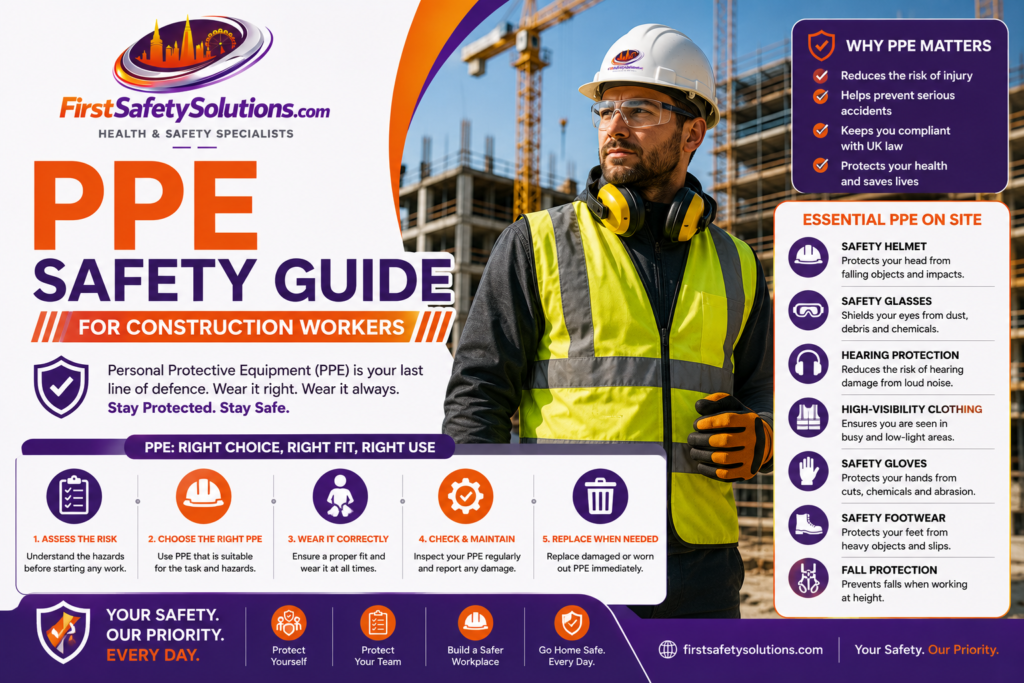
One of the most important construction site safety rules is wearing the correct PPE. Personal protective equipment protects workers from common site hazards.
Essential PPE may include:
- Hard hats
- Safety boots
- High-visibility clothing
- Gloves
- Eye protection
- Ear protection
- Respiratory protection
PPE reduces the risk of injuries caused by falling objects, sharp materials, dust exposure, and loud equipment. Workers should always inspect PPE before use to ensure it is not damaged. Employers should provide proper PPE and ensure workers understand how to use it correctly. Professional training helps employees follow construction site safety rules correctly.
Follow site induction procedures
Every construction worker should attend a site induction before starting work.
A site induction explains the following:
- Site hazards
- Emergency procedures
- First aid arrangements
- Fire safety rules
- Restricted areas
- PPE requirements
- Welfare facilities
Site inductions help workers understand the specific risks of the construction project. Skipping induction training can increase accident risks because workers may not know important safety information. Businesses can improve compliance through professional construction safety training services.
Keep Work Areas Clean and Organised
Poor housekeeping is one of the most common causes of workplace accidents. Construction sites can quickly become dangerous if materials, tools, and waste are left lying around.
Workers should:
- Remove waste regularly
- Keep walkways clear
- Store tools safely
- Organise materials properly
- Clean spills immediately
Good housekeeping reduces slips, trips, and falls. A clean work environment also improves productivity because workers can move safely and efficiently around the site.
Follow Working at Height Safety Rules
Falls from height are one of the leading causes of serious injuries in construction. Workers must follow strict working-at-height safety procedures.
Important safety rules include:
- Use secure scaffolding
- Wear fall protection equipment
- Inspect ladders before use
- Never overload platforms
- Use guardrails where required
- Avoid unsafe climbing practices
Employers should ensure workers receive proper working-at-height training. Regular inspections help identify unsafe conditions before accidents occur. Official guidance for working safely at height is available from the UK government Health and Safety Guide.
Operate Machinery Safely
Construction machinery can be extremely dangerous if used incorrectly. Only trained and authorized workers should operate equipment such as
- Forklifts
- Excavators
- Cranes
- Dumpers
- Power tools
Workers should always:
- Inspect machinery before use
- Report defects immediately
- Follow operating instructions
- Wear appropriate PPE
- Keep safe distances from moving equipment
Unsafe machinery use can lead to severe injuries and fatalities.
Understand Risk Assessments
Risk assessments are a critical part of construction site safety rules. A risk assessment identifies hazards and explains how risks will be controlled. Understanding construction site safety rules is essential for construction workers in the UK.
Construction risk assessments may cover:
- Electrical hazards
- Excavation work
- Heavy lifting
- Working at height
- Chemical exposure
- Noise risks
Workers should understand the risk assessments related to their tasks before starting work. Professional health and safety consultancy support helps businesses create effective risk assessments and safer working environments.
Report Hazards Immediately
Workers should never ignore unsafe conditions. If hazards are discovered, they should be reported immediately to supervisors or site managers.
Examples of hazards include:
- Damaged equipment
- Unsafe scaffolding
- Exposed wires
- Oil spills
- Broken ladders
- Falling debris
Early reporting helps prevent accidents before they happen. A strong safety culture encourages workers to speak up about risks without fear.
Follow fire safety procedures
Construction sites often contain flammable materials, electrical equipment, and hot work activities that increase fire risks.
Workers should understand:
- Fire exit routes
- Emergency assembly points
- Fire extinguisher locations
- Emergency contacts
- Hot work procedures
Smoking should only be allowed in designated areas. Fire safety training is important for reducing emergency risks on construction sites.
Stay Aware of Moving Vehicles
Construction sites usually have many moving vehicles and heavy equipment.
Workers should:
- Use designated walkways
- Wear high-visibility clothing
- Stay alert around reversing vehicles
- Follow traffic management systems
- Maintain eye contact with operators when possible
Vehicle accidents can cause serious injuries, especially in busy construction environments. Clear communication and proper traffic management improve site safety.
Use Tools and Equipment Correctly
Using tools incorrectly increases accident risks.
Workers should:
- Inspect tools before use
- Use the right tool for the job
- Never use damaged equipment
- Follow the manufacturer’s instructions.
- Store tools safely after use
Power tools should only be used by trained individuals. Regular equipment maintenance helps reduce breakdowns and injuries.
Avoid Manual-Handling Injuries
Construction workers often lift heavy materials and equipment.
Poor lifting techniques can cause the following:
- Back injuries
- Muscle strain
- Joint damage
- Long-term pain
Safe manual handling practices include:
- Lifting with the legs
- Avoiding twisting movements
- Asking for assistance
- Using lifting aids
- Keeping loads close to the body
Employers should provide manual handling training to workers.
Understand Emergency Procedures
Every worker should know what to do during emergencies.
Emergency situations may include:
- Fires
- Structural collapse
- Medical incidents
- Chemical spills
- Electrical accidents
Workers should know:
- Emergency contacts
- First aid locations
- Evacuation procedures
- Assembly points
Quick responses during emergencies can save lives.
Construction Safety Training Is Essential
Safety training helps workers understand hazards and safe working practices.
Construction training may include the following:
- CSCS card training
- Manual handling
- Working at height
- Fire safety
- First aid
- Site awareness
Training improves confidence and reduces workplace accidents. Businesses investing in safety training often see better compliance and productivity.
Mental Health and Worker Wellbeing
Construction safety is not only about physical hazards. Mental health is also important.
Construction workers may experience the following:
- Stress
- Fatigue
- Anxiety
- Long working hours
- Financial pressure
Businesses should support worker well-being by:
- Encouraging communication
- Providing rest breaks
- Managing workloads
- Supporting mental health awareness
A healthy workforce is usually safer and more productive.
Common Construction Site Hazards
Construction workers should always stay aware of common hazards such as the following:
- Falling objects
- Slippery surfaces
- Electrical risks
- Noise exposure
- Unsafe scaffolding
- Dust inhalation
- Moving machinery
- Hazardous substances
Understanding these risks helps workers make safer decisions on site.
Why Employers Must Prioritise Construction Safety
Employers have legal responsibilities to protect workers.
Good construction safety management helps businesses
- Reduce accidents
- Improve employee confidence
- Avoid legal penalties
- Protect business reputation
- Improve project efficiency
Employers should regularly review safety procedures and update policies when necessary.
The Institution of Occupational Safety and Health (IOSH) provides useful guidance for improving workplace safety standards.
The Importance of Safety Audits
Safety audits help identify weaknesses in site safety systems.
Regular audits may review:
- PPE usage
- Worker behaviour
- Equipment condition
- Risk assessments
- Site housekeeping
- Emergency planning
Audits help construction companies improve safety performance and maintain compliance.
How Construction Safety Protects Families
Construction accidents do not only affect workers. Families are also affected emotionally and financially. Parents often search for workplace safety information because they care about the wellbeing of loved ones working in construction. Safe working environments help workers return home safely every day. Following proper construction site safety rules protects workers, families, and future careers.
Benefits of Following Construction Site Safety Rules
Strong safety procedures provide many benefits for businesses and workers.
Benefits include:
- Fewer accidents
- Better worker confidence
- Improved productivity
- Reduced project delays
- Lower insurance costs
- Better legal compliance
- Stronger business reputation
Safety should always be viewed as an investment rather than an expense.
Creating a Strong Safety Culture on Construction Sites
A positive safety culture means everyone takes responsibility for safety.
Strong safety cultures encourage workers to:
- Report hazards
- Follow procedures
- Support colleagues
- Use PPE correctly
- Participate in training
Site managers play a major role in promoting safe behavior. When safety becomes part of everyday work, accident risks are significantly reduced.
Technology and Modern Construction Safety
Modern construction companies are using technology to improve workplace safety.
Examples include:
- Digital inspections
- Safety management software
- Wearable safety devices
- Drones for inspections
- Online training systems
Technology helps businesses identify risks more quickly and improve communication. Modern companies are improving construction site safety rules using new technology.
How First Safety Solution Can Help
Professional safety support helps construction companies improve compliance and reduce workplace risks.
First Safety Solution provides practical support for businesses needing:
- Construction risk assessments
- Site inspections
- Safety audits
- Health and safety consultancy
- Employee training
- Workplace compliance guidance
Expert guidance helps businesses create safer construction environments while improving productivity and legal compliance. Strong construction site safety rules improve productivity and workplace confidence.
Conclusion
Construction sites can be dangerous without proper safety procedures. Following construction site safety rules is essential for protecting workers. Employers must regularly review construction site safety rules to improve compliance. reducing accidents, and maintaining safe working environments. From wearing PPE and following risk assessments to improving housekeeping and emergency planning, every safety rule plays an important role in workplace protection.
Employers, site managers, and workers must work together to create safer construction sites where risks are controlled and employees feel protected. Investing in construction safety not only improves compliance but also protects families, businesses, and future careers.
🔗 Learn more or book at firstsafetysolution.com
📞 Call Now: 02034888123 | 07501170101
📍 Visit Us: Quantum Offices, Mountview House, 212 High Rd, Ilford IG1 1QB