Risk Assessment Training: 7 Essential Steps to Improve Workplace Safety
Every workplace has hazards that could cause injury, illness, or damage if they are not managed properly. In construction, these risks may include working at height, moving machinery, hazardous substances, manual handling, and unsafe working practices. Risk Assessment Training helps employees, supervisors, managers, and business owners understand how to identify workplace hazards, assess potential risks, and choose suitable control measures.
For UK businesses, effective risk assessment is an important part of managing health and safety responsibilities. The Health and Safety Executive (HSE) explains that employers must assess risks to employees and others affected by their work and take appropriate steps to control them. At First Safety Solution, our Risk Assessment Training helps learners develop practical knowledge to identify hazards and prepare suitable risk assessments for their workplace.
What Is Risk Assessment Training?
Risk Assessment Training teaches people how to recognize hazards, evaluate the likelihood and severity of harm, and decide what measures are needed to reduce risks. A hazard is something that has the potential to cause harm. A risk is the likelihood that someone could be harmed by that hazard, together with the possible severity of the consequences. For example, an unsecured ladder is a potential hazard. The risk could be a worker falling and suffering an injury while using it. Training helps people understand how to identify these situations and apply appropriate precautions before an accident occurs.
You can read the official HSE guidance on managing risks and risk assessment at work for more information.
Why Is Risk Assessment Training Important?
Risk assessment is not simply about completing paperwork. It is about understanding workplace hazards and putting practical measures in place to protect people.
1. Identify Workplace Hazards
Training helps employees recognize common and less obvious hazards in their working environment. These may include damaged equipment, slippery surfaces, poor housekeeping, unsafe access routes, hazardous substances, and inadequate protective equipment. Recognising hazards early gives businesses an opportunity to take action before someone is harmed.
2. Understand Health and Safety Responsibilities
Employers must take appropriate steps to protect employees and others affected by their work. Training helps relevant staff understand their role in identifying hazards, assessing risks, and implementing suitable controls. It also supports a better understanding of the importance of maintaining appropriate health and safety arrangements.
3. Reduce the Risk of Accidents
When hazards are identified and suitable control measures are implemented, businesses can reduce the likelihood of workplace incidents. Risk assessment training encourages people to consider how accidents could happen and what practical steps can prevent them.
4. Improve Employee Awareness
Employees who understand workplace risks are better placed to recognise unsafe conditions and follow the correct procedures. Training can also encourage workers to report hazards, raise concerns, and contribute to a safer working environment.
5. Support Better Health and Safety Documentation
Businesses need to maintain appropriate health and safety records. Training helps relevant staff understand how to prepare clear risk assessments that reflect the work being undertaken and the precautions required.
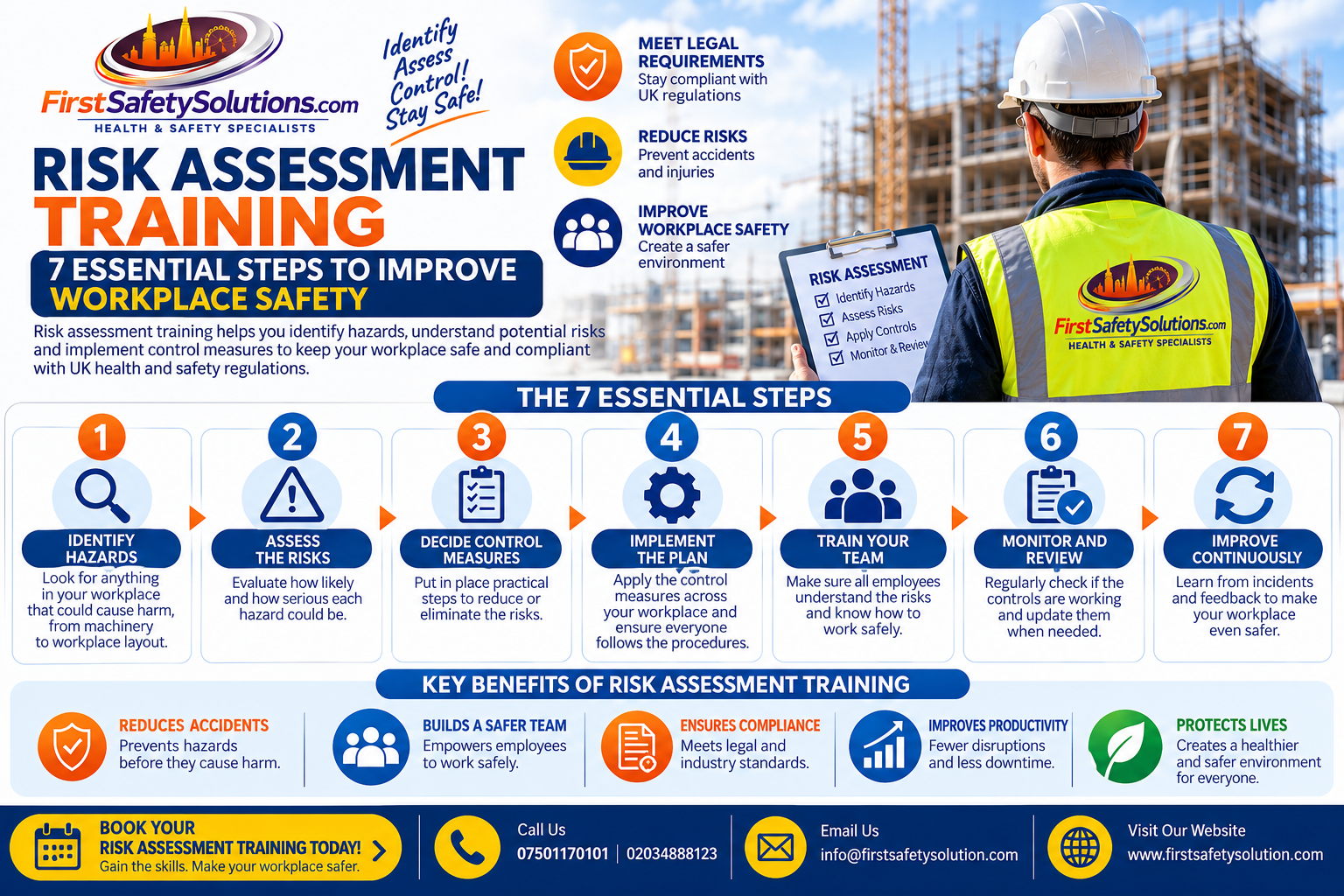
7 Essential Steps in the Risk Assessment Process
The HSE recommends a practical approach to identifying and managing workplace risks. These five core steps provide a useful starting point.
Step 1: Identify the Hazards
Look at the workplace, equipment, materials, and tasks to identify anything that could cause injury or ill health.
In construction, hazards may include:
Working at height
Moving vehicles and plant machinery
Manual handling and lifting
Electrical equipment
Dust and hazardous substances
Slips, trips, and falls
Consider routine and non-routine activities, including maintenance, cleaning, and changes to working practices.
Step 2: Decide Who Might Be Harmed and How
Consider everyone who could be affected by the identified hazards. This may include employees, subcontractors, visitors, members of the public, and other people working nearby. Think about how each person could be exposed to the hazard and what type of injury or ill health could result.
Step 3: Evaluate the Risks and Choose Control Measures
Assess how likely it is that harm could occur and how serious the consequences might be. Then decide what measures are needed to eliminate the hazard or reduce the risk. Depending on the circumstances, this could involve changing a work method, improving access, separating pedestrians from vehicles, providing suitable equipment, or introducing additional safety procedures. Personal protective equipment may also be needed, but it should not replace more effective controls where these are reasonably practicable.
Step 4: Record Your Significant Findings
Record the important hazards, who may be harmed, and the measures being used to control the risks where required. UK employers with five or more employees must record the significant findings of their risk assessments. Keeping clear records is also useful for smaller businesses because it helps communicate safety arrangements and review them when necessary.
Step 5: Review and Update the Assessment
A risk assessment should remain relevant to the work being carried out. Review it when working practices, equipment, materials, or workplace conditions change, or when an accident, near miss, or other information suggests that existing controls may not be adequate. Training helps relevant staff understand why risk assessments need to be reviewed rather than treated as one-time documents.
What Does First Safety Solution’s Risk Assessment Training Cover?
First Safety Solution offers a scheduled half-day Risk Assessment Training course designed for people with managerial or supervisory responsibilities and those required to prepare or implement risk assessments.
The course covers key topics, including:
Introduction to risk assessment and legal requirements
Understanding hazards and risks
Identifying hazards in the workplace
Deciding who might be harmed and how
Assessing risks and selecting control measures
Recording and reviewing risk assessments
Recognising common causes of workplace accidents
Prioritising risks and taking appropriate action
The training is intended to help learners develop practical knowledge that they can apply to their workplace responsibilities. For the latest course arrangements and booking information, visit the Risk Assessment Training course page.
Who Should Attend Risk Assessment Training?
Risk Assessment Training can benefit people who are responsible for workplace safety or need to understand how risks should be assessed and controlled.
Suitable participants may include:
Construction managers and site supervisors
Business owners and employers
Health and safety representatives
Employees involved in preparing risk assessments
Supervisors responsible for implementing control measures
Workers who need to recognize hazards and follow safety procedures
The training may also benefit businesses that want to improve staff awareness and strengthen their day-to-day approach to workplace safety.
Common Workplace Risk Assessment Mistakes to Avoid
Even when businesses have risk assessment documents in place, important hazards or control measures can sometimes be overlooked.
Using Generic Risk Assessments
A generic assessment may not reflect the actual conditions, equipment, or tasks at a particular workplace. Assessments should be relevant to the work being carried out.
Failing to Identify Everyone at Risk
Risk assessments should consider employees and other people who may be affected, including contractors, visitors, and members of the public where relevant.
Choosing Inadequate Control Measures
Simply identifying a hazard is not enough. Businesses must consider what practical steps are needed to eliminate the hazard or reduce the risk.
Not Communicating the Findings
Relevant workers should understand the risks associated with their tasks and the control measures they need to follow.
Forgetting to Review Assessments
Workplaces change over time. An assessment may need updating when new equipment, processes, materials, or working conditions introduce different risks.
Risk Assessment Training helps learners understand these common problems and how to approach the assessment process more effectively.
How First Safety Solution Can Help
First Safety Solution provides health and safety training and support for businesses across the UK, including the East Midlands. Our Risk Assessment Training is designed to help learners understand how to identify hazards, evaluate risks, and select suitable control measures. The course is available through scheduled training at our venue, with workplace delivery options also available. The course is advertised as a half-day session, with group arrangements depending on the delivery option. Contact us to discuss availability, venue requirements, and pricing.
Visit the Risk Assessment Training service page to find out more.
Frequently Asked Questions
1. What is the purpose of Risk Assessment Training?
The purpose is to help people identify hazards, evaluate risks, and understand how to select and implement appropriate control measures to protect people at work.
2. How long does the First Safety Solution course take?
The course is advertised as a half-day training session. Contact First Safety Solution to confirm current availability and delivery arrangements.
3. Who needs Risk Assessment Training?
It can benefit managers, supervisors, business owners, health and safety representatives, and employees who are involved in identifying hazards or preparing and implementing risk assessments.
4. Is risk assessment a legal requirement in the UK?
Employers must assess risks to employees and others who may be affected by their work and take appropriate action to control them. Employers with five or more employees must record the significant findings of their risk assessments.
5. Does training help prevent workplace accidents?
Training can improve hazard awareness and help people understand suitable control measures. However, effective accident prevention also depends on implementing controls, providing appropriate supervision, maintaining equipment, and reviewing safety arrangements.
6. Where can I book Risk Assessment Training?
You can visit the First Safety Solution Risk Assessment Training page to enquire about course options and availability.
Conclusion
Risk Assessment Training plays an important role in helping businesses identify hazards, assess workplace risks, and introduce suitable control measures. It supports better safety awareness and helps relevant employees understand their responsibilities. By following a structured risk assessment process, businesses can make more informed decisions about workplace safety and respond to changing conditions. First Safety Solution provides practical Risk Assessment Training to help managers, supervisors, and employees build their understanding of workplace hazards and risk control.
Want to improve your workplace risk assessment skills?
Visit our Risk Assessment Training page to discuss your training requirements.
Contact First Safety Solution
Website: https://firstsafetysolution.com/
Email: info@firstsafetysolution.com
Phone: 07501170101 | 02034888123