Fire Risk Assessment Guide for UK Businesses
Fire safety is one of the most important responsibilities for every business in the UK. Fires can spread quickly, causing serious injuries, loss of life, property damage, financial losses, and emotional stress for workers and families. Many workplace fires happen because businesses fail to identify hazards or follow proper safety procedures. Parents often search online about workplace safety because they want reassurance that loved ones working in offices, construction sites, warehouses, factories, schools, shops, and industrial environments are protected from dangerous situations. A proper fire risk assessment helps businesses identify fire hazards early and reduce risks before accidents happen.
Every business, regardless of size, should take workplace fire safety seriously. Good fire prevention systems help protect employees, visitors, equipment, and buildings while improving legal compliance and workplace confidence. Professional health and safety consultancy services can help businesses improve fire safety management and maintain compliance with UK regulations. This guide explains everything UK businesses need to know about fire risk assessment procedures, legal responsibilities, emergency planning, fire hazards, employee training, and workplace fire prevention.
What Is a Fire Risk Assessment?
A fire risk assessment is a detailed review of a workplace to identify fire hazards and evaluate the risks to people and property.
The purpose of a fire risk assessment is to:
- Identify fire dangers
- Reduce workplace risks
- Improve fire prevention
- Protect employees and visitors
- Support emergency planning
- Maintain legal compliance
Businesses must regularly review workplace conditions to ensure fire safety systems remain effective. A proper fire risk assessment helps employers identify problems before fires occur.
Why Fire Risk Assessments Are Important
Fires can happen in almost any workplace.
Common causes include:
- Faulty electrical equipment
- Poor storage practices
- Flammable materials
- Overloaded sockets
- Smoking materials
- Cooking equipment
- Hot work activities
Without proper safety measures, even a small fire can become a serious emergency. Parents often worry about loved ones working in environments where fire hazards may exist. Businesses that carry out regular fire risk assessment procedures usually create safer and more organized workplaces.
Good workplace fire safety helps reduce the following:
- Injuries
- Fatal accidents
- Property damage
- Financial losses
- Business disruption
- Emotional stress for families
UK Fire Safety Laws and Regulations
UK businesses must follow workplace fire safety laws. The Regulatory Reform (Fire Safety) Order 2005 requires employers and responsible persons to manage fire risks properly.
Businesses are legally responsible for:
- Conducting a fire risk assessment
- Identifying fire hazards
- Providing fire safety equipment
- Training employees
- Maintaining emergency procedures
- Keeping escape routes clear
Failure to follow fire safety laws may result in:
- Fines
- Legal penalties
- Business closure
- Insurance problems
- Increased accident risks
Businesses should also follow official guidance from the UK Government Fire Safety Guidance to improve workplace fire prevention and compliance.
Common Workplace Fire Hazards
Many workplaces contain hidden fire hazards.
Common hazards include:
- Electrical faults
- Flammable liquids
- Paper storage
- Gas equipment
- Dust buildup
- Overheated machinery
- Poor housekeeping
Identifying hazards early helps businesses improve workplace safety and reduce emergency risks.
Electrical Fire Risks
Electrical equipment is one of the leading causes of workplace fires.
Electrical fire hazards may include:
- Damaged cables
- Faulty machinery
- Overloaded sockets
- Poor maintenance
- Unsafe portable heaters
Businesses should regularly inspect electrical systems and equipment to reduce risks. Employees should report electrical problems immediately.
Importance of Good Housekeeping
Poor housekeeping can increase fire risks significantly.
Businesses should:
- Remove waste regularly
- Store flammable materials safely
- Keep walkways clear
- Avoid cluttered storage areas
- Maintain clean workspaces
Good housekeeping improves fire risk assessment results and reduces emergency hazards.
Fire Risk Assessment Steps
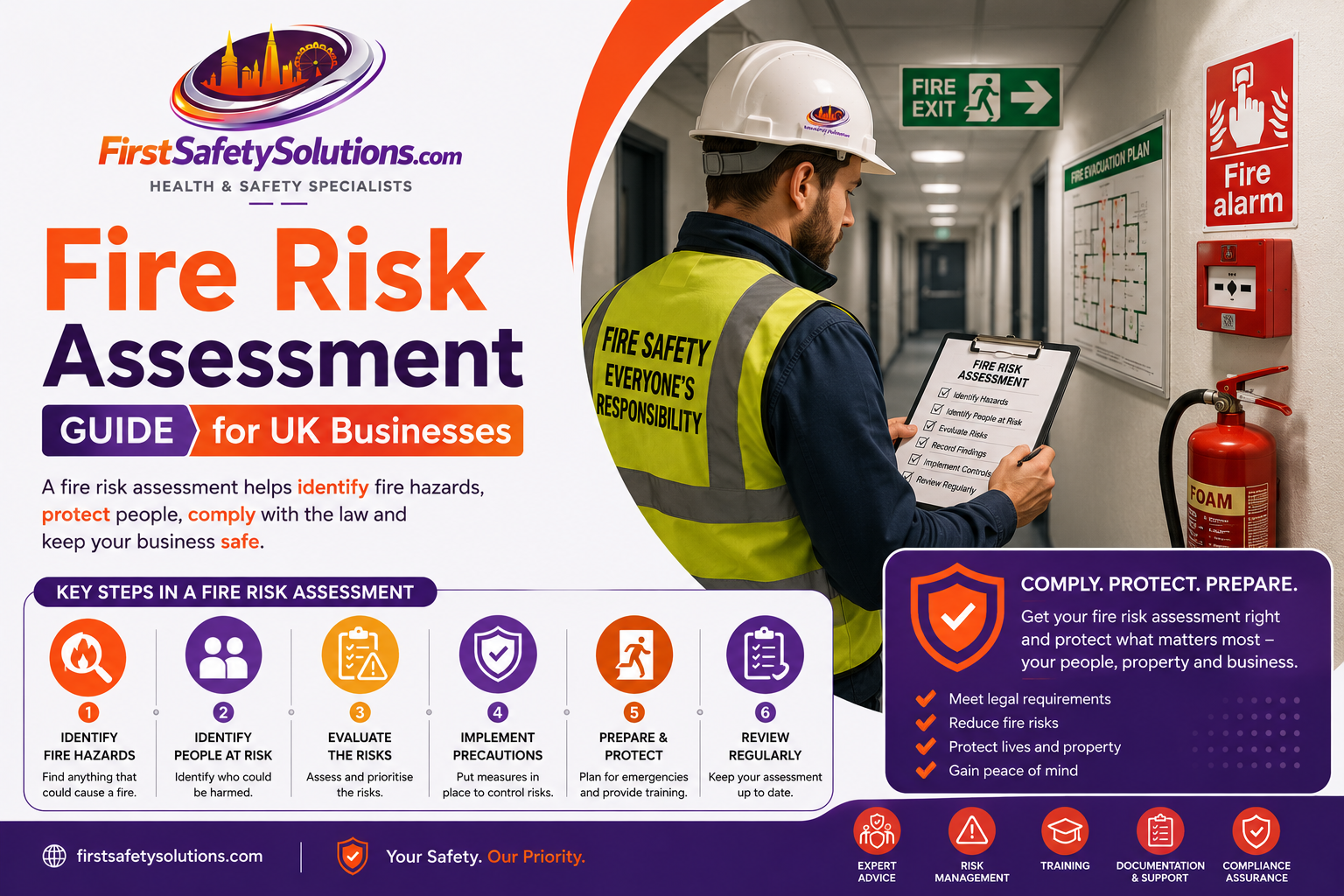
A proper fire risk assessment usually follows several important steps.
Identify Fire Hazards
Businesses should identify sources of ignition, fuel, and oxygen.
Examples include:
- Electrical equipment
- Heating systems
- Chemicals
- Paper storage
- Gas cylinders
Identify People at Risk
Employers should consider everyone who may be affected during a fire.
This includes:
- Employees
- Visitors
- Contractors
- Customers
- Vulnerable individuals
Evaluate Fire Risks
Businesses should review how likely a fire is to occur and how serious the consequences could be.
Implement Safety Measures
Employers should reduce risks using safety controls such as the following:
- Fire alarms
- Extinguishers
- Emergency lighting
- Fire doors
- Staff training
Review and Update Assessments
Fire risk assessments should be reviewed regularly or whenever workplace conditions change.
Fire Safety Equipment
Proper fire safety equipment is essential for workplace protection.
Common equipment includes:
- Fire extinguishers
- Fire alarms
- Smoke detectors
- Emergency lighting
- Fire blankets
- Sprinkler systems
Businesses should inspect and maintain fire safety equipment regularly. Damaged or faulty equipment may fail during emergencies.
Fire Extinguisher Safety
Employees should understand how to use fire extinguishers safely. Different extinguishers are designed for different types of fires.
Examples include:
- Water extinguishers
- Foam extinguishers
- CO₂ extinguishers
- Dry powder extinguishers
Using the wrong extinguisher can increase danger.
Fire Escape Routes and Emergency Exits
Clear escape routes are extremely important during emergencies.
Businesses should ensure the following:
- Emergency exits remain unlocked.
- Escape routes stay clear
- Exit signs are visible.
- Emergency lighting works correctly
Blocked exits can place workers and visitors at serious risk during fires.
Fire Safety Training for Employees
Employee training is one of the most important parts of workplace safety.
Workers should understand:
- Fire hazards
- Emergency procedures
- Evacuation routes
- Alarm systems
- Fire extinguisher use
- Reporting procedures
Training improves employee confidence and helps reduce panic during emergencies. Businesses investing in fire safety training often improve workplace compliance and emergency preparedness.
Emergency Evacuation Procedures
Every workplace should have clear evacuation procedures.
Emergency plans should explain:
- Assembly points
- Emergency contacts
- Evacuation routes
- Responsibilities during emergencies
- Assistance for vulnerable individuals
Employees should participate in fire drills regularly to improve preparedness.
Fire Doors and Compartmentation
Fire doors help slow the spread of smoke and flames.
Businesses should:
- Keep fire doors closed
- Avoid blocking fire doors
- Inspect doors regularly
- Repair damage immediately
Proper compartmentation helps protect escape routes during emergencies.
The Role of Fire Wardens
Fire wardens help manage workplace fire safety procedures.
Responsibilities may include:
- Monitoring evacuation
- Checking escape routes
- Assisting employees
- Reporting hazards
- Supporting emergency planning
Businesses should provide proper training for fire wardens.
Fire Risks in Construction Sites
Construction sites often contain additional fire hazards.
These may include:
- Hot work activities
- Temporary electrical systems
- Fuel storage
- Gas cylinders
- Flammable building materials
Construction businesses should carry out regular fire risk assessment reviews to reduce site hazards.
Fire Safety in Offices and Commercial Buildings
Office environments also contain fire risks.
Common office hazards include:
- Electrical overloads
- Kitchen equipment
- Paper storage
- Portable heaters
Businesses should not assume office environments are low risk. Regular fire risk assessment procedures remain important in commercial workplaces.
Why Small Businesses Need Fire Risk Assessments
Some smaller businesses believe fire safety rules only apply to large companies. However, all workplaces must manage fire risks properly.
Strong fire prevention systems help small businesses:
- Protect employees
- Reduce financial losses
- Improve legal compliance
- Build customer trust
- Improve workplace confidence
Small businesses with strong safety systems often appear more professional and responsible.
Mental Health and Workplace Fire Safety
Unsafe workplaces can also affect employee well-being.
Workers may experience:
- Stress
- Anxiety
- Fear during emergencies
- Reduced confidence
Safe working environments help employees feel protected and supported. Parents searching online about workplace safety often want reassurance that loved ones are protected physically and emotionally.
Fire Safety Audits and Inspections
Safety audits help businesses identify weaknesses in fire prevention systems.
Audits may review:
- Emergency exits
- Fire alarms
- Fire extinguishers
- Employee training
- Escape routes
- Storage practices
Regular inspections improve fire risk assessment procedures and reduce workplace hazards.
Technology and Modern Fire Safety Systems
Modern technology is helping businesses improve fire prevention systems.
Examples include:
- Smart fire alarms
- Digital inspections
- Fire monitoring systems
- Automated emergency alerts
- Online training platforms
Technology helps businesses identify hazards more quickly and improve emergency communication.
The Financial Impact of Workplace Fires
Fires can become extremely expensive for businesses.
Workplace fires may lead to the following:
- Property damage
- Compensation claims
- Insurance increases
- Business interruption
- Legal penalties
- Lost productivity
Investing in workplace fire safety and fire risk assessment procedures often saves businesses money in the long term.
Creating a Positive Fire Safety Culture
A strong safety culture encourages everyone to take fire prevention seriously.
Positive workplace cultures encourage workers to:
- Report hazards
- Follow procedures
- Participate in training
- Keep exits clear
- Support colleagues during emergencies
Managers play an important role in encouraging safe behavior and maintaining workplace fire safety standards.
How Fire Safety Protects Families
Workplace fires affect more than employees alone. Families are also impacted emotionally and financially when workers are injured or businesses suffer major damage. Parents often search online about fire risk assessment procedures because they want reassurance that loved ones are protected in workplaces. Businesses that improve workplace fire safety help workers return home safely every day.
Maintaining Fire Risk Assessment Compliance
Workplace fire safety management should continue regularly.
Businesses should:
- Update assessments
- Conduct refresher training
- Inspect fire equipment
- Review emergency procedures
- Improve workplace systems
Continuous improvement helps businesses maintain compliance and reduce future risks.
Future Trends in Workplace Fire Safety
Fire safety expectations continue to increase across industries.
Future trends may include:
- Smart fire detection systems
- Advanced emergency communication
- Digital compliance tracking
- Improved fire-resistant materials
- Better workplace monitoring technology
Businesses that invest in workplace fire safety and fire risk assessment procedures are usually better prepared for future industry changes.
How First Safety Solution Can Help
First Safety Solution supports businesses needing help with fire risk assessment procedures, including:
- Workplace fire risk assessments
- Safety audits
- Employee training
- Emergency planning
- Fire safety consultancy
- Compliance support
Professional guidance helps businesses improve workplace safety while reducing fire hazards and maintaining legal compliance.
Conclusion
A proper fire risk assessment is essential for protecting employees, visitors, buildings, and businesses from workplace fire hazards. Fires can spread quickly and cause serious injuries, financial losses, and emotional stress for workers and families. From fire alarms and emergency exits to employee training and workplace inspections, every fire safety measure plays an important role in reducing emergency risks. Employers must take workplace fire safety seriously to improve compliance, protect workers, support families, and create safer working environments for everyone.
🔗 Learn more or book at firstsafetysolution.com
📞 Call Now: 02034888123 | 07501170101
📍 Visit Us: Quantum Offices, Mountview House, 212 High Rd, Ilford IG1 1QB