Workplace Safety Training
Workplace safety has become one of the most important responsibilities for businesses across the UK. Companies working in construction, engineering, manufacturing, warehousing, logistics, maintenance, healthcare, cleaning services, and industrial sectors face many daily risks that can seriously affect employees, contractors, visitors, and members of the public if workers are not trained properly. Because of increasing legal responsibilities and workplace safety expectations, many employers now search online to understand workplace safety training requirements, why training is important, and how effective employee safety training helps businesses improve compliance and reduce accidents.
Parents also search online about workplace safety because they want reassurance that loved ones working in high-risk industries are protected by proper training and safe working procedures. Poor workplace training can lead to serious injuries, emotional stress, financial difficulties, and long-term health problems for workers and families. Strong workplace safety training helps businesses improve employee awareness, reduce hazards, prevent accidents, and maintain legal compliance. Businesses with organised safety training systems are often viewed as more professional, reliable, and trustworthy by clients, contractors, and employees.
Professional health and safety consultancy services can help businesses improve workplace safety systems and deliver effective workplace safety training programs.
This guide explains everything businesses need to know about workplace safety training, including legal responsibilities, employee competence, risk reduction, accident prevention, workplace inspections, emergency procedures, mental wellbeing, and long-term business protection.
What Is Workplace Safety Training?
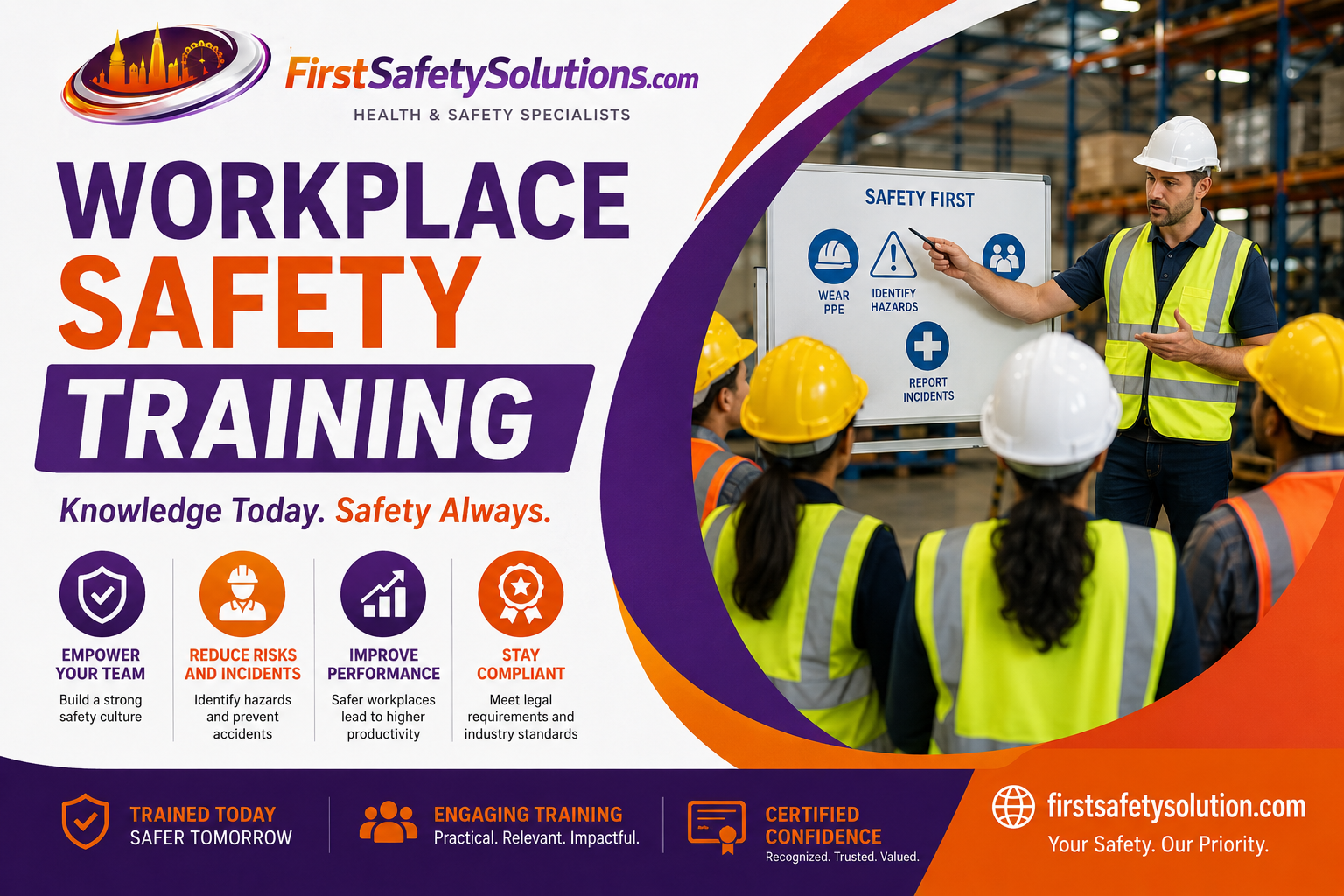
Workplace safety training is the process of teaching employees how to work safely, identify hazards, follow procedures, and reduce risks while performing their job duties.
Workplace safety training helps employees understand:
- Workplace hazards
- Safety procedures
- Emergency actions
- Safe equipment use
- Risk control measures
- Legal responsibilities
Proper workplace safety training helps employees protect themselves and others from workplace accidents and injuries.
Why Workplace Safety Training Is Important
Every workplace contains potential hazards. Without proper training, employees may not understand how to work safely or respond correctly during dangerous situations.
Workplace safety training helps businesses:
- Reduce workplace accidents
- Improve employee awareness
- Strengthen legal compliance
- Improve workplace confidence
- Increase productivity
- Reduce financial risks
- Improve business reputation
Parents often worry about loved ones working in dangerous industries because poor training can increase accident risks significantly. Businesses with strong workplace safety training systems usually create safer working environments where employees feel more protected and supported.
Legal Responsibilities for Employers
UK employers have legal duties to protect employees and maintain safe workplaces.
Businesses must:
- Provide suitable workplace safety training
- Identify workplace hazards
- Carry out risk assessments
- Maintain safe systems of work
- Monitor employee competence
- Review safety procedures regularly
Workplace safety training helps businesses demonstrate legal compliance and responsible workplace management. Businesses should also follow official guidance from the Health and Safety Executive (HSE) to improve workplace safety standards and employee protection.
Industries That Require Workplace Safety Training
Almost every industry requires workplace safety training.
Industries commonly requiring employee safety training include:
- Construction
- Manufacturing
- Warehousing
- Engineering
- Healthcare
- Logistics
- Cleaning services
- Facilities management
- Hospitality
- Retail
Businesses without proper workplace safety training systems may increase accident risks significantly.
Common Workplace Hazards
Many workplace accidents happen because employees are not trained to identify hazards correctly.
Common workplace hazards include:
- Slips and trips
- Electrical hazards
- Falling objects
- Unsafe machinery
- Hazardous substances
- Fire risks
- Manual handling injuries
- Working at height
Strong workplace safety training helps employees recognise and reduce these risks.
Benefits of Workplace Safety Training
Businesses investing in workplace safety training often experience many long-term advantages.
Important benefits include:
- Fewer workplace accidents
- Improved employee confidence
- Better legal compliance
- Increased productivity
- Stronger workplace communication
- Reduced absenteeism
- Lower insurance costs
- Better client confidence
Businesses with organised workplace safety training systems often appear more professional and reliable.
How Workplace Safety Training Improves Employee Safety
Employees who receive proper training are more likely to follow safe working procedures correctly.
Workplace safety training helps employees:
- Understand hazards
- Use equipment safely
- Follow emergency procedures
- Report unsafe conditions
- Use PPE correctly
- Reduce risky behaviour
Safer employees usually improve workplace morale and operational performance.
Importance of Employee Competence
Employee competence is one of the most important parts of workplace safety.
Competent employees are more likely to:
- Follow procedures
- Avoid unsafe actions
- Identify hazards early
- Protect colleagues
- Prevent accidents
Workplace safety training helps businesses improve employee competence and workplace confidence.
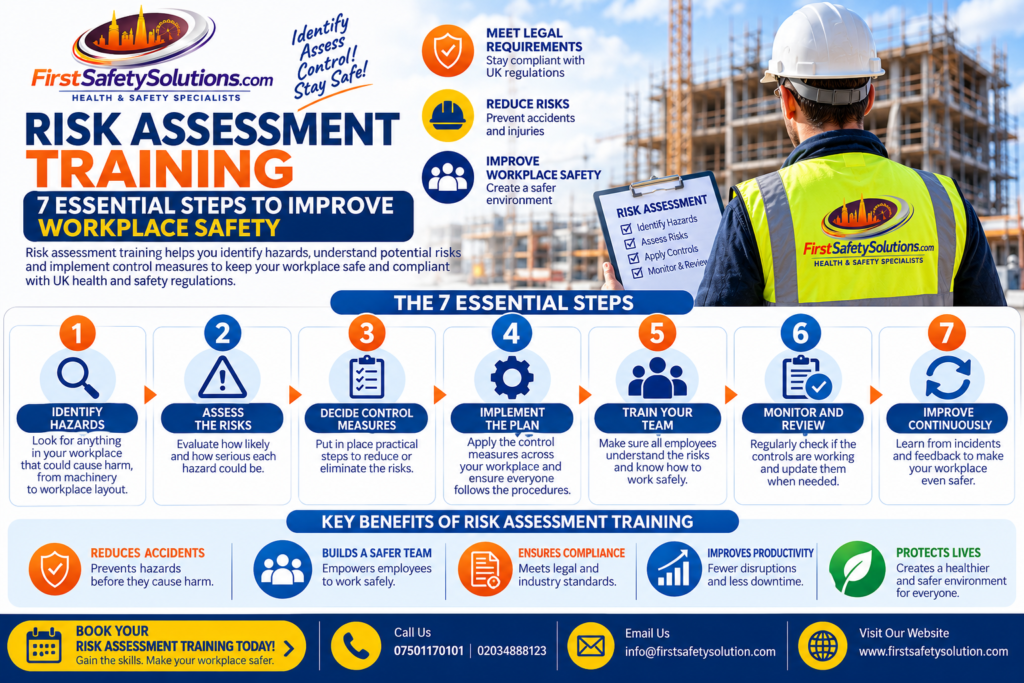
Risk Assessments and Workplace Safety Training
Risk assessments help businesses identify workplace hazards and required safety controls.
Workplace safety training helps employees understand:
- Risk assessment findings
- Safety procedures
- Hazard controls
- Emergency responses
- PPE requirements
Strong workplace safety training systems support effective risk management and accident prevention.
Manual Handling Safety Training
Manual handling injuries are extremely common in many workplaces.
Poor lifting techniques may cause:
- Back injuries
- Muscle strain
- Joint damage
- Long-term pain
Manual handling training teaches employees how to:
- Lift safely
- Use proper posture
- Avoid twisting movements
- Use lifting aids correctly
Strong workplace safety training helps reduce manual handling accidents significantly.
Fire Safety Training
Fire safety is an important part of workplace protection.
Fire safety training may include:
- Fire evacuation procedures
- Fire extinguisher use
- Emergency contacts
- Fire alarm systems
- Escape routes
Employees trained in fire safety are more likely to respond quickly during emergencies.
Working at Height Training
Falls from height are one of the leading causes of workplace injuries in the UK.
Working at height training may include:
- Ladder safety
- Scaffold safety
- Fall protection equipment
- Safe climbing procedures
- Equipment inspections
Proper workplace safety training helps reduce fall-related accidents significantly.
COSHH Safety Training
Many workplaces use hazardous substances that can seriously affect employee health.
COSHH training helps employees understand:
- Chemical hazards
- PPE requirements
- Safe storage procedures
- Emergency spill response
- Health risks
Strong workplace safety training systems help businesses improve hazardous substance management.
PPE Training and Safety Awareness
Employees should understand how to use PPE correctly.
PPE training may include:
- Correct PPE selection
- PPE maintenance
- Proper fitting procedures
- Storage requirements
- Replacement procedures
Workplace safety training helps employees use protective equipment properly and consistently.
Electrical Safety Training
Electrical hazards can cause serious injuries and fatalities.
Electrical safety training may include:
- Safe equipment use
- Cable inspections
- Emergency isolation procedures
- Reporting faults
- Electrical hazard awareness
Strong workplace safety training helps reduce electrical accidents significantly.
Emergency Procedures and Safety Training
Employees should know what to do during emergencies.
Emergency training may include:
- Fire evacuation
- First aid procedures
- Accident reporting
- Spill response
- Emergency communication
Well-trained employees usually respond more effectively during dangerous situations.
Workplace Housekeeping and Safety Awareness
Poor housekeeping is one of the most common causes of workplace accidents.
Employees should be trained to:
- Remove waste regularly
- Keep walkways clear
- Store equipment safely
- Clean spills immediately
- Organise work areas properly
Good housekeeping improves both safety and productivity.
Accident Reporting and Incident Management
Employees should understand how to report workplace incidents correctly.
Accident reporting systems help businesses:
- Identify hazards
- Prevent repeat incidents
- Improve workplace safety
- Maintain compliance
- Improve communication
Strong workplace safety training systems improve hazard reporting and incident management.
Why Clients Prefer Businesses With Strong Safety Training
Clients often prefer businesses with organised workplace safety systems because they reduce operational and legal risks.
Strong workplace safety training systems help businesses demonstrate:
- Professionalism
- Legal compliance
- Employee competence
- Workplace organisation
- Commitment to safety
Businesses with strong training programmes often gain competitive advantages.
Workplace Safety Training for Small Businesses
Some smaller businesses think formal safety training only benefits large organisations.
However, small businesses can also face serious workplace hazards.
Workplace safety training helps small businesses:
- Improve employee safety
- Reduce legal risks
- Improve organisation
- Build client confidence
- Improve professionalism
- Reduce accidents
Smaller businesses with strong safety training systems often appear more reliable and organised.
Common Workplace Safety Training Mistakes
Some businesses struggle with workplace safety because training systems are poorly organised.
Common mistakes include:
- Incomplete training
- Poor communication
- Missing refresher training
- Weak supervision
- Inconsistent procedures
- Lack of employee engagement
Businesses should review training systems regularly to maintain safety standards successfully.
Mental Health and Workplace Safety
Unsafe workplaces can affect employee mental wellbeing significantly.
Employees may experience:
- Stress
- Anxiety
- Fatigue
- Fear of accidents
- Poor morale
Businesses with strong workplace safety training systems often improve employee confidence, morale, and wellbeing. Parents searching online about workplace safety often want reassurance that loved ones are protected in high-risk industries.
Safety Audits and Workplace Inspections
Regular audits help businesses improve workplace safety systems.
Safety audits may review:
- Employee behaviour
- PPE use
- Equipment condition
- Risk assessments
- Emergency procedures
- Safety records
- Training compliance
Audits help businesses maintain workplace safety training standards while improving organisation and accident prevention.
Technology and Modern Safety Training
Technology is helping businesses improve workplace safety systems more effectively.
Examples include:
- Online training systems
- Digital inspections
- Mobile reporting apps
- Virtual safety training
- Compliance software
- Digital record management
Technology helps businesses organise workplace safety training systems more efficiently while improving communication and monitoring.
Financial Benefits of Workplace Safety Training
Strong workplace safety systems can reduce long-term business costs significantly.
Poor safety training may lead to:
- Compensation claims
- Legal penalties
- Insurance increases
- Lost productivity
- Project delays
- Reputation damage
Businesses with strong safety training systems often reduce financial risks while improving operational performance.
Creating a Positive Workplace Safety Culture
Strong workplace safety cultures encourage everyone to take responsibility for safety.
Positive workplace cultures encourage workers to:
- Report hazards
- Follow procedures
- Participate in training
- Support colleagues
- Improve communication
- Use PPE correctly
Managers play an important role in maintaining safety standards and encouraging safe behavior.
How Workplace Safety Training Protects Families
Workplace accidents affect more than employees alone. Families are also impacted emotionally and financially when workers are injured. Parents often search online about workplace safety because they care about loved ones working in construction, engineering, warehousing, healthcare, manufacturing, and industrial environments. Businesses with strong safety training systems help workers return home safely every day while reducing long-term health and financial risks.
Maintaining Workplace Safety Training Compliance
Safety training should continue after employees complete initial courses.
Businesses should:
- Conduct refresher training
- Monitor employee competence
- Review workplace procedures
- Update safety policies
- Improve communication systems
- Review accident reports
Continuous improvement helps businesses maintain safety training compliance while reducing future workplace risks.
Future Trends in Workplace Safety Training
Health and safety expectations continue to increase across industries.
Future workplace training trends may include:
- AI-based safety learning
- Virtual reality training
- Smart workplace monitoring
- Online compliance tracking
- Real-time hazard reporting
- Interactive safety systems
Businesses investing in strong workplace safety training systems now are usually better prepared for future safety requirements.
Why Workplace Safety Matters to Families
Parents often search online about safety because they want reassurance that loved ones are protected while working in dangerous industries. Construction, engineering, manufacturing, warehousing, and industrial services can involve serious hazards every day.
Unsafe workplaces may lead to:
- Serious injuries
- Emotional stress
- Financial hardship
- Long-term disabilities
- Reduced quality of life
Strong safety systems supported by workplace safety training help businesses create safer environments for workers and families.
The Role of Leadership in Workplace Safety
Business owners and managers play an important role in maintaining safety standards.
Strong leadership helps businesses:
- Improve communication
- Encourage safe behaviour
- Maintain compliance systems
- Support employees
- Improve operational performance
Employees are more likely to follow workplace procedures when management actively supports safety improvements.
Long-Term Business Growth and Workplace Safety Training
Businesses with strong safety systems often improve long-term growth opportunities.
Workplace safety training may help businesses:
- Improve client confidence
- Strengthen business reputation
- Reduce operational risks
- Improve employee well-being
- Increase contractor opportunities
- Improve workplace efficiency
Strong compliance systems often support sustainable business growth and long-term stability.
How First Safety Solution Can Help
First Safety Solution supports businesses needing help with safety training, including:
- Employee safety courses
- Workplace risk assessments
- Safety audits
- Health and safety consultancy
- Compliance support
- Workplace inspections
- Safety documentation
- Training management systems
Professional guidance helps businesses improve workplace safety while reducing risks and maintaining legal compliance through safety training support.
Conclusion
Workplace safety training is one of the most important parts of workplace health and safety management for businesses across the UK. From hazard awareness and employee competence to emergency procedures and accident prevention, safety training helps businesses create safer, healthier, and more organized working environments. Businesses that invest in strong workplace safety training systems often improve employee safety, reduce accident risks, strengthen legal compliance, improve client confidence, and create better long-term business success.
🔗 Learn more or book at firstsafetysolution.com
📞 Call Now: 02034888123 | 07501170101
📍 Visit Us: Quantum Offices, Mountview House, 212 High Rd, Ilford IG1 1QB