NPORS Excavator Course: 7 Essential Skills for Safe Plant Operation
Excavators are widely used across construction, groundwork, civil engineering, and infrastructure projects. Operating these machines safely requires practical skills, knowledge of site hazards, and an understanding of the correct operating procedures. The NPORS Excavator Course is designed to help learners develop the knowledge and practical ability needed to operate excavator machinery safely. It can be suitable for beginners entering the construction industry and experienced operators who need formal training and assessment.
Whether you want to start a career as a plant operator or improve your existing skills, suitable excavator training can help you build confidence and understand your responsibilities on site. At First Safety Solution, we provide information and support for people interested in the NPORS Excavator Course and their next steps towards plant operator training.
What Is an NPORS Excavator Course?
The NPORS Excavator Course is a plant operator training and assessment program associated with the National Plant Operators Registration Scheme (NPORS). It focuses on safe excavator operation, machine controls, pre-use checks, excavation techniques, hazard awareness, and relevant site safety procedures. The exact training route depends on the type of excavator, the learner’s previous experience, and the qualification or operator card required.
For example, someone with little or no operating experience may need a novice training course, while an experienced operator may be eligible for an experienced worker assessment route.
You can learn more about available plant training standards on the official NPORS website.
Why Is Excavator Training Important?
Excavators are powerful machines that can create serious risks if they are operated incorrectly. Training helps operators understand how to work safely, recognize hazards, and follow the correct procedures.
1. Develop Practical Operating Skills
Training helps learners become familiar with excavator controls, machine movements, digging operations, and safe maneuvering techniques. Practical experience helps operators understand how the machine responds in different working conditions.
2. Improve Site Safety Awareness
Excavator operators need to remain aware of people, vehicles, underground services, overhead obstructions, and changing ground conditions. Training helps learners recognize potential hazards and understand the precautions needed to reduce risks.
3. Understand Pre-Use Inspections
Before operating an excavator, operators should carry out the required checks in accordance with the machine manufacturer’s instructions and workplace procedures. These checks may include inspecting tracks or tires, hydraulic systems, attachments, safety devices, and visible signs of damage. Identifying problems before work begins can help prevent equipment failures and unsafe operating conditions.
4. Support Career Development
Formal plant operator training can help individuals demonstrate their skills to employers and pursue suitable roles in construction and groundwork. The qualification or operator card awarded depends on the training route, assessment outcome, and applicable NPORS requirements.
5. Build Confidence Around Heavy Machinery
Working with heavy plant requires concentration, sound judgment, and an understanding of machine limitations. Training provides structured learning and practical experience to help learners develop confidence without overlooking essential safety procedures.
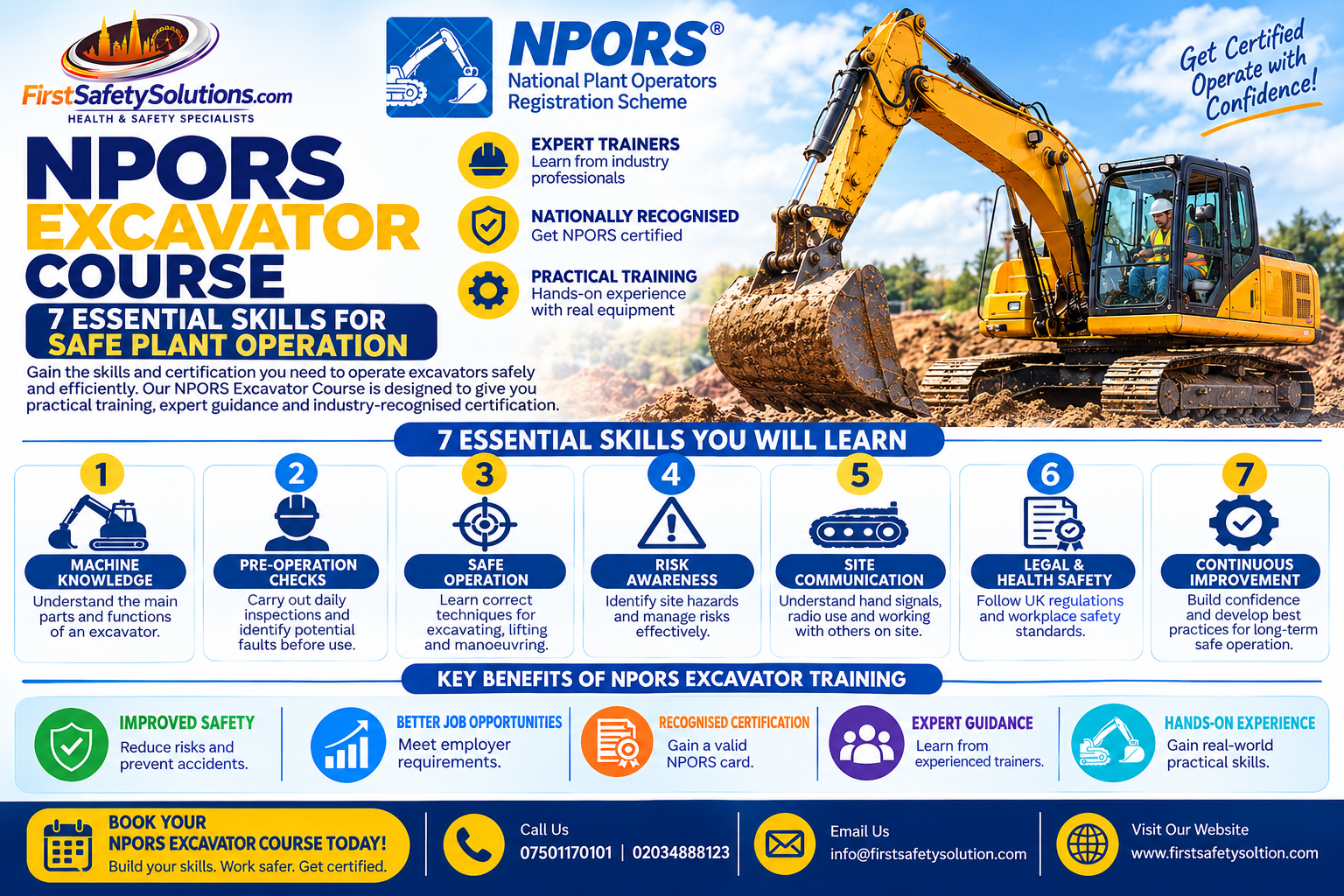
7 Essential Skills Covered in Excavator Training
The precise syllabus varies by excavator category and training route, but the following skills are important for safe plant operation.
Skill 1: Understanding Excavator Controls
Operators need to understand the machine’s controls and operating functions before carrying out work. Training introduces the controls, safe starting and stopping procedures, and the importance of following the manufacturer’s operating instructions.
Skill 2: Carrying Out Pre-Use Checks
Daily inspections help identify defects that could affect the machine’s safe operation. Operators should understand how to check the machine, report defects, and follow the correct procedures when equipment is unsafe to use.
Skill 3: Safe Manoeuvring and Positioning
Moving and positioning an excavator requires awareness of ground conditions, machine stability, surrounding workers, and nearby equipment. Operators need to understand safe travel routes, visibility limitations, and the importance of following site traffic management arrangements.
Skill 4: Excavating and Digging Techniques
Excavation work requires control, accuracy, and awareness of the surrounding environment. Depending on the course category, practical training may cover digging, trenching, grading, levelling, and other relevant excavation tasks. Operators must also follow site procedures for underground services and excavation safety.
Skill 5: Recognizing Workplace Hazards
Excavator operators may encounter hazards such as unstable ground, underground utilities, overhead power lines, pedestrians, and other moving machinery. Training helps learners identify these risks and understand the control measures needed before and during operations.
Skill 6: Understanding Attachments and Machine Limitations
Excavators can use different attachments depending on the task. Operators need to understand which attachments are suitable and how they affect safe operation. Any lifting duties must be covered by the appropriate training, equipment, planning, and site procedures rather than assumed to be included in every excavator course.
Skill 7: Safe Shutdown and Parking Procedures
At the end of a task, operators must secure the machine correctly and follow the manufacturer’s shutdown instructions. This may include parking in a suitable location, lowering attachments safely, applying the required safety controls, and reporting any defects.
Who Should Take an NPORS Excavator Course?
The course may be suitable for individuals and employers who need to develop or assess excavator operating competence.
Potential learners include:
Construction workers looking to move into plant operation
Groundworkers involved in excavation projects
New entrants interested in construction careers
Experienced excavator operators seeking formal assessment
Plant operators whose employers require recognized training
Construction businesses looking to improve workforce competence
Before booking, confirm the appropriate excavator category and training route. A course for one type of excavator may not cover the machine or duties required for another role.
How Long Does an NPORS Excavator Course Take?
The duration depends on the learner’s experience, the excavator category, and the training or assessment route. A novice course may require several days of practical training, while an experienced worker assessment may take less time when the candidate already has the necessary operating skills. The training provider should confirm the course duration, assessment arrangements, entry requirements, and available dates before enrollment.
For current course information, visit the NPORS Excavator Course UK page.
What Certification Can You Receive?
Candidates who successfully complete the required training and assessments may receive the relevant NPORS operator card or certification for the category undertaken. The correct card depends on the training route and the learner’s circumstances. NPORS offers different operator card routes, including its Traditional Operator Card and construction-related cards that may carry the CSCS logo when the relevant requirements are met. If you need a card for work on construction sites, check the specific requirements with the training provider before booking. Do not assume every NPORS course automatically results in the same card or endorsements.
For details, visit the official NPORS plant operator training standards.
Career Opportunities After Excavator Training
Excavator training can support career development in several construction-related fields. Opportunities depend on experience, competence, the type of qualification held, and employer requirements.
Potential roles include:
Excavator Operator
Plant Operator
Groundworker
Construction Site Operative
Civil Engineering Operative
Infrastructure and Utilities Operative
Additional experience and relevant training may help operators progress into more specialized plant operations. However, completing a course does not guarantee employment. Employers may also require relevant site experience, additional qualifications, or specific operator card categories.
Common Excavator Safety Mistakes to Avoid
Even experienced operators need to follow safe working practices and site procedures.
Ignoring Pre-Use Checks
Skipping inspections may allow defects to go unnoticed. Carry out the required checks before operating the machine and report any concerns.
Working Too Close to Other People
Excavators have blind spots and can swing or move unexpectedly if not operated carefully. Follow exclusion zones, site traffic management arrangements, and banksman or signaller instructions where required.
Overlooking Underground Services
Excavation work can damage buried utilities and create serious risks. Follow the site’s procedures for locating and avoiding underground services before digging.
Operating on Unsuitable Ground
Poor ground conditions can affect machine stability. Follow the site assessment, manufacturer’s guidance, and safe operating limits.
Using Attachments Incorrectly
Only use suitable attachments and follow the correct operating procedures. Special activities, including lifting operations, may require additional planning and competence.
How First Safety Solution Can Help
First Safety Solution provides construction health and safety training and support for UK businesses and workers. Our NPORS Excavator Course page provides information for people interested in developing excavator operating skills and exploring training options. We can help you make an enquiry about course suitability, available arrangements, and the next steps towards booking. Before enrolling, discuss your experience level, the excavator category you need, and whether you require a particular operator card for your intended work.
Explore the course here: NPORS Excavator Course UK.
Frequently Asked Questions
1. What is an NPORS Excavator Course?
It is a plant operator training and assessment programme designed to develop or assess the skills required for safe excavator operation.
2. Can beginners take an NPORS Excavator Course?
Yes, novice training routes are available for eligible learners with little or no previous operating experience. Confirm the appropriate course category with the provider.
3. Can experienced operators take the course?
Experienced operators may be eligible for an experienced worker assessment route, depending on their existing skills and the relevant course requirements.
4. How long does the course take?
The duration depends on the excavator category and whether the learner needs novice training or an experienced operator assessment. Confirm the current duration before booking.
5. Will I receive an NPORS card?
Successful candidates may receive the relevant NPORS operator card or certification after meeting the required assessment and eligibility criteria. The type of card depends on the route selected.
6. Is an NPORS Excavator Course useful for construction jobs?
It can help demonstrate excavator operating competence for relevant plant operator roles. Employers may also require experience, additional training, or a particular card category.
7. How can I book an NPORS Excavator Course?
Visit the First Safety Solution NPORS Excavator Course page to enquire about current course arrangements and availability.
Conclusion
The NPORS Excavator Course can help learners develop practical machine operating skills, understand workplace hazards, and work towards relevant plant operator certification. From pre-use inspections and safe manoeuvring to excavation techniques and shutdown procedures, suitable training helps operators understand the responsibilities involved in working with heavy machinery.
Whether you are new to construction or an experienced operator seeking formal assessment, choosing the correct training route is an important first step.
Ready to take the next step? Visit First Safety Solution to enquire about the NPORS Excavator Course UK.
Contact First Safety Solution
Website: https://firstsafetysolution.com/
Email: info@firstsafetysolution.com
Phone: 07501170101 | 02034888123