Ladder Safety Rules for Workers
Ladders are one of the most commonly used tools across workplaces in the UK. Workers use ladders in construction, warehouses, offices, maintenance work, electrical projects, retail environments, and industrial sites every day. Although ladders may seem simple to use, incorrect ladder use can quickly lead to serious injuries and workplace accidents. Falls from ladders remain one of the leading causes of workplace injuries in the UK. Workers can suffer broken bones, head injuries, spinal damage, and long-term health problems when proper safety procedures are ignored. In some cases, ladder accidents can even become fatal.
Parents often search online about workplace safety because they want reassurance that loved ones working at height are protected from preventable accidents. Businesses that follow proper ladder safety rules help reduce workplace injuries, improve employee confidence, and create safer working environments.
Strong workplace safety systems not only protect workers but also improve productivity, reduce financial losses, and support legal compliance. Companies that prioritise ladder safety rules are often viewed as more professional and responsible. Professional health and safety consultancy services can help businesses improve ladder safety rules and workplace compliance. This guide explains everything workers and employers need to know about ladder safety rules, including ladder inspections, safe working practices, working at height regulations, emergency procedures, and accident prevention methods.
What Are Ladder Safety Rules?
Ladder safety rules are workplace procedures designed to reduce accidents and injuries when workers use ladders.
These rules help workers:
- Work safely at height
- Prevent falls
- Maintain balance
- Use ladders correctly
- Inspect equipment properly
- Reduce workplace hazards
Good ladder safety rules help businesses create safer and more organised working environments.
Why Ladder Safety Rules Are Important
Ladder accidents happen in many industries every year.
Common causes include:
- Damaged ladders
- Poor ladder positioning
- Slippery surfaces
- Overreaching
- Incorrect ladder use
- Lack of training
Unsafe ladder practices can result in:
- Serious injuries
- Lost productivity
- Financial losses
- Legal penalties
- Emotional stress for families
Parents often worry about loved ones working at height because falls can have life-changing consequences.
Businesses that improve ladder safety rules usually experience the following:
- Fewer workplace accidents
- Better worker confidence
- Improved compliance
- Reduced insurance costs
- Stronger business reputation
UK Ladder Safety Regulations
UK employers have legal responsibilities to protect workers using ladders.
The Work at Height Regulations require employers to
- Assess workplace risks
- Provide suitable equipment
- Train employees properly
- Inspect ladders regularly
- Reduce fall risks
Employers must ensure ladders are only used when appropriate for the task.
Businesses should also follow official guidance from the Health and Safety Executive (HSE) to improve ladder safety rules and workplace compliance.
Choosing the Right Ladder
Using the correct ladder is essential for workplace safety. Different tasks require different ladder types.
Common ladder types include:
- Step ladders
- Extension ladders
- Platform ladders
- Folding ladders
Workers should select ladders based on:
- Height requirements
- Task duration
- Workplace conditions
- Load capacity
Using the wrong ladder increases accident risks significantly.
Ladder Inspection Procedures
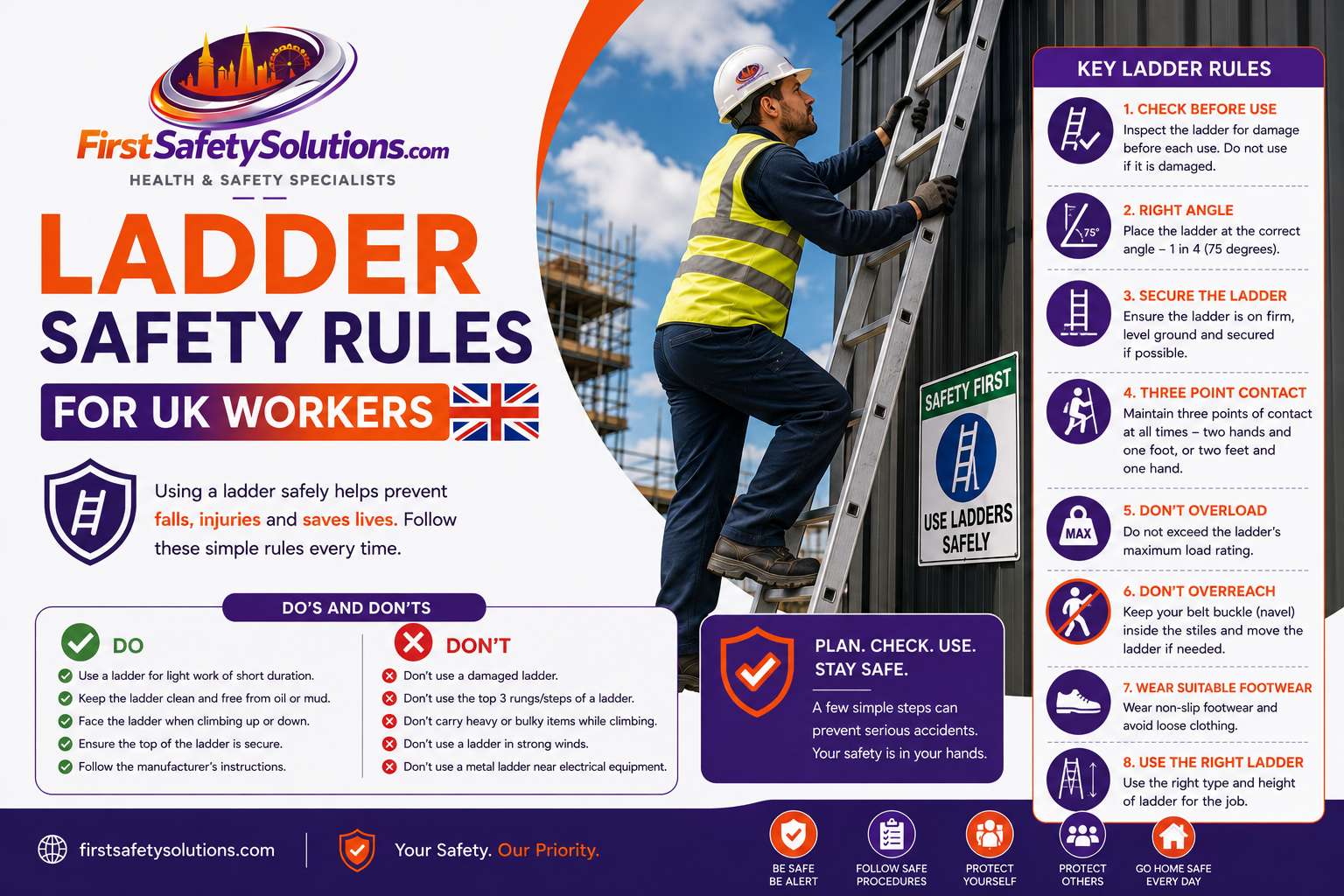
Workers should inspect ladders before every use.
Important inspection checks include:
- Cracks or damage
- Loose steps
- Bent rails
- Missing feet
- Faulty locking systems
Damaged ladders should never be used. Regular inspections are an important part of effective ladder safety rules.
Safe Ladder Positioning
Incorrect ladder positioning is a major cause of workplace falls.
Workers should:
- Place ladders on stable surfaces.
- Avoid slippery areas
- Ensure ladders are fully open
- Maintain proper ladder angles
- Secure ladders where necessary
Good ladder positioning improves stability and worker safety.
Three Points of Contact Rule
Workers should maintain three points of contact while climbing ladders.
This means keeping:
- Two hands and one foot
or - Two feet and one hand
in contact with the ladder at all times. This simple ladder safety rule helps improve balance and reduce fall risks.
Avoid Overreaching
Overreaching is one of the most common causes of ladder accidents.
Workers should:
- Keep their body centered
- Move the ladder when necessary.
- Avoid leaning sideways
- Maintain stable footing
Overreaching can easily cause ladders to tip over.
Ladder Safety Rules for Construction Sites
Construction sites often involve dangerous working-at-height activities.
Construction ladder hazards may include the following:
- Uneven ground
- Muddy surfaces
- Falling objects
- Busy work areas
- Heavy equipment movement
Construction businesses should ensure workers receive proper training and supervision when using ladders.
Working at Height Risk Assessments
Risk assessments help businesses identify hazards related to ladder work.
Risk assessments may review:
- Work height
- Surface conditions
- Environmental risks
- Weather conditions
- Worker experience
- Equipment condition
Strong ladder safety rules begin with effective workplace risk assessments.
Importance of Employee Training
Employee training is one of the most important parts of workplace safety.
Workers should understand:
- Ladder inspection procedures
- Safe climbing techniques
- Weight limits
- Emergency procedures
- Hazard reporting
Well-trained employees are more likely to follow ladder safety rules consistently. Businesses investing in training often experience fewer workplace accidents.
Weather Conditions and Ladder Safety
Weather conditions can increase workplace risks significantly.
Dangerous weather conditions may include:
- Rain
- Strong winds
- Ice
- Snow
Wet or windy conditions can make ladders unstable and slippery. Workers should avoid using ladders during unsafe weather whenever possible.
Importance of Proper Footwear
Suitable footwear helps improve ladder safety.
Workers should wear footwear with:
- Good grip
- Slip-resistant soles
- Proper support
Unsafe footwear can increase fall risks during ladder work.
Carrying Tools Safely
Workers should avoid carrying heavy tools while climbing ladders.
Safer methods include:
- Tool belts
- Hoists
- Hand lines
Keeping hands free improves balance and stability.
Common Ladder Safety Mistakes
Many workplace accidents happen because workers ignore basic ladder safety rules.
Common mistakes include:
- Using damaged ladders
- Standing on top steps
- Overloading ladders
- Rushing tasks
- Ignoring inspections
Employers should encourage workers to report hazards immediately.
Emergency Procedures for Ladder Accidents
Businesses should have clear emergency procedures for workplace accidents.
Employees should understand:
- First aid arrangements
- Emergency contacts
- Incident reporting procedures
- Evacuation systems
Quick responses can reduce injury severity during emergencies.
PPE and Ladder Safety Rules
Personal protective equipment also supports workplace safety during ladder work.
Useful PPE may include:
- Safety helmets
- Slip-resistant footwear
- Gloves
- High-visibility clothing
PPE helps reduce injury severity if accidents occur.
Mental Health and Workplace Safety
Unsafe workplaces can also affect worker wellbeing.
Employees may experience:
- Stress
- Anxiety
- Fear of falling
- Reduced confidence
Safe working environments help workers feel protected and supported. Parents searching online about ladder safety rules often want reassurance that loved ones are protected physically and emotionally.
Why Employers Must Prioritize Ladder Safety Rules
Employers have legal responsibilities to protect workers from workplace hazards.
Good ladder safety management helps businesses
- Reduce accidents
- Improve productivity
- Avoid legal penalties
- Improve worker confidence
- Protect business reputation
Companies with strong workplace safety systems often appear more professional and responsible.
Safety Audits and Workplace Inspections
Safety audits help businesses identify weaknesses in workplace systems.
Audits may review:
- Ladder condition
- Employee behaviour
- Workplace hazards
- Training records
- Risk assessments
Regular inspections improve ladder safety rules and workplace compliance.
Technology and Modern Workplace Safety
Modern technology is improving workplace safety systems.
Examples include:
- Digital inspections
- Smart safety monitoring
- Online training systems
- Mobile safety reporting tools
- Wearable safety devices
Technology helps businesses improve ladder safety rules more effectively while improving communication and compliance.
The Financial Impact of Workplace Falls
Workplace falls can become extremely expensive for businesses.
Ladder accidents may lead to:
- Compensation claims
- Insurance increases
- Lost productivity
- Legal penalties
- Employee absence
- Reputation damage
Investing in strong ladder safety rules often saves businesses money in the long term.
Creating a Positive Workplace Safety Culture
A strong workplace safety culture encourages everyone to take responsibility for safety.
Positive workplace cultures encourage workers to
- Follow safety procedures
- Report hazards
- Participate in training
- Support colleagues
- Use equipment correctly
Managers play an important role in encouraging safe behavior and maintaining ladder safety rules.
How Ladder Safety Rules Protect Families
Workplace accidents affect more than employees alone. Families are also impacted emotionally and financially when workers are injured. Parents often search online about ladder safety rules because they want reassurance that loved ones working at height are protected from avoidable accidents. Businesses that improve workplace safety help workers return home safely every day.
Maintaining Ladder Safety Compliance
Workplace safety management should continue regularly.
Businesses should:
- Conduct inspections
- Replace damaged ladders
- Update risk assessments
- Provide refresher training
- Improve workplace procedures
Continuous improvement helps businesses maintain ladder safety rules and reduce future risks.
Future Trends in Workplace Ladder Safety
Workplace safety expectations continue to increase across industries.
Future trends may include:
- Smart ladder inspection systems
- Advanced safety monitoring
- Digital compliance tracking
- Online safety certification
- Improved fall prevention technology
Businesses that invest in ladder safety rules are usually better prepared for future workplace safety challenges.
How First Safety Solution Can Help
First Safety Solution supports businesses needing help with ladder safety rules, including:
- Workplace risk assessments
- Safety audits
- Employee training
- Working at height inspections
- Health and safety consultancy
- Compliance support
Professional guidance helps businesses improve workplace safety while reducing fall risks and maintaining legal compliance.
Conclusion
Ladder safety rules play a major role in protecting workers from falls and serious workplace injuries. From proper ladder inspections and safe positioning to employee training and workplace risk assessments, every safety measure helps reduce accident risks and improve worker protection. Employers must take ladder safety rules seriously to improve compliance, protect workers, support families, and create safer working environments for everyone.
🔗 Learn more or book at firstsafetysolution.com
📞 Call Now: 02034888123 | 07501170101
📍 Visit Us: Quantum Offices, Mountview House, 212 High Rd, Ilford IG1 1QB