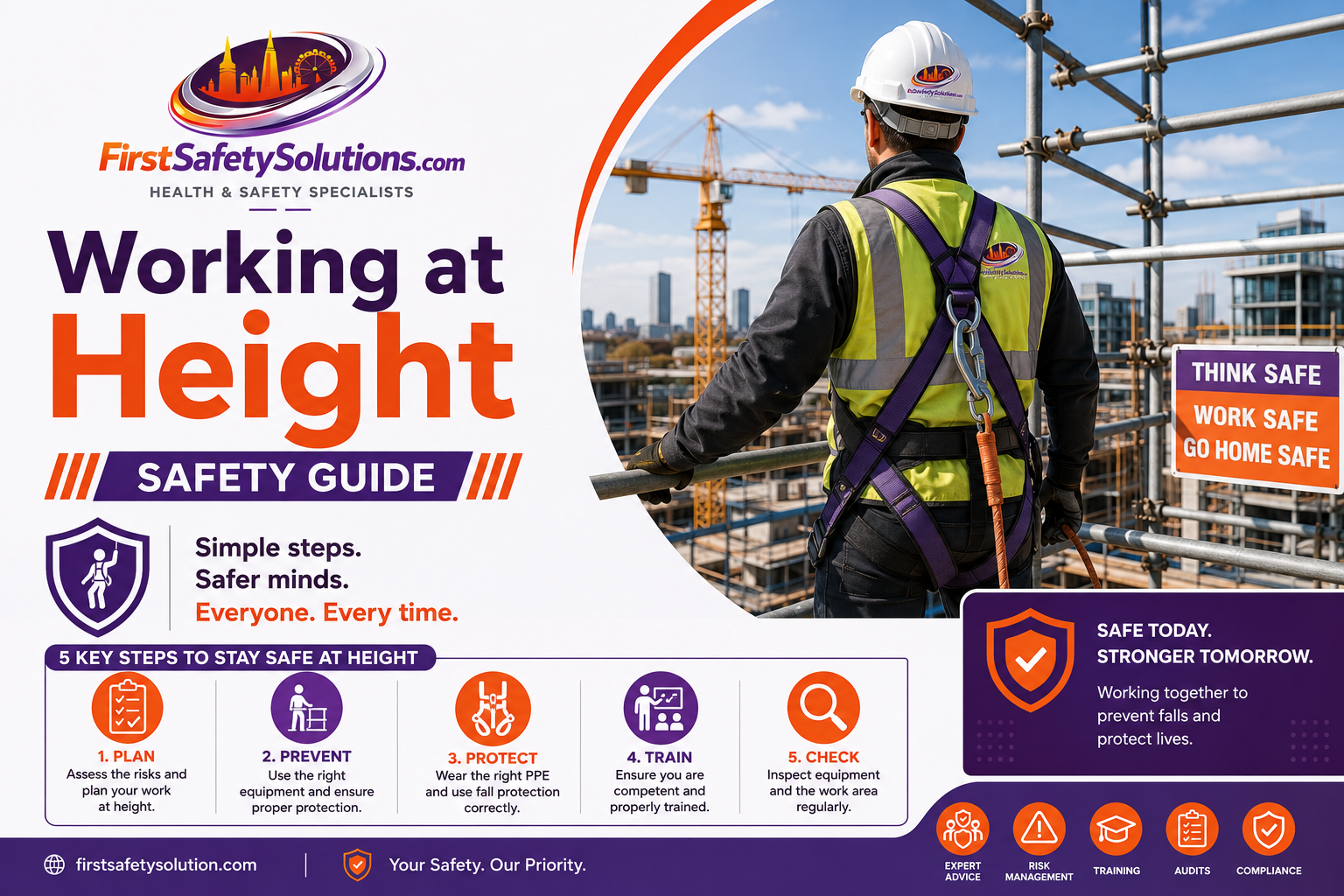
Working at Height Safety Guide
Working at height is one of the most dangerous activities in many industries across the UK. Every year, serious injuries and fatalities happen because workers fall from ladders, roofs, scaffolding, platforms, or other elevated areas. These accidents can have devastating effects on workers, businesses, and families. Parents often search online about workplace safety because they want reassurance that loved ones working in construction, maintenance, roofing, and industrial jobs are protected from dangerous working conditions. Proper working at height safety procedures help reduce accidents and create safer workplaces for everyone.
Businesses that ignore working at height safety risks may face legal penalties, financial losses, and serious harm to employees. Following correct safety rules helps workers stay protected while improving compliance and productivity. Professional health and safety consultancy services can help businesses improve working at height safety standards and reduce workplace risks. This guide explains everything UK workers and employers need to know about working at height safety, including important regulations, safety procedures, PPE, risk assessments, and accident prevention methods.
What Does Working at Height Mean?
Working at height refers to any work activity where a person could fall and injure themselves.
This includes work carried out on:
- Ladders
- Roofs
- Scaffolding
- Platforms
- Elevated work areas
- Construction structures
- Mobile access towers
- Cherry pickers
Even small falls can cause serious injuries.
Many workers believe working at height only applies to very high places, but accidents can happen from relatively low heights as well. This is why proper working at height safety procedures are extremely important in all workplaces.
Why Working at Height Safety Is Important
Falls from height remain one of the leading causes of workplace injuries and fatalities in the UK.
Poor working at height safety practices can lead to:
- Serious injuries
- Broken bones
- Head injuries
- Long-term disabilities
- Fatal accidents
- Emotional stress for families
- Financial losses
- Legal action
Parents often worry about family members working in high-risk industries because accidents at height can change lives permanently.
Businesses that invest in working at height safety usually experience the following:
- Fewer accidents
- Better employee confidence
- Improved productivity
- Stronger legal compliance
- Better workplace reputation
According to the Health and Safety Executive (HSE), employers must properly manage risks related to working at height.
Understanding UK Working at Height Regulations
UK businesses must follow the Work at Height Regulations 2005.
These regulations require employers to:
- Avoid unnecessary work at height
- Assess workplace risks
- Use suitable equipment
- Provide employee training
- Inspect equipment regularly
- Prevent falls whenever possible
The regulations apply to many industries, including construction, maintenance, warehousing, roofing, telecommunications, and facilities management.
Failure to follow these rules can result in:
- Fines
- Legal penalties
- Project delays
- Workplace accidents
- Reputation damage
Common Working at Height Hazards
Workers should understand common hazards associated with elevated work.
These hazards include:
- Unstable ladders
- Unsafe scaffolding
- Slippery surfaces
- Falling objects
- Poor weather conditions
- Weak roof surfaces
- Inadequate fall protection
- Unsafe access equipment
Identifying these hazards early helps businesses improve working at height safety and reduce accident risks.
Risk Assessments for Working at Height Safety
Risk assessments are one of the most important parts of workplace safety management. A risk assessment identifies hazards and explains how risks will be controlled.
Working at height safety risk assessments may include:
- Ladder safety
- Scaffold inspections
- Fall protection systems
- Roof access procedures
- Emergency rescue plans
- Weather conditions
- Equipment inspections
Employers should ensure workers understand the risks involved before starting elevated work activities. Strong working at height safety procedures help businesses reduce incidents and improve compliance.
Choosing the Right Equipment
Using proper access equipment is essential for safe working conditions.
Common working at height equipment includes
- Ladders
- Scaffolding
- Mobile towers
- Cherry pickers
- Safety harnesses
- Guardrails
- Fall arrest systems
Equipment should always be suitable for the task being performed. Workers should never use damaged or unstable equipment because this greatly increases accident risks.
Ladder Safety Rules
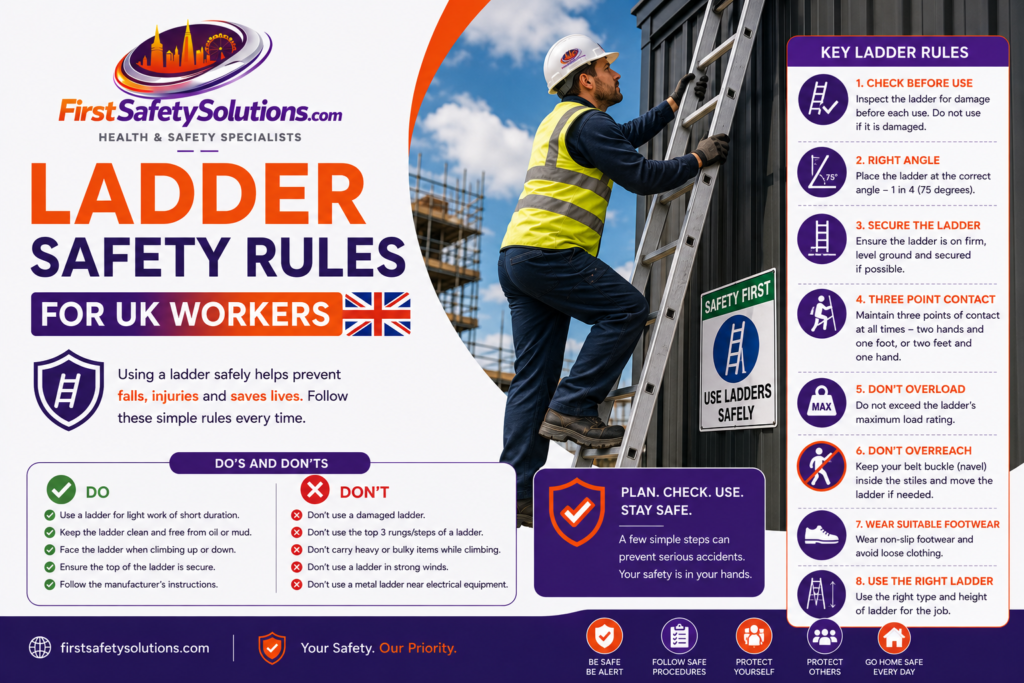
Ladders are commonly used in many workplaces, but incorrect ladder use causes many injuries each year.
Important ladder safety rules include:
- Inspect ladders before use
- Place ladders on stable ground
- Maintain three points of contact
- Avoid overreaching
- Do not use damaged ladders
- Secure ladders properly
Workers should only use ladders for short-duration tasks where safer alternatives are not practical. Good working at height safety training helps employees understand safe ladder use.
Scaffold Safety Procedures
Scaffolding provides safer access for construction and maintenance work when installed correctly.
Scaffold safety rules include:
- Regular inspections
- Proper assembly
- Secure guardrails
- Safe access points
- Weight limit compliance
- Stable foundations
Unsafe scaffolding can collapse and cause serious injuries. Employers should ensure scaffolds are inspected by competent individuals before use.
Fall Protection Systems
Fall protection systems are essential for reducing injury risks during elevated work.
Common fall protection equipment includes:
- Safety harnesses
- Lanyards
- Anchor points
- Safety nets
- Guardrails
Workers should receive proper training before using fall protection equipment. Incorrect harness use may fail to prevent injuries during falls.
Importance of PPE in Working at Height Safety
Personal protective equipment plays a major role in accident prevention.
Essential PPE may include:
- Hard hats
- Safety footwear
- Gloves
- High-visibility clothing
- Fall arrest harnesses
Workers should inspect PPE regularly to ensure it remains safe and effective. Employers must provide suitable PPE and training for employees.
Working on Roofs Safely
Roof work is especially dangerous because of fragile surfaces, edges, and weather conditions.
Roof safety procedures may include:
- Edge protection systems
- Safety harnesses
- Roof ladders
- Fragile surface markings
- Restricted access areas
Weather conditions such as rain, snow, and strong winds increase risks significantly. Businesses should avoid unnecessary roof work during dangerous weather.
Weather Risks and Height Safety
Poor weather conditions create additional hazards for elevated work.
Weather-related dangers include:
- Slippery surfaces
- Reduced visibility
- Strong winds
- Ice formation
- Equipment instability
Employers should monitor weather forecasts and stop unsafe activities when necessary. Good planning improves working at height safety and reduces unnecessary risks.
Training Requirements for Working at Height Safety
Employee training is essential for safe workplace practices.
Training may include:
- Ladder safety
- Harness use
- Scaffold awareness
- Emergency procedures
- Risk assessments
- PPE use
Well-trained workers are more likely to follow proper working at height safety procedures and avoid dangerous mistakes. Businesses investing in training usually experience fewer workplace accidents.
Emergency Procedures and Rescue Plans
Every workplace should have emergency plans for working at height incidents.
Emergency planning may include:
- Rescue procedures
- First aid arrangements
- Emergency contacts
- Evacuation plans
- Incident reporting systems
Quick responses during emergencies can save lives and reduce injury severity. Workers should understand emergency procedures before beginning elevated work.
The Importance of Supervision
Supervisors play a major role in maintaining workplace safety.
Supervisors should:
- Monitor worker behaviour
- Conduct inspections
- Enforce safety procedures
- Identify hazards
- Ensure compliance
Strong supervision helps improve working at height safety and reduce unsafe practices.
Manual Handling Risks at Height
Carrying heavy materials while working at height increases accident risks.
Workers should:
- Avoid carrying excessive loads
- Use lifting equipment where possible
- Maintain balance
- Keep work areas organised
Manual handling injuries can become more serious when combined with elevated work environments.
Common Mistakes Workers Make
Many workplace accidents happen because workers ignore safety procedures.
Common mistakes include:
- Overreaching from ladders
- Skipping harness use
- Using damaged equipment
- Ignoring inspections
- Working during poor weather
- Standing on unsafe surfaces
Businesses should encourage workers to report unsafe conditions immediately.
Why Employers Must Prioritise Height Safety
Employers have legal responsibilities to protect employees from workplace risks.
Good working at height safety management helps businesses
- Reduce accidents
- Improve productivity
- Avoid penalties
- Protect reputation
- Improve employee confidence
Companies that ignore safety standards may face serious legal and financial consequences.
Mental Health and Worker Wellbeing
Workplace safety also affects mental well-being.
Workers exposed to unsafe conditions may experience:
- Stress
- Anxiety
- Fatigue
- Reduced confidence
Safe workplaces help employees feel more secure and supported. Parents searching online for workplace safety information often want reassurance that family members are protected physically and emotionally.
The Role of Safety Audits
Safety audits help businesses identify weaknesses in safety systems.
Audits may review:
- Equipment condition
- Worker behaviour
- PPE compliance
- Risk assessments
- Emergency planning
- Training records
Regular audits improve working at height safety and help businesses maintain compliance standards.
Technology and Modern Workplace Safety
Modern technology is helping businesses improve workplace safety systems.
Examples include:
- Digital inspections
- Safety monitoring software
- Drones for inspections
- Online safety training
- Wearable safety devices
Technology helps businesses identify hazards more quickly and improve communication.
Creating a Positive Safety Culture
A strong safety culture encourages everyone to take responsibility for workplace safety.
Positive safety cultures encourage workers to:
- Follow procedures
- Report hazards
- Use PPE correctly
- Support colleagues
- Participate in training
Managers play an important role in encouraging safe behavior and maintaining strong working at height safety standards.
How Working at Height Safety Protects Families
Workplace accidents affect more than employees alone. Families are also impacted emotionally and financially when workers are injured. Parents often search online about working at height safety because they want reassurance that loved ones are protected in dangerous industries. Businesses that improve workplace safety help workers return home safely every day.
The Financial Impact of Workplace Accidents
Poor workplace safety can become very expensive for businesses.
Accidents may lead to:
- Compensation claims
- Insurance increases
- Legal penalties
- Delayed projects
- Lost productivity
- Reputation damage
Investing in strong working at height safety systems often saves businesses money in the long term.
Maintaining Compliance Over Time
Workplace safety should not stop after initial training or inspections.
Businesses should regularly:
- Review procedures
- Conduct refresher training
- Inspect equipment
- Update risk assessments
- Improve safety systems
Continuous improvement helps businesses maintain compliance and reduce future risks.
Future Trends in Working at Height Safety
Safety expectations continue to increase across industries.
Future workplace safety trends may include:
- Advanced fall detection systems
- Smart wearable technology
- Digital compliance tracking
- Improved online training
- Better rescue equipment
Businesses that invest in modern working at height safety systems are usually better prepared for future industry changes.
How First Safety Solution Can Help
First Safety Solution supports businesses needing help with working at height safety, including:
- Risk assessments
- Workplace inspections
- Safety audits
- Employee training
- Health and safety consultancy
- Compliance support
Professional guidance helps businesses create safer workplaces while improving legal compliance and reducing accident risks.
Conclusion
Working at height safety is one of the most important parts of workplace protection in high-risk industries. Falls from height can cause serious injuries, financial losses, and emotional stress for workers and families. From proper PPE and ladder safety to risk assessments and emergency planning, every safety measure plays an important role in preventing accidents. Employers and workers must work together to improve working at height safety standards and create safer working environments where employees feel protected and confident. Investing in workplace safety not only improves compliance but also protects workers, families, businesses, and future careers.
🔗 Learn more or book at firstsafetysolution.com
📞 Call Now: 02034888123 | 07501170101
📍 Visit Us: Quantum Offices, Mountview House, 212 High Rd, Ilford IG1 1QB