Manual Handling Safety Tips for Workers
Manual handling is one of the most common workplace activities across the UK. Workers regularly lift, carry, push, pull, move, or support objects in industries such as construction, warehousing, manufacturing, retail, healthcare, and logistics. While these tasks may appear simple, poor lifting techniques and unsafe working practices can lead to serious injuries. Parents often search online about workplace safety because they want reassurance that loved ones working in physically demanding jobs are protected from avoidable injuries and long-term health problems. Unsafe manual handling can affect a worker’s health, income, confidence, and future career opportunities.
Proper manual handling safety procedures help reduce workplace injuries, improve employee wellbeing, and create safer working environments. Businesses that invest in workplace safety often experience fewer accidents, better productivity, and stronger legal compliance. Professional health and safety consultancy services can help businesses improve manual handling safety standards and reduce workplace risks. This guide explains everything workers and employers need to know about manual handling safety, including lifting techniques, workplace hazards, employer responsibilities, training requirements, and injury prevention methods.
What Is Manual Handling Safety?
Manual handling safety refers to safe working practices used when lifting, carrying, pushing, pulling, or moving objects in the workplace.
Manual handling tasks may include the following:
- Lifting boxes
- Carrying materials
- Moving equipment
- Pushing trolleys
- Pulling loads
- Supporting machinery
- Handling deliveries
Without proper manual handling safety procedures, workers may suffer serious injuries. Good workplace safety practices help reduce physical strain and improve employee protection.
Why Manual Handling Safety Is Important
Unsafe lifting and poor working techniques are major causes of workplace injuries in the UK.
Manual handling accidents may lead to the following:
- Back injuries
- Muscle strain
- Joint damage
- Neck pain
- Long-term disabilities
- Lost productivity
- Financial losses
Parents often worry about loved ones working in physically demanding industries because injuries can affect long-term health and daily life.
Businesses that improve manual handling safety usually experience:
- Fewer workplace injuries
- Better employee confidence
- Reduced absence rates
- Improved productivity
- Stronger legal compliance
UK Manual Handling Regulations
UK employers have legal responsibilities to protect workers from lifting-related injuries.
The Manual Handling Operations Regulations require employers to
- Avoid unnecessary lifting tasks
- Assess workplace risks
- Reduce injury risks
- Provide employee training
- Use lifting equipment where necessary
Failure to follow manual handling safety regulations may result in:
- Legal penalties
- Compensation claims
- Increased insurance costs
- Workplace injuries
- Reputation damage
Businesses should also follow official guidance from the Health and Safety Executive (HSE) to improve workplace lifting safety and compliance.
Common Manual Handling Injuries
Poor manual handling safety practices can cause many different injuries.
Common injuries include:
- Back pain
- Muscle strains
- Shoulder injuries
- Knee damage
- Hernias
- Joint problems
Some injuries develop slowly over time due to repeated lifting and poor posture. Workers should report discomfort early before problems become more serious.
Understanding Workplace Manual Handling Hazards
Manual handling risks can exist in almost every workplace.
Common hazards include:
- Heavy loads
- Awkward objects
- Poor posture
- Repetitive movements
- Slippery floors
- Limited space
- Uneven surfaces
Identifying these hazards helps businesses improve manual handling safety procedures and reduce accident risks.
Safe Lifting Techniques
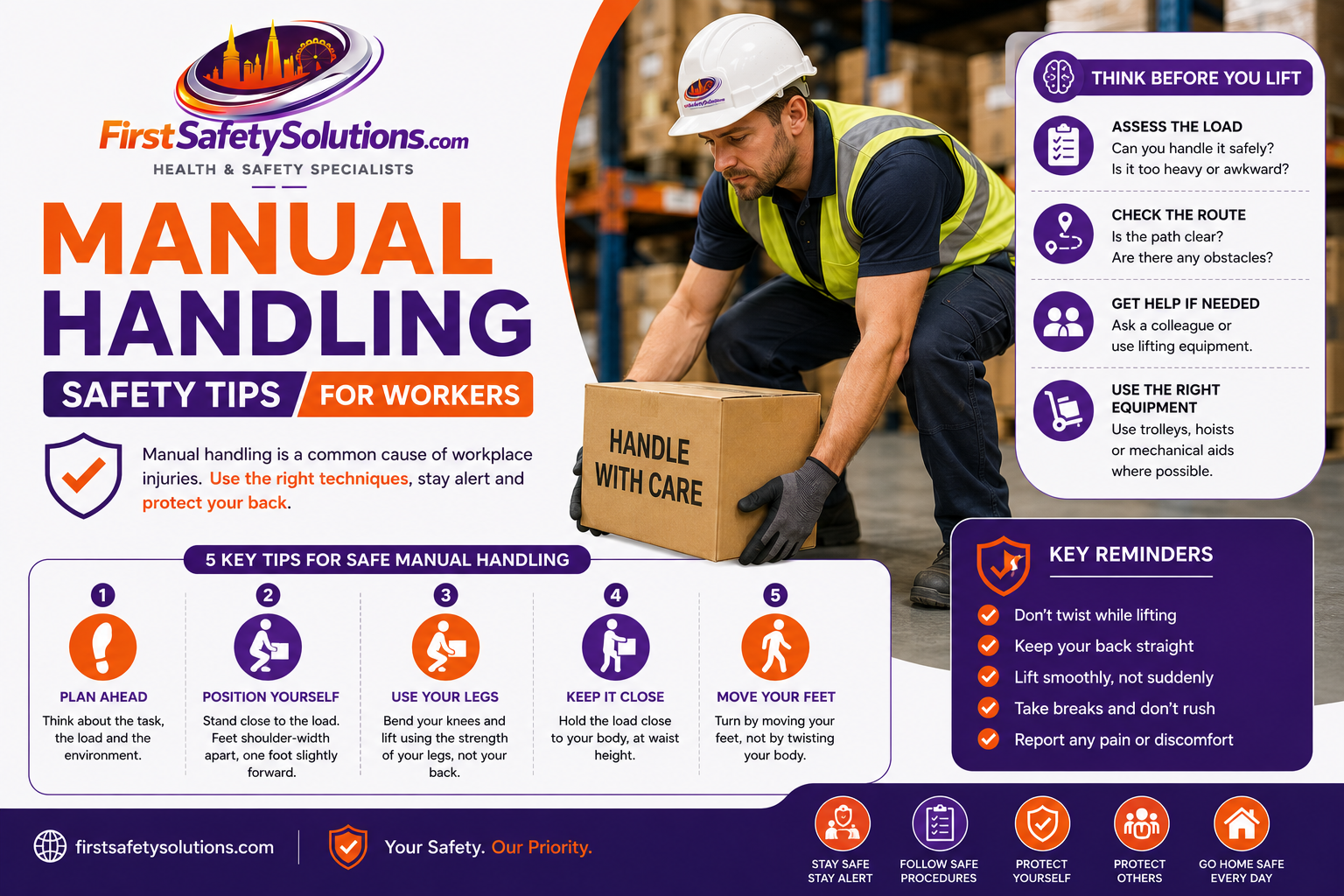
Using correct lifting techniques is one of the most important parts of workplace safety.
Workers should:
- Plan the lift before starting
- Keep feet shoulder-width apart
- Bend the knees
- Keep the back straight.
- Hold loads close to the body
- Avoid twisting movements
- Lift smoothly
Good manual handling safety practices help reduce strain on muscles and joints.
Importance of Risk Assessments
Risk assessments help employers identify workplace hazards and reduce lifting-related injuries.
Manual handling risk assessments may review the following:
- Load weight
- Object shape
- Lifting distance
- Working environment
- Worker capability
- Repetitive tasks
Strong manual handling safety systems begin with proper risk assessments.
Why Training Matters
Employee training is essential for workplace protection.
Workers should understand:
- Safe lifting techniques
- Workplace hazards
- Proper posture
- Use of lifting equipment
- Emergency procedures
Well-trained employees are more likely to follow safe working practices consistently. Businesses investing in manual handling safety training often experience fewer workplace accidents.
Using Mechanical Lifting Equipment
Mechanical aids help reduce physical strain on workers.
Examples include:
- Forklifts
- Trolleys
- Hoists
- Conveyor systems
- Pallet trucks
Employers should encourage workers to use lifting equipment whenever possible instead of carrying heavy loads manually.
Team Lifting Procedures
Some loads are too heavy or awkward for one person to lift safely.
Team lifting may be necessary when:
- Objects are oversized.
- Loads are unstable.
- Visibility is restricted
- Weight exceeds safe limits
Workers should communicate clearly during team lifting tasks. Good teamwork improves manual handling safety and reduces injury risks.
Workplace Housekeeping and Safety
Poor housekeeping can increase manual handling hazards.
Businesses should:
- Keep walkways clear
- Remove obstacles
- Clean spills immediately
- Organize storage areas
- Maintain proper lighting
Safe working environments improve workplace efficiency and reduce accidents.
Manual Handling Safety in Construction
Construction workers regularly lift heavy materials and equipment.
Construction manual handling hazards may include the following:
- Cement bags
- Bricks
- Timber
- Tools
- Machinery parts
Unsafe lifting on construction sites can lead to serious injuries.
Construction businesses should provide suitable training and lifting equipment to improve workplace safety.
Manual Handling in Warehouses
Warehouse workers frequently move stock, deliveries, and equipment.
Warehouse safety risks may include:
- Repetitive lifting
- Heavy boxes
- Fast-paced work environments
- Limited space
Employers should organize storage systems properly to reduce unnecessary strain on workers.
Office Manual Handling Risks
Even office workers may face manual handling hazards.
Office risks may include:
- Moving furniture
- Lifting equipment
- Carrying files
- Repetitive movements
Businesses should not assume office environments are free from lifting-related risks.
Importance of Proper Posture
Poor posture during lifting increases strain on the body.
Workers should:
- Avoid bending awkwardly
- Keep loads close
- Maintain balance
- Avoid sudden movements
Good posture is essential for long-term manual handling safety.
Fatigue and Workplace Injuries
Tired workers are more likely to make mistakes during lifting tasks.
Fatigue may reduce:
- Concentration
- Strength
- Coordination
- Awareness
Employers should manage workloads properly and encourage regular breaks.
PPE and Manual Handling Safety
Personal Protective Equipment can help reduce injury risks during lifting tasks.
Useful PPE may include:
- Safety gloves
- Safety footwear
- High-visibility clothing
- Back support equipment where appropriate
Workers should inspect PPE regularly to ensure it remains safe and effective.
Common Manual Handling Mistakes
Many workplace injuries happen because workers ignore safety procedures.
Common mistakes include:
- Lifting too quickly
- Twisting while carrying loads
- Carrying excessive weight
- Ignoring pain or discomfort
- Using poor posture
Businesses should encourage workers to report hazards and unsafe conditions immediately.
Why Employers Must Prioritize Manual Handling Safety
Employers have legal responsibilities to protect workers from workplace hazards.
Good manual handling safety management helps businesses
- Reduce injuries
- Improve productivity
- Avoid compensation claims
- Improve worker confidence
- Protect business reputation
Companies with strong workplace safety systems often appear more professional and responsible.
Emergency Procedures for Workplace Injuries
Businesses should have clear procedures for handling workplace injuries.
Employees should know:
- First aid arrangements
- Reporting systems
- Emergency contacts
- Incident procedures
Quick responses during emergencies help reduce injury severity.
Mental Health and Workplace Safety
Unsafe workplaces can affect mental well-being as well as physical health.
Workers may experience:
- Stress
- Anxiety
- Fear of injury
- Reduced confidence
Safe working environments help employees feel protected and supported. Parents searching online about manual handling safety often want reassurance that loved ones are protected physically and emotionally.
Safety Audits and Workplace Inspections
Safety audits help businesses identify weaknesses in workplace systems.
Audits may review:
- Lifting techniques
- Employee behaviour
- Workplace layout
- Training records
- Equipment condition
Regular inspections improve manual handling safety and workplace compliance.
Technology and Modern Workplace Safety
Modern technology is helping businesses improve workplace safety systems.
Examples include:
- Digital risk assessments
- Smart lifting equipment
- Online safety training
- Wearable safety devices
- Automated handling systems
Technology helps businesses manage manual handling safety more effectively while improving communication and efficiency.
The Financial Impact of Workplace Injuries
Poor workplace safety can become extremely expensive for businesses.
Manual handling injuries may lead to the following:
- Compensation claims
- Increased insurance costs
- Lost productivity
- Employee absence
- Legal penalties
- Reputation damage
Investing in strong manual handling safety systems often saves businesses money in the long term.
Creating a Positive Workplace Safety Culture
A strong workplace safety culture encourages everyone to take responsibility for safety.
Positive workplace cultures encourage workers to
- Follow lifting procedures
- Report hazards
- Support colleagues
- Participate in training
- Use equipment properly
Managers play an important role in encouraging safe behavior and maintaining manual handling safety standards.
How Manual Handling Safety Protects Families
Workplace injuries affect more than employees alone. Families are also impacted emotionally and financially when workers are injured. Parents often search online about manual handling safety because they want reassurance that loved ones are protected in physically demanding workplaces. Businesses that improve workplace safety help workers return home safely every day.
Maintaining Manual Handling Safety Compliance
Workplace safety management should continue regularly.
Businesses should:
- Conduct refresher training
- Update risk assessments
- Inspect lifting equipment
- Review workplace procedures
- Improve safety systems
Continuous improvement helps businesses maintain manual handling safety compliance and reduce future risks.
Future Trends in Manual Handling Safety
Workplace safety expectations continue to increase across industries.
Future trends may include:
- Smart lifting technology
- Automated handling systems
- Digital compliance tracking
- Improved online training
- Advanced workplace monitoring
Businesses that invest in manual handling safety are usually better prepared for future industry changes.
How First Safety Solution Can Help
First Safety Solution supports businesses needing help with manual handling safety, including:
- Workplace risk assessments
- Safety audits
- Employee training
- Workplace inspections
- Health and safety consultancy
- Compliance support
Professional guidance helps businesses improve workplace safety while reducing injury risks and maintaining legal compliance.
Conclusion
Manual handling safety is one of the most important parts of workplace protection across many industries. Unsafe lifting techniques and poor workplace practices can lead to serious injuries, financial losses, and long-term health problems. Proper training, risk assessments, lifting equipment, and strong workplace procedures help businesses reduce accidents and create safer working environments for workers and contractors. Employers must take manual handling safety seriously to improve compliance, protect workers, support families, and reduce long-term business risks.
🔗 Learn more or book at firstsafetysolution.com
📞 Call Now: 02034888123 | 07501170101
📍 Visit Us: Quantum Offices, Mountview House, 212 High Rd, Ilford IG1 1QB