Introduction to SafeContractor Accreditation Cost
For many UK contractors, achieving recognized health and safety accreditation is an important step towards securing larger contracts, improving compliance, and strengthening business credibility. One of the most popular contractor assessment schemes is SafeContractor, which is recognized across a wide range of industries, including construction, engineering, facilities management, maintenance, cleaning, and property services. Before beginning the application, one of the most common questions businesses ask is about the SafeContractor Accreditation Cost. Understanding the likely costs involved helps contractors budget effectively and decide whether accreditation is the right investment for their business.
While there is no single fee that applies to every organization, the SafeContractor Accreditation Cost depends on several factors, including business size, employee numbers, and the level of certification required. In addition to the application fee, businesses should also consider the cost of preparing documentation, updating health and safety policies, and maintaining compliance throughout the year. The good news is that many contractors find the investment worthwhile. Accreditation can improve access to public and private sector tenders, strengthen client confidence, and reduce duplication during procurement. For businesses aiming to grow in 2026 and beyond, recognised health and safety accreditation can deliver significant long-term value.
In this guide, we’ll explain everything you need to know about SafeContractor Accreditation Cost, including the factors that influence pricing, what is included in the fee, additional expenses to consider, and practical tips to help you prepare your budget.
What Is SafeContractor Accreditation?
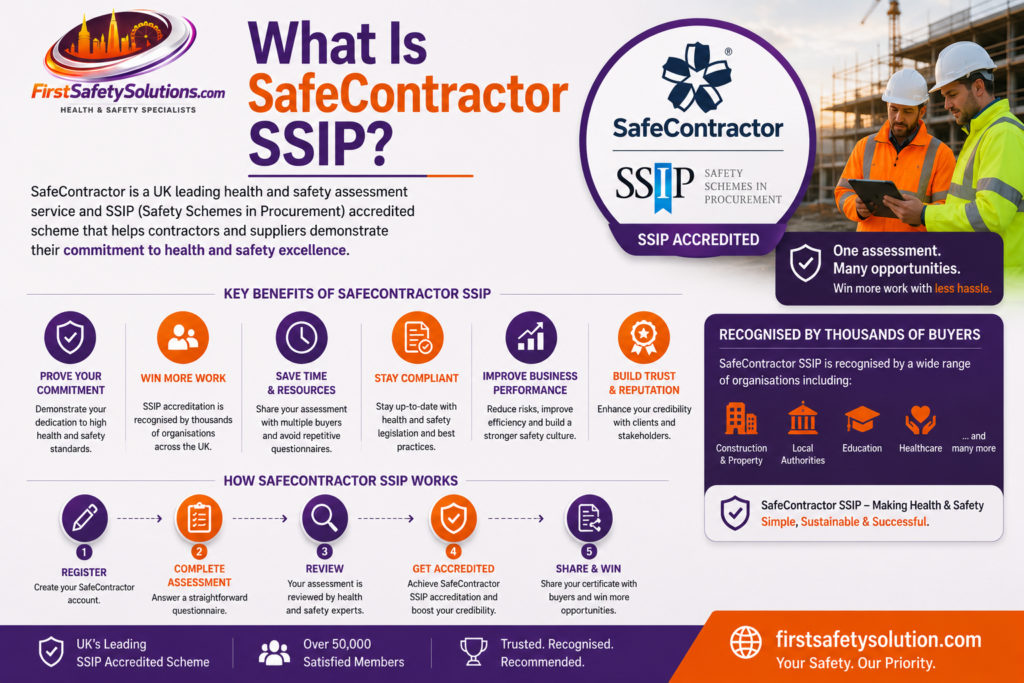
SafeContractor is a recognized contractor accreditation scheme operated by Alcumus. It assesses contractors against established health and safety standards, providing independent confirmation that suitable management systems are in place.
Official SafeContractor website: https://www.safecontractor.com/
The scheme is recognized across multiple industries and forms part of the Safety Schemes in Procurement (SSIP) framework.
Official SSIP website: https://www.ssip.org.uk/
During the assessment, contractors are required to demonstrate effective management of health and safety through documented evidence.
Typical assessment areas include the following:
Health and safety policy
Risk assessments
Method statements
Employee training
Competency records
Insurance certificates
Accident reporting procedures
Equipment inspections
Management systems
Achieving accreditation demonstrates professionalism, legal compliance, and a commitment to protecting employees, clients, and members of the public.
For businesses exploring contractor accreditation options, visit: Accreditation Hub
Why SafeContractor Accreditation Is Worth the Investment
Although businesses naturally consider the SafeContractor Accreditation Cost before applying, it is equally important to consider the return on investment. Many organizations now require recognized health and safety accreditation before allowing contractors to participate in tender opportunities. Without accreditation, businesses may be excluded from projects before pricing or technical capability is even considered.
Accreditation provides several commercial advantages, including:
Increased tender opportunities
Improved business credibility
Greater client confidence
Enhanced professional reputation
Stronger health and safety management
Better supply chain recognition
Reduced procurement duplication
Rather than viewing accreditation purely as an expense, many contractors regard it as a strategic investment that supports long-term business growth. The value of accreditation often extends well beyond compliance by helping businesses compete for contracts that may otherwise be inaccessible.
How Much Does SafeContractor Accreditation Cost in 2026?
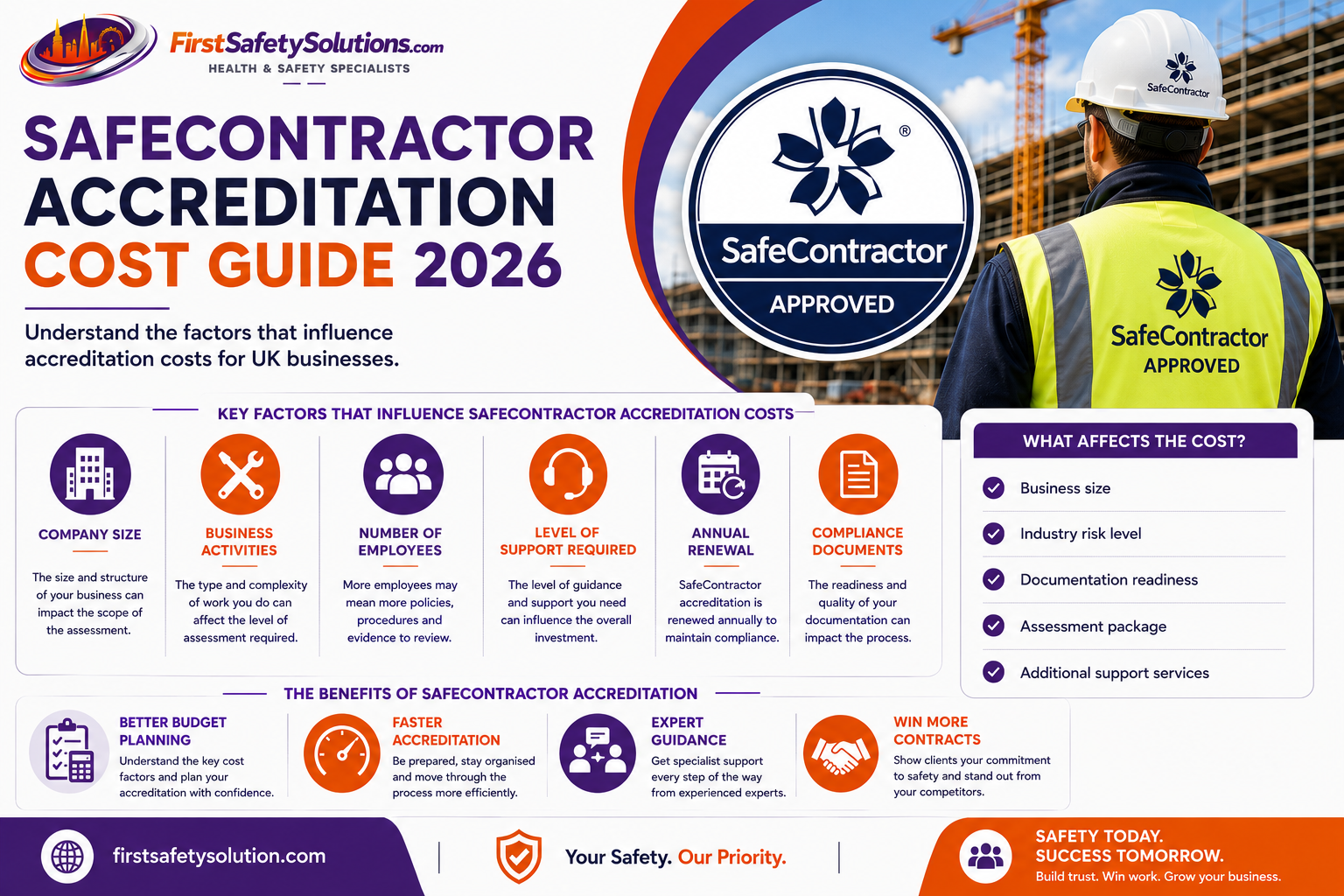
One of the most frequently asked questions from contractors concerns the SafeContractor Accreditation Cost in 2026. The exact cost varies because fees are generally based on the size and structure of the business. Larger organisations with more employees typically pay higher fees than smaller contractors or sole traders.
The overall cost may also depend on:
Number of employees
Type of business activities
Level of accreditation required
Additional assessment modules
Renewal requirements
Although pricing changes periodically, contractors should always obtain the latest fee information directly from the accreditation provider or an approved consultancy. When budgeting for accreditation, businesses should consider both the initial application fee and any internal costs associated with preparing documentation.
Typical Factors That Influence Accreditation Fees
Several factors determine the SafeContractor accreditation cost.
Business Size
Business size is one of the most significant pricing factors. Larger organisations generally require more extensive assessments because they employ more people, undertake more complex work, and maintain larger management systems.
Number of Employees
Assessment fees often increase according to workforce size.
Businesses employing larger numbers of staff usually require additional documentation covering:
Training
Competency
Supervision
Risk management
Type of Work
Higher-risk industries may require more comprehensive health and safety evidence.
Examples include:
Construction
Civil engineering
Roofing
Demolition
Electrical installation
Mechanical engineering
The complexity of operations may influence assessment requirements.
Additional Certification Modules
Some organizations choose optional modules covering areas such as:
Environmental management
Quality management
Corporate social responsibility
Sustainability
Modern slavery
Selecting additional services may increase the overall SafeContractor Accreditation Cost.
Annual Renewal
Contractors should also budget for annual renewal. Maintaining accreditation requires businesses to continue demonstrating compliance with recognised health and safety standards.
Estimated Cost Factors Overview
The following table summarizes the factors that commonly influence accreditation pricing.
| Cost Factor | Impact on Overall Cost |
|---|---|
| Business Size | Higher employee numbers generally increase fees |
| Workforce Size | More documentation may be required |
| Industry Risk | Higher-risk activities often require additional evidence |
| Optional Modules | Additional certifications increase total costs |
| Annual Renewal | Ongoing renewal fees should be considered |
Understanding these factors helps businesses prepare realistic budgets before beginning the application process.
What Is Included in the Accreditation Fee?
When considering the SafeContractor Accreditation Cost, businesses should understand exactly what the accreditation fee covers. Although services may vary depending on the chosen package, the standard assessment typically includes the review of your organization’s health and safety management systems.
The assessment usually covers:
Health and safety documentation
Risk management procedures
Insurance verification
Employee competency
Safe systems of work
Accident reporting arrangements
Compliance review
Following successful assessment, contractors receive recognized accreditation that can be used during procurement and tender submissions. Many businesses find that the accreditation fee provides value beyond certification by improving credibility and strengthening client confidence.
Additional Costs to Consider
While the accreditation fee represents the primary expense, businesses should also consider additional costs that may arise during preparation.
Documentation Updates
Some organizations discover that existing health and safety documentation requires updating before assessment.
This may include:
Health and safety policies
Risk assessments
Method statements
Employee handbooks
Emergency procedures
Staff Training
Employees may require additional training to meet current competency requirements. Training investments often improve workplace safety while supporting successful accreditation.
Examples include:
Health and safety awareness
Manual handling
Working at height
First aid
Fire safety
Equipment operation
Professional Consultancy
Many contractors choose to work with experienced health and safety consultants when preparing for accreditation.
Consultants can assist with:
Policy development
Documentation reviews
Compliance audits
Risk assessments
Method statements
Application support
Professional guidance often reduces delays and improves first-time approval rates.
Internal Administration
Businesses should also allow time for:
Collecting documentation
Reviewing policies
Updating records
Uploading evidence
Responding to assessor queries
Although these activities may not involve direct external costs, they still require valuable staff time.
Is SafeContractor Accreditation Cost Good Value?
For many contractors, the answer is yes. While every business should evaluate its own circumstances, accreditation often provides benefits that extend well beyond the initial investment.
Potential returns include:
More contract opportunities
Improved tender success
Stronger client relationships
Better compliance
Reduced procurement duplication
Improved business reputation
Enhanced employee confidence
Businesses planning to grow within competitive sectors frequently find that recognized accreditation supports long-term commercial success.
SafeContractor Accreditation Cost vs CHAS Accreditation Cost
Many contractors compare the SafeContractor Accreditation Cost with the cost of CHAS before deciding which accreditation scheme best suits their business. Both schemes are widely recognised across the UK and are members of the Safety Schemes in Procurement (SSIP), but pricing structures may vary depending on the size of your business and the level of assessment required. The most important factor when choosing between schemes should not be price alone. Consider which accreditation your clients recognise or require, the industries you work in, and the long-term value it can bring to your business.
| Feature | SafeContractor | CHAS |
|---|---|---|
| SSIP Recognised | ✔ | ✔ |
| Health and Safety Assessment | ✔ | ✔ |
| Suitable for SMEs | ✔ | ✔ |
| Accepted by Public & Private Sector | ✔ | ✔ |
| Annual Renewal Required | ✔ | ✔ |
If a major client specifically requests CHAS, it may be more beneficial to obtain CHAS accreditation. Likewise, if your customers prefer SafeContractor, investing in SafeContractor accreditation could improve your chances of securing work.
SafeContractor Accreditation Cost vs SMAS Accreditation Cost
Another common comparison is between the SafeContractor Accreditation Cost and SMAS accreditation. Like SafeContractor, SMAS is recognised under the SSIP framework and assesses contractors against recognised health and safety standards.
| Feature | SafeContractor | SMAS |
|---|---|---|
| SSIP Member | ✔ | ✔ |
| Independent Assessment | ✔ | ✔ |
| Health and Safety Review | ✔ | ✔ |
| Suitable for Sole Traders | ✔ | ✔ |
| Annual Renewal | ✔ | ✔ |
Rather than choosing the lowest-priced option, businesses should consider which accreditation is most widely accepted by their target clients and industry sector.
How to Reduce SafeContractor Accreditation Cost
Although accreditation is an investment, there are several ways to reduce unnecessary expenses and improve value for money.
Prepare Your Documents Early
Gather all required documentation before beginning your application.
Typical documents include the following:
Health and safety policy
Risk assessments
Method statements
Insurance certificates
Training records
Accident reporting procedures
Having these documents ready can reduce delays and minimize additional consultancy costs.
Keep Policies Up to Date
Businesses that regularly review their health and safety documentation are less likely to require major updates before applying. Review your policies at least once a year or whenever significant changes occur.
Maintain Accurate Records
Well-organized records make the assessment process much easier.
Keep digital copies of:
Training certificates
Equipment inspections
Insurance documents
Employee competency records
Good record management can save both time and money.
Invest in Ongoing Compliance
Instead of waiting until renewal, maintain compliance throughout the year. This approach often reduces future preparation costs and makes annual renewals much simpler.
Seek Professional Support
Many contractors save time by working with experienced health and safety consultants. Professional guidance helps identify compliance gaps before submission and reduces the likelihood of delays or repeated assessments.
Common Mistakes That Increase Costs
Many businesses spend more than necessary because they make avoidable mistakes during the application process.
Incomplete Documentation
Missing documents often result in additional work and delays.
Always check that your application includes:
Health and safety policy
Risk assessments
Insurance certificates
Training records
Method statements
Outdated Policies
Old policies that no longer reflect current business activities may require revision before approval. Keeping documents current reduces unnecessary work.
Poor File Organisation
Disorganized documentation makes it harder to complete applications efficiently.
Create separate folders for:
Policies
Risk assessments
Insurance
Training
Equipment inspections
Ignoring Compliance Throughout the Year
Businesses that only think about compliance when renewal is due often spend more updating documentation at the last minute, increasing their SafeContractor Accreditation Cost. Regular reviews are usually more cost-effective.
Is SafeContractor Accreditation Cost Worth It for Small Businesses?
Many small businesses worry that the SafeContractor Accreditation Cost may be beyond their budget. However, the value should be measured against potential business opportunities rather than the initial fee alone.
For many SMEs, accreditation can provide:
Greater access to tenders
Improved credibility
Better client confidence
Stronger professional reputation
Long-term business growth
If accreditation helps secure even one additional commercial contract, the investment may quickly pay for itself.
SafeContractor Accreditation Cost Checklist
Before applying, use this checklist to help manage your SafeContractor Accreditation Cost, avoid unnecessary expenses, and improve your chances of first-time approval.
✔ Review your health and safety policy.
✔ Update risk assessments.
✔ Review method statements.
✔ Check insurance certificates.
✔ Update employee training records.
✔ Organise competency evidence.
✔ Prepare accident reporting procedures.
✔ Review equipment inspection records.
✔ Ensure company details are accurate.
✔ Gather supporting documentation before submitting your application.
Completing these tasks before applying can reduce delays and avoid unnecessary additional work.
How First Safety Solution Can Help
Preparing for accreditation requires time, organisation, and accurate documentation. First Safety Solution supports contractors throughout the application process by helping businesses prepare the information needed for successful accreditation while managing their SafeContractor Accreditation Cost effectively.
Services include:
Health and safety policy preparation
Risk assessment reviews
Method statement development
Documentation audits
Compliance reviews
Application support
Ongoing health and safety advice
Useful resources:
Working with experienced consultants can improve efficiency, reduce delays, and help ensure your business meets recognised health and safety standards while keeping your SafeContractor Accreditation Cost under control.
Frequently Asked Questions
1. How much is the SafeContractor Accreditation Cost?
The SafeContractor Accreditation Cost varies depending on factors such as business size, employee numbers, and the level of accreditation required. Always check the latest pricing with the accreditation provider.
2. Does the accreditation fee include document preparation?
No. The standard fee generally covers the assessment process. Businesses may need to prepare or update their own documentation before applying.
3. Are there annual renewal costs?
Yes. SafeContractor accreditation requires periodic renewal to maintain recognized certification.
4. Can sole traders apply?
Yes. Sole traders can apply provided they meet the assessment requirements and have appropriate health and safety arrangements in place.
5. Is SafeContractor recognized under SSIP?
Yes, SafeContractor is recognized under the Safety Schemes in Procurement framework.
6. Can professional consultants help reduce application costs?
Professional support can help avoid delays, improve documentation quality, and reduce the likelihood of costly amendments during the assessment.
7. Is SafeContractor accreditation worth the investment?
For many contractors, accreditation improves tender opportunities, client confidence, and overall business credibility, making it a worthwhile long-term investment.
8. Which is better: SafeContractor, CHAS, or SMAS?
The best choice depends on your clients’ requirements, the industries you work in, and the type of projects you undertake. All three schemes are recognised under SSIP.
Conclusion
Understanding the SafeContractor Accreditation Cost is an important part of planning for successful accreditation. While the total investment varies depending on your business size, activities, and documentation requirements, accreditation offers significant long-term value for contractors operating in competitive industries.
Rather than focusing solely on the initial fee, businesses should consider the wider benefits, including improved compliance, stronger client confidence, easier procurement, and increased opportunities to secure new contracts. By preparing your documentation carefully and maintaining effective health and safety systems throughout the year, you can maximise the return on your investment and reduce unnecessary costs. If you need expert guidance with preparing your application, reviewing your health and safety documentation, or improving compliance, First Safety Solution can provide professional support to help your business manage the SafeContractor Accreditation Cost while achieving accreditation efficiently and confidently.