Introduction to SafeContractor Accreditation
Health and safety compliance has become a key requirement for contractors across the UK. Whether you operate in construction, facilities management, engineering, cleaning, maintenance, or another high-risk industry, clients increasingly expect contractors to demonstrate recognised standards before awarding contracts. One of the most respected schemes available is SafeContractor Accreditation.
Many organisations, including local authorities, housing associations, major contractors, and private companies, now require suppliers to hold recognised health and safety accreditation as part of their procurement process. Achieving SafeContractor Accreditation demonstrates that your business has effective health and safety management systems in place and meets recognised industry standards.
Beyond compliance, accreditation can help improve your company’s reputation, increase client confidence, simplify procurement, and open the door to larger contract opportunities. Businesses that invest in recognised accreditation often find themselves better positioned to compete in today’s increasingly compliance-focused marketplace.
In this complete guide, we’ll explain everything you need to know about SafeContractor Accreditation, including how it works, who needs it, the application process, required documentation, and how your business can prepare for successful approval.
What Is SafeContractor Accreditation?
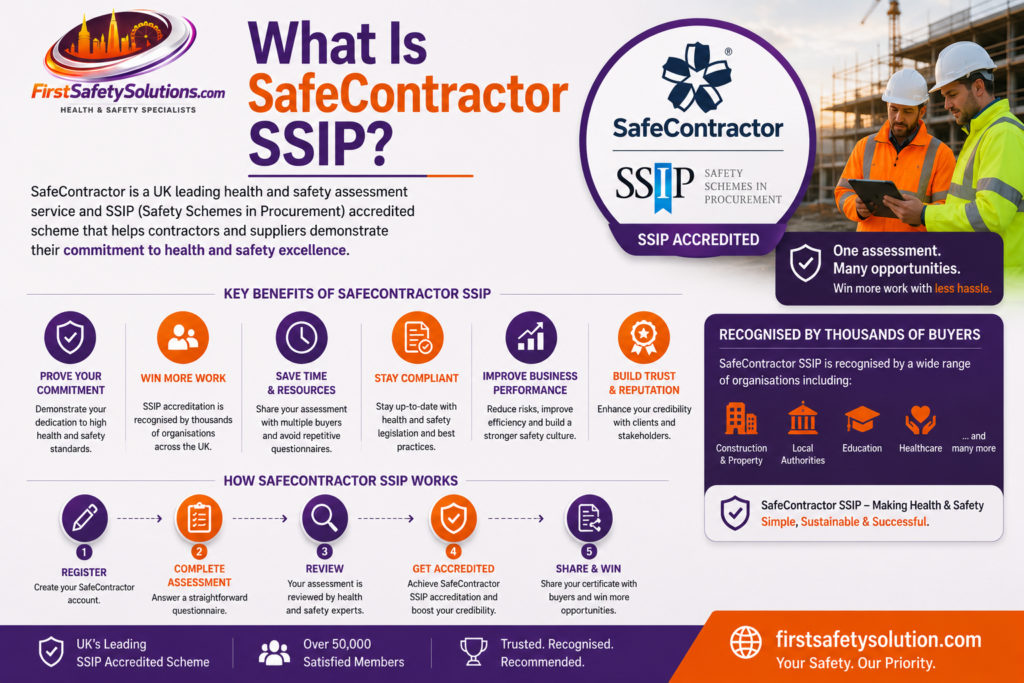
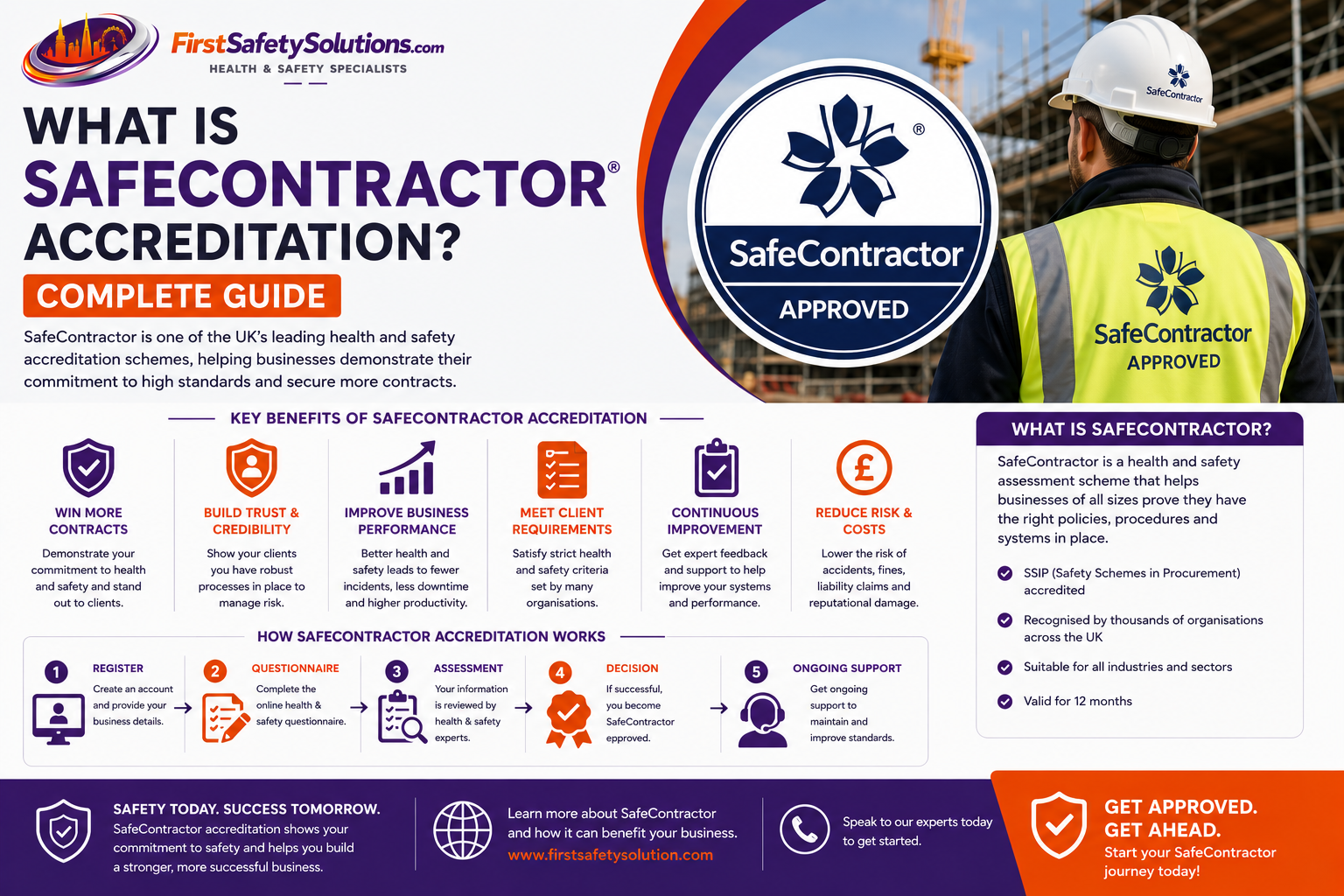
SafeContractor Accreditation is a recognised contractor accreditation scheme operated by Alcumus SafeContractor. The scheme assesses contractors against recognised health and safety standards, helping organisations identify competent suppliers that effectively manage workplace risks.
Official SafeContractor website: https://www.safecontractor.com/
The scheme is widely recognised across numerous industries and forms part of the Safety Schemes in Procurement (SSIP) framework.
Official SSIP website: https://www.ssip.org.uk/
The purpose of SafeContractor Accreditation is to provide independent verification that contractors have appropriate health and safety management systems in place. Rather than every client carrying out their own assessment, businesses can demonstrate compliance through a recognized accreditation.
During assessment, contractors are typically required to provide evidence covering:
Health and safety policy
Risk assessments
Method statements
Training records
Insurance certificates
Accident reporting procedures
Competency evidence
Equipment inspection records
Management systems
Once approved, businesses receive accreditation that can be used when tendering for work across both public and private sectors.
For businesses exploring multiple contractor accreditation schemes, visit: https://firstsafetysolution.com/accreditation/
Why SafeContractor Accreditation Matters in 2026
Health and safety expectations continue to evolve across the UK construction and contracting sectors. Clients are placing greater emphasis on contractor competence, legal compliance, and effective risk management than ever before. This is why SafeContractor Accreditation has become increasingly valuable in 2026. Many procurement teams now require contractors to demonstrate recognised health and safety standards before they are eligible to bid for projects.
Holding accreditation helps businesses:
Demonstrate compliance with UK health and safety legislation
Improve credibility
Increase client confidence
Strengthen tender submissions
Reduce procurement barriers
Improve supply chain approval
As supply chains become increasingly focused on compliance, accredited contractors often enjoy a competitive advantage over businesses without recognized certification. Whether you operate as a sole trader or manage a large workforce, SafeContractor Accreditation provides reassurance that your business meets recognized industry expectations.
Who Needs SafeContractor Accreditation?
One common misconception is that SafeContractor Accreditation is only suitable for large construction companies. In reality, businesses of many different sizes and industries benefit from becoming accredited.
Typical organizations include:
Construction contractors
Civil engineering companies
Electrical contractors
Mechanical contractors
Plumbing businesses
Roofing contractors
Facilities management companies
Cleaning contractors
Maintenance providers
Landscaping businesses
Security companies
HVAC contractors
Businesses working within high-risk environments often find accreditation particularly valuable because clients place significant emphasis on health and safety competence.
Small Businesses
Small contractors frequently use SafeContractor Accreditation to improve credibility and compete for larger projects. Accreditation demonstrates professionalism and helps smaller businesses satisfy procurement requirements that might otherwise prevent them from bidding.
Medium-Sized Companies
Growing businesses often require recognized accreditation as they expand into larger commercial or public sector markets. Accreditation supports business growth by increasing access to procurement opportunities.
Large Organisations
Larger contractors benefit from accreditation by demonstrating consistency across their health and safety management systems while strengthening client confidence.
Industries That Commonly Require SafeContractor Accreditation
Although originally associated with construction, SafeContractor Accreditation is now recognised across a wide range of industries.
| Industry | Why Accreditation Matters |
|---|---|
| Construction | Demonstrates health and safety competence |
| Civil Engineering | Supports procurement requirements |
| Facilities Management | Strengthens supplier approval |
| Electrical Services | Confirms compliance standards |
| Mechanical Engineering | Demonstrates risk management |
| Cleaning Services | Provides client assurance |
| Landscaping | Supports commercial tenders |
| Security Services | Demonstrates operational competence |
| Property Maintenance | Improves contractor credibility |
The broad acceptance of accreditation means businesses from many sectors can benefit from achieving recognized certification.
How Does the SafeContractor Accreditation Process Work?
The SafeContractor Accreditation process follows a structured assessment designed to verify that contractors have suitable health and safety arrangements in place.
Although every business is different, the process generally follows several key stages.
Step 1: Preparing Documentation
Before beginning your application, gather all required documentation.
This usually includes:
Health and safety policy
Risk assessments
Method statements
Insurance certificates
Training records
Competency evidence
Good preparation significantly improves the likelihood of first-time approval.
Step 2: Completing the Application
Contractors complete an online application providing information about the following:
Company details
Business activities
Workforce
Health and safety management
Insurance arrangements
Accurate information is essential throughout the SafeContractor Accreditation process.
Step 3: Uploading Supporting Evidence
Applicants upload documentation demonstrating compliance with health and safety requirements. Clear, organized evidence helps assessors complete reviews more efficiently.
Step 4: Assessment
Qualified assessors review submitted evidence against recognized standards.
They assess:
Health and safety procedures
Risk management systems
Employee competency
Insurance arrangements
Compliance documentation
If additional information is required, assessors will contact the applicant.
Step 5: Accreditation
Once all assessment requirements have been satisfied, successful applicants receive SafeContractor Accreditation, confirming compliance with recognized health and safety standards.
Typical SafeContractor Accreditation Timeline
Although every application differs, the overall process generally follows a similar timeline.
| Stage | Typical Time |
|---|---|
| Document Preparation | 1–3 weeks |
| Application Submission | 1–2 days |
| Assessment Review | Several working days |
| Additional Information (if required) | Depends on response time |
| Accreditation Approval | Following successful assessment |
Businesses with organized documentation often complete the process more efficiently than those needing to update policies or gather additional evidence.
Requirements for SafeContractor Accreditation
To achieve SafeContractor Accreditation, businesses must demonstrate that they effectively manage health and safety risks and comply with relevant legislation. Assessors typically review several key compliance areas.
Health and Safety Policy
Every contractor should maintain a current health and safety policy that clearly outlines management responsibilities and organizational commitment to workplace safety.
Risk Assessments
Risk assessments identify workplace hazards and explain how those risks are controlled. Assessors expect assessments to reflect actual work activities rather than generic templates.
Method Statements
Method statements explain how work will be carried out safely. These should align with identified risks and demonstrate practical control measures.
Employee Competency
Businesses must provide evidence that employees possess appropriate skills, qualifications, and training.
Examples include:
Training certificates
Professional qualifications
Toolbox talks
Competency records
Insurance
Valid insurance documentation is essential.
Typical requirements include the following:
Public liability insurance
Employer’s liability insurance (where applicable)
Accident Reporting
Businesses should maintain clear procedures for reporting, investigating, and recording workplace incidents.
Documents Needed for SafeContractor Accreditation
Preparing documentation before starting your application is one of the best ways to improve the success of your SafeContractor Accreditation assessment.
The following documents are commonly required:
| Document | Purpose |
|---|---|
| Health and Safety Policy | Demonstrates management commitment |
| Risk Assessments | Identifies workplace hazards |
| Method Statements | Explains safe working methods |
| Public Liability Insurance | Protects against third-party claims |
| Employer’s Liability Insurance | Demonstrates legal compliance |
| Training Records | Confirms employee competency |
| Accident Reporting Procedures | Explains incident management |
| Equipment Inspection Records | Demonstrates maintenance and safety |
| Competency Evidence | Shows workforce qualifications |
Before submission, ensure every document:
Is current
Reflects your business activities
Includes accurate company information
Is easy to read
Meets current legal requirements
Well-prepared documentation not only improves approval success but also reduces delays caused by assessor queries. In the next section, we’ll explore the key business benefits of SafeContractor Accreditation, compare it with CHAS and SMAS, discuss common application mistakes, answer frequently asked questions, and explain how First Safety Solution can help businesses achieve successful accreditation.
Benefits of SafeContractor Accreditation
One of the biggest reasons businesses apply for SafeContractor Accreditation is the wide range of commercial and operational benefits it provides. While achieving accreditation requires preparation and commitment, the long-term advantages often outweigh the investment. Below are some of the key benefits contractors can expect after becoming accredited.
Helps Win More Contracts
Many organizations require recognized health and safety accreditation before inviting contractors to tender for work. Holding SafeContractor Accreditation demonstrates that your business has already been independently assessed, making it easier for procurement teams to evaluate your suitability.
This can increase opportunities to work with:
Local authorities
Government departments
Housing associations
Principal contractors
Commercial developers
Facilities management companies
For many businesses, accreditation opens the door to projects that would otherwise be unavailable.
Demonstrates Health and Safety Compliance
Clients want confidence that contractors operate safely and comply with UK legislation. One of the major benefits of SafeContractor Accreditation is demonstrating your commitment to maintaining high health and safety standards.
The assessment reviews areas including the following:
Health and safety policies
Risk assessments
Employee competency
Insurance
Safe systems of work
Independent verification reassures clients that your business takes compliance seriously.
Improves Business Reputation
Reputation is essential within the construction and contracting industries. Businesses holding SafeContractor Accreditation often enjoy greater trust among clients, suppliers, and business partners.
Accreditation demonstrates:
Professionalism
Competence
Reliability
Commitment to safety
Continuous improvement
These qualities can strengthen long-term business relationships.
Simplifies Procurement
Many procurement teams prefer working with accredited contractors because much of the health and safety assessment has already been completed.
This helps reduce:
Administrative workload
Duplicate assessments
Procurement delays
Repeated requests for documentation
As procurement becomes increasingly compliance-driven, recognized accreditation provides valuable reassurance.
Supports SSIP Recognition
SafeContractor Accreditation forms part of the Safety Schemes in Procurement (SSIP) framework. This means many organizations recognize the assessment as evidence of contractor competence, helping reduce duplication across supply chains. For contractors working with multiple clients, this recognition can save both time and administrative effort.
SafeContractor vs CHAS Accreditation
Businesses often compare SafeContractor Accreditation with CHAS before deciding which scheme best suits their requirements. Both schemes assess contractor health and safety competence and are recognised under SSIP, but individual client requirements may differ.
| Feature | SafeContractor | CHAS |
|---|---|---|
| Health and Safety Assessment | ✔ | ✔ |
| SSIP Recognised | ✔ | ✔ |
| Widely Accepted Across UK | ✔ | ✔ |
| Contractor Pre-Qualification | ✔ | ✔ |
| Independent Assessment | ✔ | ✔ |
In many cases, the choice depends on client preferences, existing procurement requirements, or the sectors in which a business operates.
SafeContractor vs SMAS Accreditation
Another common comparison is between SafeContractor Accreditation and SMAS. Like SafeContractor, SMAS is recognized under SSIP and assesses contractor health and safety management.
| Feature | SafeContractor | SMAS |
|---|---|---|
| Health and Safety Assessment | ✔ | ✔ |
| SSIP Member | ✔ | ✔ |
| Contractor Recognition | ✔ | ✔ |
| Suitable for SMEs | ✔ | ✔ |
| Procurement Support | ✔ | ✔ |
Businesses should always check client requirements before selecting an accreditation scheme. Some clients specify a preferred provider, while others accept any recognized SSIP accreditation.
Common Mistakes When Applying
Although the application process is straightforward, several common mistakes can delay approval.
Incomplete Documentation
Applicants sometimes forget to include:
Insurance certificates
Risk assessments
Training records
Method statements
Missing documents are one of the most common reasons applications require further review.
Generic Templates
Policies and risk assessments should accurately reflect your business. Generic documents copied from online templates rarely provide sufficient evidence.
Outdated Information
Ensure all documentation is current. Expired insurance or outdated policies may delay approval.
Poor Organisation
Uploading clearly labeled files makes the assessment process much easier for both applicants and assessors. Good document management also simplifies future renewals.
SafeContractor Accreditation Checklist
Before submitting your application, ensure you have prepared the following.
✔ Health and Safety Policy
✔ Risk Assessments
✔ Method Statements
✔ Public Liability Insurance
✔ Employer’s Liability Insurance
✔ Employee Training Records
✔ Competency Evidence
✔ Accident Reporting Procedures
✔ Equipment Inspection Records
✔ Current Company Information
✔ Emergency Procedures
Using a checklist helps reduce errors and speeds up the assessment process.
How First Safety Solution Can Help
Preparing for SafeContractor Accreditation can be time-consuming, particularly for businesses applying for the first time. First Safety Solution provides expert support to help contractors prepare documentation, improve compliance, and complete their applications efficiently.
Services include:
Accreditation guidance
Health and safety policy preparation
Risk assessment reviews
Method statement development
Compliance audits
Documentation support
Ongoing health and safety advice
Useful resources:
Accreditation Hub
https://firstsafetysolution.com/accreditation/
CHAS Accreditation
https://firstsafetysolution.com/accreditation/chas-accreditation-uk/
SMAS Accreditation
https://firstsafetysolution.com/accreditation/ssip-smas/
Professional support can reduce delays, improve application quality, and increase the likelihood of first-time approval.
Frequently Asked Questions
1. What is SafeContractor Accreditation?
SafeContractor Accreditation is a recognized contractor assessment scheme that evaluates businesses against health and safety standards to demonstrate competence and compliance.
2. Is SafeContractor Accreditation recognised under SSIP?
Yes. SafeContractor is a member of the Safety Schemes in Procurement (SSIP) framework.
3. Who should apply for SafeContractor Accreditation?
Construction companies, engineering firms, facilities management providers, maintenance contractors, cleaners, landscapers, electricians, plumbers, and many other businesses can benefit from accreditation.
4. How long does SafeContractor Accreditation take?
Times vary depending on document quality, business size, and assessor workload. Well-prepared applications are generally processed more efficiently.
5. Does SafeContractor Accreditation guarantee contracts?
No. Accreditation does not guarantee work, but it strengthens tender submissions and demonstrates recognised health and safety standards.
6. Does SafeContractor Accreditation require renewal?
Yes. Contractors are expected to renew their accreditation periodically to maintain recognised compliance.
7. Can small businesses apply?
Absolutely. Sole traders, SMEs, and larger contractors can all apply provided they meet the relevant assessment requirements.
8. Is professional support necessary?
Professional support is optional, but many contractors choose expert guidance to improve documentation quality and reduce application delays.
Conclusion
SafeContractor Accreditation has become an important benchmark for contractors seeking to demonstrate health and safety competence, strengthen compliance, and improve their chances of securing new business. As procurement standards continue to evolve across the UK, more organizations are looking for independent evidence that contractors operate safely and responsibly.
Achieving SafeContractor Accreditation not only enhances your professional reputation but also simplifies procurement, supports SSIP recognition, and helps build trust with clients across a wide range of industries. Whether you are a sole trader, a growing SME, or a large contractor, investing in accreditation can provide long-term commercial and operational benefits.
By understanding the application process, preparing the required documentation, and maintaining strong health and safety systems, your business can successfully achieve SafeContractor Accreditation and position itself for sustainable growth in an increasingly competitive marketplace.