Introduction to the SafeContractor Accreditation Process
Winning contracts in today’s competitive UK construction and contracting industry requires more than delivering quality workmanship. Clients increasingly expect contractors to demonstrate strong health and safety management before they are approved to work on projects. One of the most recognized ways to achieve this is by completing the SafeContractor Accreditation Process.
Whether you are a sole trader, a small contractor, or a large organization, understanding the SafeContractor Accreditation Process can help you prepare the correct documentation, avoid unnecessary delays, and improve your chances of receiving accreditation at the first attempt. SafeContractor, operated by Alcumus, is one of the UK’s leading contractor accreditation schemes and is recognized by thousands of organizations across construction, engineering, facilities management, maintenance, cleaning, and many other sectors. The accreditation demonstrates that your business has appropriate health and safety management systems, competent employees, and suitable procedures for managing workplace risks.
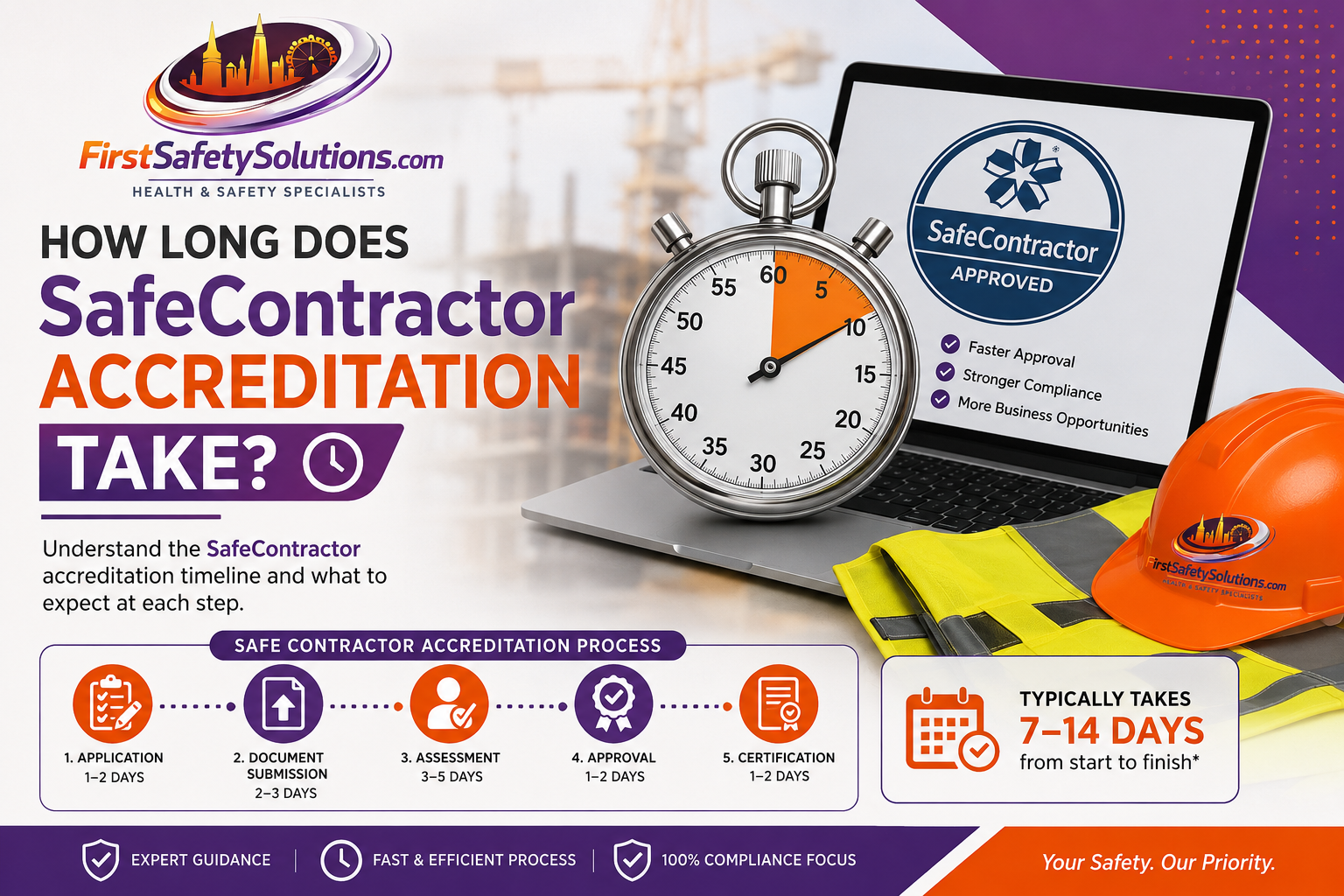
One of the most common questions contractors ask is, “How long does the accreditation take?” The answer depends on several factors, including the quality of your documentation, the complexity of your business, and how quickly any additional information is provided during the assessment.
This guide explains the entire SafeContractor accreditation process, including the typical timeline, every stage of the application, the documents you’ll need, common delays, and practical tips to help your application progress as smoothly as possible.
What Is the SafeContractor Accreditation Process?
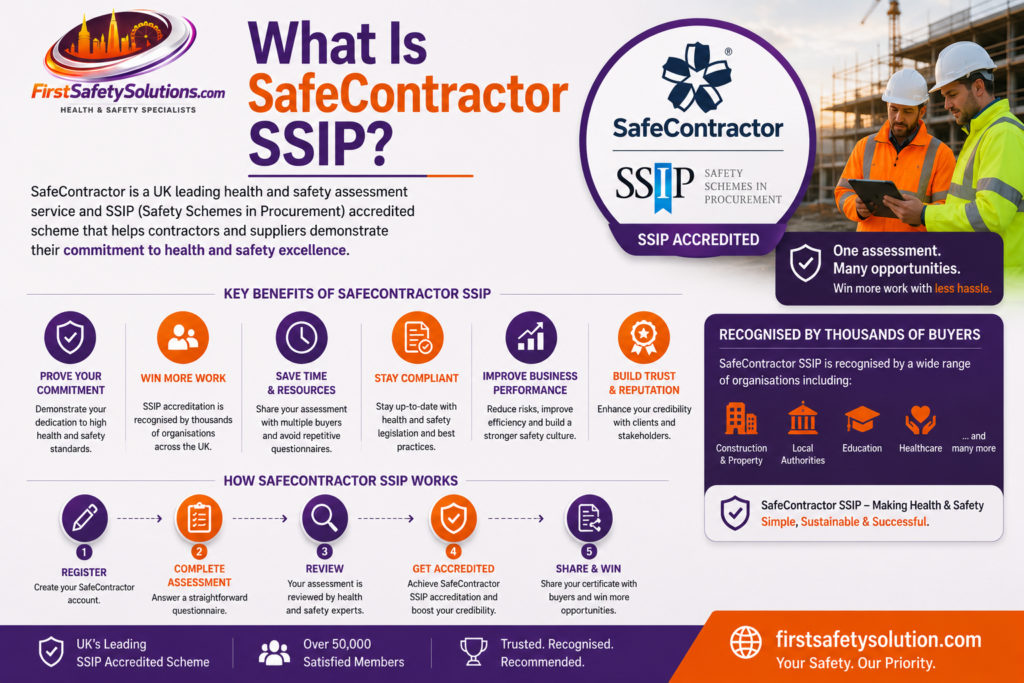
The SafeContractor Accreditation Process is the structured assessment used by Alcumus to determine whether a contractor meets recognised health and safety standards.
Official SafeContractor website: https://www.safecontractor.com/
The scheme is also recognized under the Safety Schemes in Procurement (SSIP) framework.
Official SSIP website: https://www.ssip.org.uk/
Rather than each client carrying out their own health and safety assessment, businesses that successfully complete the SafeContractor Accreditation Process can demonstrate independent verification of their health and safety management systems.
The assessment normally reviews:
Health and safety policies
Risk assessments
Method statements
Employee competency
Insurance documentation
Training records
Accident reporting procedures
Equipment inspections
Management systems
Successfully completing the SafeContractor Accreditation Process helps contractors demonstrate professionalism, improve compliance, and increase opportunities to secure new work.
For businesses exploring recognized contractor accreditation schemes, visit: Accreditation Hub
Why the SafeContractor Accreditation Process Matters
Health and safety compliance is now an essential part of contractor selection across the UK. Many organizations require recognized accreditation before inviting contractors to tender for projects.
Completing the SafeContractor Accreditation Process demonstrates that your business:
Takes health and safety seriously
Understands legal responsibilities
Maintains suitable management systems
Protects employees and clients
Meets recognised industry standards
Accreditation can also provide commercial benefits, including:
Greater client confidence
Improved business reputation
Increased tender opportunities
Easier procurement
Stronger supply chain relationships
As procurement standards continue to evolve, recognized accreditation has become increasingly valuable for contractors of every size.
How Long Does the SafeContractor Accreditation Process Take?
One of the most frequently asked questions concerns the overall timeline.
There is no fixed timescale because every application is different.
The duration of the SafeContractor Accreditation Process depends on factors such as:
Business size
Quality of documentation
Complexity of operations
Assessor workload
Response time to information requests
Businesses that prepare all required documentation before submitting their application generally experience a much faster approval process.
The following table provides a typical overview.
| Stage | Typical Time |
|---|---|
| Preparing Documentation | 1–3 weeks |
| Completing Application | 1–2 days |
| Uploading Supporting Evidence | 1–3 days |
| Assessment Review | Several working days |
| Additional Information (if required) | Depends on applicant response |
| Accreditation Approval | After successful assessment |
These times are only general estimates and may vary depending on individual circumstances.
Factors That Influence the Timeline
Several factors affect how quickly the SafeContractor accreditation process can be completed.
Documentation Quality
Applications supported by clear, accurate documentation are normally processed more efficiently. Missing information often leads to requests for additional evidence.
Business Size
Larger businesses may require more comprehensive documentation due to larger workforces and more complex management systems.
Type of Work
Higher-risk industries often require more detailed evidence of risk management.
Examples include:
Construction
Civil engineering
Roofing
Demolition
Electrical installation
Internal Preparation
Businesses that regularly maintain their health and safety documentation generally complete the process much faster than organizations preparing everything for the first time.
Step-by-Step SafeContractor Accreditation Process
Understanding each stage of the SafeContractor accreditation process helps businesses prepare effectively and reduce unnecessary delays.
Step 1: Review Your Existing Documentation
Before starting the application, review all current health and safety documents.
Check that your:
Policies are current
Risk assessments are relevant
Insurance certificates remain valid
Training records are complete
Updating documentation before submission can save considerable time later.
Step 2: Gather Supporting Evidence
The next stage involves collecting all documentation required for assessment.
Typical evidence includes the following:
Health and safety policy
Risk assessments
Method statements
Insurance certificates
Employee training records
Competency evidence
Well-organized documentation improves the overall efficiency of the SafeContractor Accreditation Process.
Step 3: Complete the Online Application
Applicants complete an online application providing information about:
Company details
Business activities
Workforce
Health and safety arrangements
Insurance
Compliance procedures
Accuracy is important because inconsistencies may delay the assessment.
Step 4: Upload Documentation
Supporting evidence is uploaded for assessor review.
Ensure files are:
Clearly named
Easy to read
Up to date
Relevant to your business
Good document organization helps assessors review applications more efficiently.
Step 5: Assessment
Qualified assessors examine the submitted documentation to determine whether the business satisfies recognized health and safety standards.
Assessors typically review:
Health and safety policies
Risk management
Training
Competency
Insurance
Safe systems of work
If clarification is required, additional information may be requested.
Step 6: Approval
Once all assessment requirements have been satisfied, businesses successfully complete the SafeContractor accreditation process and receive accreditation. The accreditation can then be used when tendering for contracts and demonstrating compliance to clients.
Documents Required for the SafeContractor Accreditation Process
Preparing documentation before beginning your application is one of the most effective ways to speed up the SafeContractor accreditation process. Assessors rely on these documents to determine whether contractors meet recognized standards.
Commonly required documentation includes:
Health and Safety Policy
A current policy outlining your organization’s commitment to workplace safety. The policy should clearly define management responsibilities and be regularly reviewed.
Risk Assessments
Risk assessments identify workplace hazards and explain how risks are controlled. Assessments should reflect actual work activities rather than generic examples.
Method Statements
Method statements explain how specific tasks will be carried out safely.
These should include:
Work sequence
Equipment used
Control measures
Emergency procedures
PPE requirements
Insurance Certificates
Applicants should provide evidence of suitable insurance.
Typical documents include:
Public Liability Insurance
Employer’s Liability Insurance (where applicable)
Employee Training Records
Training records demonstrate workforce competency.
Examples include:
Health and safety awareness
Working at height
Manual handling
First aid
Plant operation
Accident Reporting Procedures
Businesses should maintain documented procedures covering:
Incident reporting
Investigation
Corrective actions
Record keeping
Equipment Inspection Records
Where applicable, businesses should maintain inspection and maintenance records for tools, equipment, and machinery.
SafeContractor Documentation Checklist
The following table summarizes the most commonly requested documents.
| Document | Purpose |
|---|---|
| Health and Safety Policy | Demonstrates management commitment |
| Risk Assessments | Identifies workplace hazards |
| Method Statements | Explains safe working methods |
| Public Liability Insurance | Financial protection |
| Employer’s Liability Insurance | Legal compliance |
| Training Records | Demonstrates employee competency |
| Accident Reporting Procedures | Incident management |
| Equipment Inspection Records | Equipment safety |
| Competency Evidence | Workforce capability |
Preparing these documents before submitting your application can significantly reduce delays and improve the likelihood of completing the SafeContractor Accreditation Process successfully.
Factors That Can Delay Approval
Although many contractors complete the SafeContractor accreditation process without major difficulties, delays can occur if important information is missing or documentation does not meet the required standard. Understanding the most common causes of delays allows businesses to prepare more effectively and improve their chances of first-time approval.
Incomplete Documentation
One of the most common reasons applications are delayed is missing documentation.
Before submitting your application, ensure you have included:
- Health and safety policy
- Risk assessments
- Method statements
- Insurance certificates
- Training records
- Accident reporting procedures
Checking your documents carefully before submission can significantly reduce delays during the SafeContractor accreditation process.
Outdated Policies
Health and safety documentation should accurately reflect your current business activities. Policies that have not been reviewed for several years may no longer comply with current legislation or working practices. Regular reviews help maintain compliance and support a smoother assessment.
Missing Insurance Information
Insurance certificates must be valid and appropriate for the work your business undertakes. Expired or incomplete insurance documentation often results in assessors requesting additional evidence.
Poor Document Organisation
Uploading clearly labeled files makes the assessment process much more efficient.
Create separate folders for:
- Health and safety policies
- Risk assessments
- Method statements
- Insurance
- Training records
- Equipment inspections
Well-organized records help assessors review applications more quickly.
Delayed Responses to Assessor Queries
Assessors may occasionally request additional information.
Responding promptly helps keep the SafeContractor accreditation process moving without unnecessary interruptions.
Tips to Speed Up the SafeContractor Accreditation Process
Although some elements of the assessment are outside your control, several practical steps can help reduce delays.
Prepare Documentation Early
Begin collecting documents before starting your application. This allows time to update policies, review risk assessments, and replace expired certificates.
Keep Policies Up to Date
Review your health and safety documentation regularly rather than waiting until you apply for accreditation. Current documents are much easier to assess.
Carry Out Internal Compliance Reviews
Internal audits help identify weaknesses before your application is submitted. This reduces the likelihood of additional assessor queries.
Train Employees Regularly
Ensure staff receive appropriate health and safety training relevant to their job roles.
Keep accurate records of:
- Training certificates
- Toolbox talks
- Refresher training
- Competency assessments
Organise Digital Files
Store documents electronically using consistent file names. This makes uploading evidence quicker and helps assessors locate information easily.
Seek Professional Support
Many contractors choose experienced health and safety consultants to review documentation before submission. Professional guidance can improve document quality, reduce delays, and simplify the SafeContractor Accreditation Process.
Common Mistakes to Avoid
Avoiding common mistakes can save considerable time and improve your chances of successful accreditation.
Using Generic Templates
Policies copied from the internet rarely reflect your actual business operations. Tailor documentation to your organization.
Ignoring Regular Reviews
Health and safety management should be continuous rather than something completed only when accreditation is due. Regular reviews support both compliance and future renewals.
Inconsistent Information
Ensure company names, addresses, insurance details, and employee information remain consistent throughout every document. Inconsistencies often require clarification.
Poor Record Keeping
Maintain organized records covering
- Training
- Equipment inspections
- Risk assessments
- Accident reports
- Insurance
Good record management supports every stage of the SafeContractor accreditation process.
Benefits of Completing the SafeContractor Accreditation Process
Successfully completing the SafeContractor Accreditation Process offers much more than recognized certification. Many businesses experience significant commercial and operational benefits.
Improved Tender Opportunities
Many clients require recognized health and safety accreditation before inviting contractors to bid for projects. Accreditation increases eligibility for both public and private sector work.
Greater Client Confidence
Independent assessment demonstrates that your organization manages health and safety responsibly. This builds trust with existing and potential clients.
Stronger Business Reputation
Accreditation demonstrates professionalism and commitment to recognized industry standards. It helps distinguish your business from competitors.
Better Risk Management
Preparing for accreditation often encourages businesses to improve their:
- Risk assessments
- Safe systems of work
- Employee training
- Documentation
These improvements contribute to safer workplaces.
Reduced Procurement Duplication
Many procurement teams recognize SafeContractor accreditation as evidence of contractor competence. This can reduce repeated health and safety assessments across multiple projects.
SafeContractor Accreditation Process Timeline Summary
The following table summarizes the typical stages.
| Stage | What Happens |
|---|---|
| Documentation Preparation | Policies, risk assessments, insurance and training records reviewed |
| Application Submission | Company information completed online |
| Evidence Upload | Supporting documents submitted |
| Assessment | Documentation reviewed by qualified assessors |
| Additional Information | Applicant responds if clarification is required |
| Accreditation Approval | Accreditation issued following successful assessment |
Although every application differs, businesses that prepare thoroughly generally complete the SafeContractor accreditation process more efficiently.
How First Safety Solution Can Help
Completing the SafeContractor Accreditation Process requires careful preparation, organized documentation, and effective health and safety management. First Safety Solution supports contractors throughout the application journey by helping businesses prepare the evidence needed for successful accreditation.
Our services include:
- Health and safety policy preparation
- Risk assessment reviews
- Method statement development
- Documentation audits
- Compliance reviews
- Application support
- Ongoing health and safety consultancy
Useful resources:
Working with experienced consultants can improve efficiency, reduce delays, and help your business complete the SafeContractor Accreditation Process successfully.
Frequently Asked Questions
1. How long does the SafeContractor accreditation process usually take?
The timescale varies depending on your documentation, business size, and assessor workload. Businesses with well-prepared documents generally complete the process more quickly.
2. What documents are required?
Typical documents include a health and safety policy, risk assessments, method statements, insurance certificates, employee training records, and accident reporting procedures.
3. Is SafeContractor recognized under SSIP?
Yes. SafeContractor is recognized within the Safety Schemes in Procurement (SSIP) framework.
4. Can sole traders apply?
Yes. Sole traders can complete the SafeContractor Accreditation Process provided they meet the relevant assessment requirements.
5. What causes application delays?
Common causes include missing documents, outdated policies, incomplete insurance information, poor record keeping, and delayed responses to assessor requests.
6. Do I need professional support?
Professional support is optional, but many contractors choose expert guidance to improve documentation quality and reduce application delays.
7. How often is accreditation renewed?
SafeContractor accreditation requires periodic renewal to demonstrate continued compliance with recognized health and safety standards.
8. Does accreditation guarantee contracts?
No. Accreditation does not guarantee work, but it improves credibility, supports procurement requirements, and strengthens tender applications.
Conclusion
Completing the SafeContractor Accreditation Process is an important step for contractors looking to demonstrate strong health and safety management, improve compliance, and increase their opportunities to win new business. While the assessment requires preparation and accurate documentation, businesses that plan ahead often achieve accreditation more quickly and with fewer delays.
Maintaining up-to-date policies, carrying out regular risk assessments, keeping organized records, and responding promptly to assessor requests all contribute to a smoother application experience. These practices not only support successful accreditation but also create safer workplaces and improve operational efficiency.
If you need expert guidance with preparing your application, reviewing your documentation, or improving compliance, First Safety Solution can help you complete the SafeContractor Accreditation Process efficiently and confidently.