Introduction to SafeContractor Benefits
Health and safety have become one of the most important factors when organizations choose contractors, suppliers, and service providers. Across the UK, businesses are expected to demonstrate not only technical expertise but also a strong commitment to managing workplace risks and complying with health and safety legislation. One of the most recognized ways to achieve this is through SafeContractor accreditation.
For businesses operating in construction, engineering, facilities management, maintenance, cleaning, electrical services, plumbing, and many other industries, understanding the SafeContractor benefits can make a significant difference when competing for new contracts. Accreditation demonstrates that your organization has appropriate health and safety management systems in place and has been independently assessed against recognized standards.
Many contractors initially view accreditation as another compliance requirement. However, the reality is that the SafeContractor benefits extend far beyond simply meeting procurement requirements. Accredited businesses often experience improved client confidence, greater access to tender opportunities, enhanced business credibility, and stronger internal health and safety practices. Whether you are a sole trader looking to expand your client base or a larger contractor aiming to secure high-value commercial projects, SafeContractor accreditation can help your business stand out in an increasingly competitive marketplace. This guide explores the most important SafeContractor Benefits, explains why accreditation matters, and shows how it can support long-term business growth while improving workplace safety and operational efficiency.
What Is SafeContractor Accreditation?
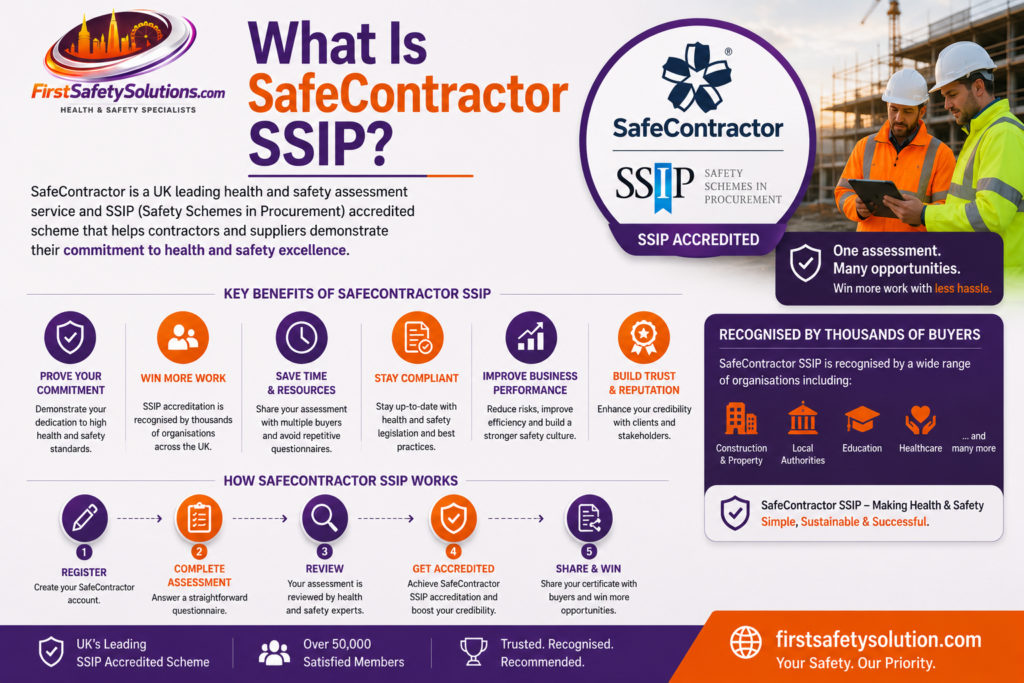
SafeContractor is one of the UK’s leading contractor accreditation schemes, operated by Alcumus. It provides an independent assessment of a contractor’s health and safety management systems to demonstrate that recognized standards are being met.
Official SafeContractor website: https://www.safecontractor.com/
SafeContractor is also recognized under the Safety Schemes in Procurement (SSIP) framework.
Official SSIP website: https://www.ssip.org.uk/
Rather than every client carrying out their own detailed health and safety assessment, accredited contractors can provide evidence that they have already been independently assessed.
The accreditation process normally reviews:
Health and safety policies
Risk assessments
Method statements
Employee competency
Insurance documentation
Training records
Accident reporting procedures
Safe systems of work
Management responsibilities
Successfully achieving accreditation provides reassurance to clients that your business manages health and safety effectively.
Businesses looking to compare different accreditation schemes can also visit the First Safety Solution Accreditation Hub: https://firstsafetysolution.com/accreditation/
Why SafeContractor Benefits Matter
Health and safety standards continue to play an increasingly important role in procurement across the UK. Many organizations now require contractors to hold recognized accreditation before they can even submit a quotation or tender. Understanding the SafeContractor Benefits helps businesses appreciate that accreditation is more than a certificate—it is an investment in business growth, risk management, and customer confidence.
Some of the biggest reasons why accreditation matters include:
Demonstrating legal compliance
Building trust with clients
Improving workplace safety
Supporting tender applications
Enhancing business reputation
Reducing procurement duplication
Encouraging continuous improvement
As competition for contracts increases, businesses with recognized accreditation are often viewed as lower-risk suppliers.
Top SafeContractor Benefits for UK Businesses
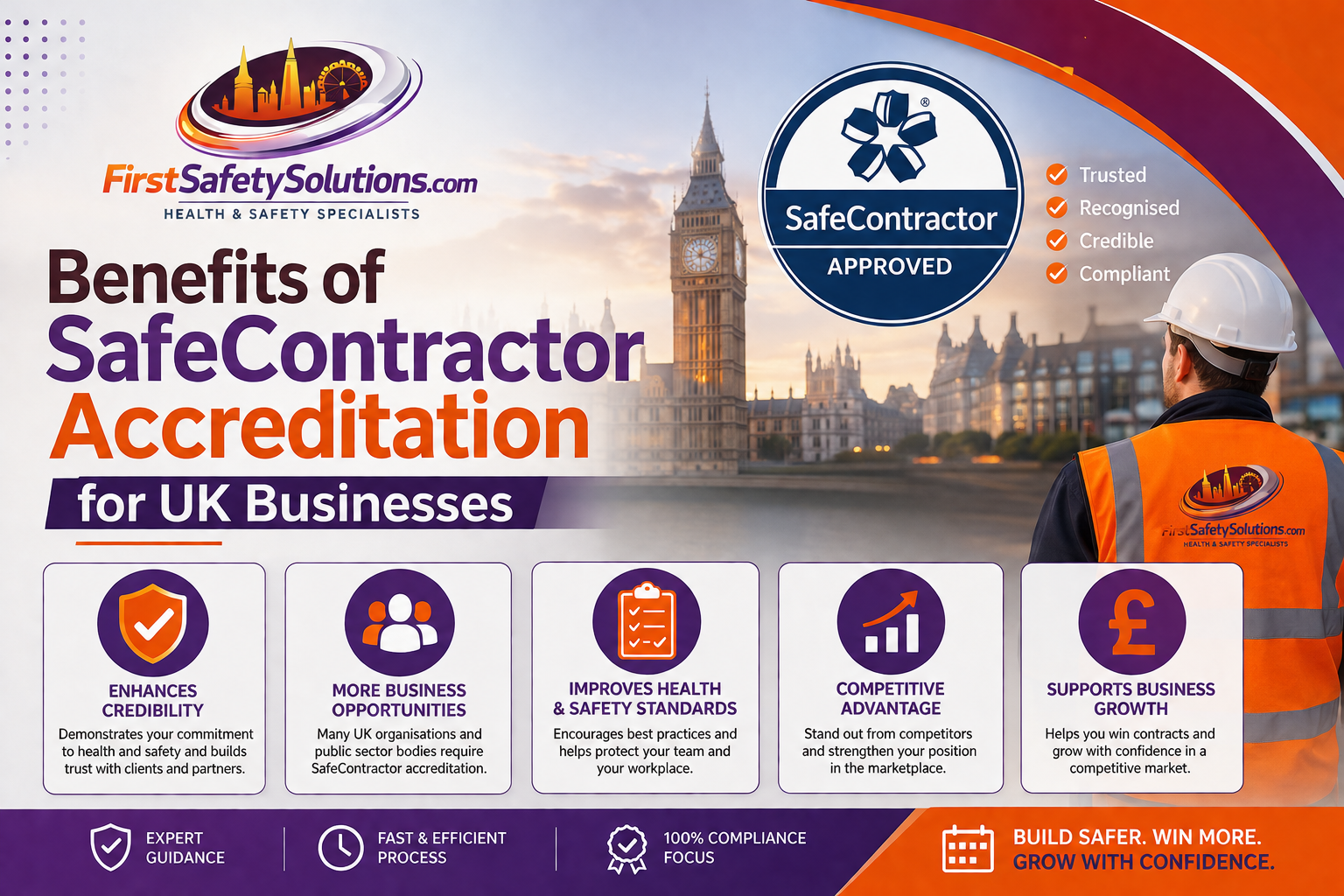
The SafeContractor Benefits extend across nearly every area of a business, from improving internal health and safety systems to creating new commercial opportunities.
The following table highlights some of the most significant advantages.
| Benefit | Business Impact |
|---|---|
| Independent Accreditation | Demonstrates professional standards |
| Improved Compliance | Supports legal responsibilities |
| Better Tender Opportunities | Increases eligibility for contracts |
| Enhanced Reputation | Builds trust with clients |
| Stronger Risk Management | Reduces workplace incidents |
| Competitive Advantage | Helps win more business |
| Improved Employee Confidence | Encourages safer working practices |
| Ongoing Compliance | Supports long-term business growth |
Each of these benefits contributes to stronger operational performance and increased credibility within the marketplace.
Improved Health and Safety Compliance
One of the most valuable SafeContractor Benefits is improved compliance with UK health and safety legislation. Preparing for accreditation encourages businesses to review and strengthen their health and safety management systems. This process often highlights areas where policies, procedures, or documentation require improvement.
Stronger Health and Safety Policies
Accreditation encourages organizations to maintain clear and up-to-date health and safety policies.
These policies should define:
Management responsibilities
Employee responsibilities
Health and safety objectives
Reporting procedures
Monitoring arrangements
Regular policy reviews help ensure compliance with current legislation and industry best practices.
Better Risk Management
Effective risk management is a core requirement of SafeContractor accreditation. Businesses are expected to identify hazards, assess risks, and implement appropriate control measures.
Examples include:
Working at height
Electrical safety
Manual handling
Vehicle movements
Hazardous substances
Fire safety
Improved risk management contributes directly to safer workplaces.
Improved Documentation
Many organizations discover during the accreditation process that their documentation requires updating.
Common documents include:
Health and safety policies
Risk assessments
Method statements
Training records
Accident reporting procedures
Keeping documentation accurate and organized supports future compliance as well as accreditation renewals.
Increased Tender Opportunities
Another major reason businesses invest in accreditation is to improve access to commercial opportunities. Many principal contractors, local authorities, housing associations, and facilities management companies require recognized health and safety accreditation during procurement. Without accreditation, businesses may be excluded before their technical capability or pricing is even reviewed.
The SafeContractor Benefits therefore include increased eligibility for:
Public sector contracts
Private sector projects
Framework agreements
Supply chain opportunities
Long-term maintenance contracts
Accreditation demonstrates that your organization meets recognized standards, making procurement decisions easier for clients.
Stronger Tender Applications
Accredited contractors are often able to provide evidence of compliance quickly during tender submissions. This reduces the amount of additional documentation clients may request.
Reduced Procurement Delays
Many organizations recognize SafeContractor accreditation as part of their contractor approval process. This can reduce duplication by avoiding repeated health and safety assessments for every new project.
Enhanced Business Reputation
Reputation is one of the most valuable assets any business can develop. One of the key SafeContractor Benefits is the credibility that recognized accreditation provides. Independent assessment reassures potential clients that your organization takes health and safety seriously and operates professionally.
This can strengthen relationships with:
Existing customers
New clients
Principal contractors
Procurement teams
Supply chain partners
Businesses with recognized accreditation often find it easier to differentiate themselves from competitors.
Demonstrating Professional Standards
Accreditation demonstrates commitment to:
Legal compliance
Employee welfare
Risk management
Continuous improvement
Industry best practice
Clients frequently view accredited businesses as more reliable and lower risk.
Supporting Long-Term Growth
A strong reputation can contribute to the following:
Repeat business
Client referrals
Larger contracts
Improved customer retention
These commercial advantages continue long after accreditation has been achieved.
Greater Client Confidence
Winning new business often depends on establishing trust before work even begins. Among the most important SafeContractor Benefits is the confidence that accreditation provides to prospective clients. Businesses looking for contractors want reassurance that work will be carried out safely, professionally, and in accordance with recognised standards. SafeContractor accreditation provides independent evidence that appropriate management systems are already in place.
Demonstrating Competence
Accreditation shows that your organization has:
Effective health and safety management
Competent employees
Suitable training
Proper insurance
Documented procedures
This reduces uncertainty for procurement teams when selecting contractors.
Building Stronger Relationships
Clients are more likely to build long-term relationships with contractors who consistently demonstrate professionalism and compliance.
This can lead to:
Repeat contracts
Preferred supplier status
Larger project opportunities
Improved client retention
For many businesses, these long-term commercial advantages become some of the most valuable SafeContractor Benefits.
Reduced Workplace Risks
One of the most practical SafeContractor Benefits is the reduction of workplace risks through improved health and safety management. Preparing for accreditation encourages businesses to identify hazards, review existing procedures, and implement effective control measures. By maintaining robust health and safety systems, organisations can reduce the likelihood of workplace incidents while creating a safer environment for employees, subcontractors, clients, and members of the public.
Improved Hazard Identification
Regular workplace assessments help businesses identify potential risks before they result in accidents.
Common hazards include:
- Working at height
- Manual handling
- Electrical installations
- Slips, trips and falls
- Moving vehicles
- Hazardous substances
- Confined spaces
Managing these hazards effectively is one of the key SafeContractor Benefits that supports long-term compliance.
Fewer Workplace Accidents
Businesses that regularly review their health and safety procedures often experience fewer accidents and near misses. This can lead to reduced downtime, fewer compensation claims, and improved productivity.
Better Supply Chain Recognition
Many organizations prefer to work with accredited contractors because it simplifies supplier approval and demonstrates a commitment to recognised health and safety standards. One of the significant SafeContractor Benefits is increased visibility within approved supplier networks.
Accreditation can help businesses:
- Join approved contractor lists
- Strengthen supply chain relationships
- Meet procurement requirements
- Improve business opportunities
- Demonstrate professional standards
For businesses seeking long-term commercial partnerships, recognized accreditation can be an important competitive advantage.
Easier Contractor Approval
Procurement teams often use recognized accreditation to assess contractor competence quickly, reducing the need for repeated health and safety questionnaires.
Stronger Business Partnerships
Clients are more likely to build long-term relationships with contractors who consistently demonstrate compliance and professionalism.
Competitive Advantage
Standing out in a competitive marketplace is becoming increasingly important. One of the strongest SafeContractor Benefits is the competitive advantage accreditation provides when competing for contracts. Many businesses offer similar technical services and pricing, but recognized accreditation helps demonstrate additional value.
Accredited contractors are often viewed as the following:
- More reliable
- Better organised
- Lower risk
- More compliant
- More professional
These qualities can influence procurement decisions and increase the likelihood of winning contracts.
Winning More Business
While accreditation does not guarantee new work, it strengthens tender submissions and provides reassurance to clients during contractor selection.
Supporting Business Growth
Many organizations use accreditation as part of their long-term growth strategy, helping them expand into new sectors and work with larger clients.
SafeContractor Benefits Compared with Other Accreditation Schemes
Many contractors compare SafeContractor with other recognized accreditation schemes such as CHAS and SMAS Worksafe Accreditation.
All three schemes are recognized under the Safety Schemes in Procurement (SSIP) framework and assess contractors against health and safety standards.
| Feature | SafeContractor | CHAS | SMAS |
|---|---|---|---|
| SSIP Recognised | ✔ | ✔ | ✔ |
| Health and Safety Assessment | ✔ | ✔ | ✔ |
| Suitable for SMEs | ✔ | ✔ | ✔ |
| Tender Support | ✔ | ✔ | ✔ |
| Independent Assessment | ✔ | ✔ | ✔ |
The best choice depends on your clients’ requirements and the industries in which you operate. However, the SafeContractor Benefits make it an excellent option for businesses looking to improve compliance and strengthen their market position.
For more information about other accreditation schemes, visit:
Accreditation Hub
https://firstsafetysolution.com/accreditation/
CHAS Accreditation
https://firstsafetysolution.com/accreditation/chas-accreditation-uk/
SMAS Accreditation
https://firstsafetysolution.com/accreditation/ssip-smas/
Common Misconceptions About SafeContractor Accreditation
Despite its popularity, there are still several misconceptions about accreditation.
“It’s Only for Large Construction Companies”
This is incorrect.
SafeContractor accreditation is suitable for:
- Sole traders
- Small businesses
- Medium-sized contractors
- Large organisations
It is recognized across many industries, not just construction.
“Accreditation Guarantees Contracts”
Accreditation does not guarantee work.
However, one of the key SafeContractor Benefits is that it improves credibility and allows businesses to meet procurement requirements for many tenders.
“The Process Is Too Complicated”
With organized documentation and professional guidance, many businesses complete the accreditation process efficiently.
Preparation is the key to success.
How First Safety Solution Can Help
Understanding the SafeContractor Benefits is only the first step. Successfully achieving accreditation requires accurate documentation, effective health and safety management, and ongoing compliance. First Safety Solution supports contractors throughout the accreditation journey by helping businesses prepare the information and evidence required for successful approval.
Services include:
- Health and safety policy preparation
- Risk assessment reviews
- Method statement development
- Documentation audits
- Compliance reviews
- Accreditation application support
- Ongoing health and safety consultancy
Working with experienced consultants can help businesses maximize the SafeContractor Benefits while reducing delays and improving the likelihood of first-time approval.
Frequently Asked Questions
1. What are the main SafeContractor Benefits?
The main SafeContractor Benefits include improved health and safety compliance, increased tender opportunities, enhanced business reputation, stronger client confidence, better risk management, and a competitive advantage when bidding for contracts.
2. Is SafeContractor recognized under SSIP?
Yes, SafeContractor is recognized under the Safety Schemes in Procurement (SSIP) framework.
3. Can small businesses benefit from SafeContractor accreditation?
Yes. Small businesses and sole traders can use accreditation to demonstrate professionalism, improve compliance, and access more contract opportunities.
4. Does SafeContractor accreditation guarantee more contracts?
No. Accreditation does not guarantee contracts, but it improves credibility and helps businesses meet procurement requirements.
5. How often does SafeContractor accreditation need to be renewed?
Accreditation requires periodic renewal to ensure businesses continue to meet recognized health and safety standards.
6. What documents are required for accreditation?
Typical documents include a health and safety policy, risk assessments, method statements, insurance certificates, employee training records, and accident reporting procedures.
7. Can First Safety Solution help with accreditation?
Yes. First Safety Solution provides expert support with documentation, compliance reviews, risk assessments, health and safety policies, and accreditation applications.
8. Is SafeContractor suitable for industries outside construction?
Yes. SafeContractor is recognized across many sectors, including facilities management, maintenance, engineering, cleaning, landscaping, security, and property services.
Conclusion
The SafeContractor Benefits extend far beyond achieving recognized accreditation. By strengthening health and safety management, improving compliance, enhancing business credibility, and increasing access to tender opportunities, accreditation provides long-term value for businesses across a wide range of industries.
Whether you are a sole trader aiming to grow your customer base or a larger organization seeking major commercial contracts, SafeContractor accreditation demonstrates professionalism and commitment to recognized industry standards. Maintaining effective health and safety systems not only supports successful accreditation but also contributes to safer workplaces, improved operational efficiency, and stronger client relationships.
If you need expert guidance with understanding the SafeContractor Benefits, preparing your documentation, or achieving accreditation, First Safety Solution can provide professional support to help your business succeed.