COSHH Regulations Explained for UK Businesses
Many UK businesses use chemicals, cleaning products, dust, fumes, gases, and other hazardous substances every day. While these materials are often necessary for work activities, they can also create serious health risks if not managed properly. Parents frequently search online about workplace safety because they want reassurance that loved ones working in construction, cleaning, manufacturing, healthcare, and industrial environments are protected from harmful substances. Unsafe exposure to chemicals and hazardous materials can affect workers’ long-term health and well-being.
This is why COSHH regulations are extremely important for businesses across the UK. These regulations help employers identify hazardous substances, reduce workplace risks, and create safer working environments for employees. Professional health and safety consultancy services can help businesses improve compliance with COSHH regulations and workplace safety standards. This guide explains everything UK businesses need to know about COSHH regulations, including risk assessments, employer responsibilities, PPE, training requirements, and practical workplace safety measures.
What Are COSHH Regulations?
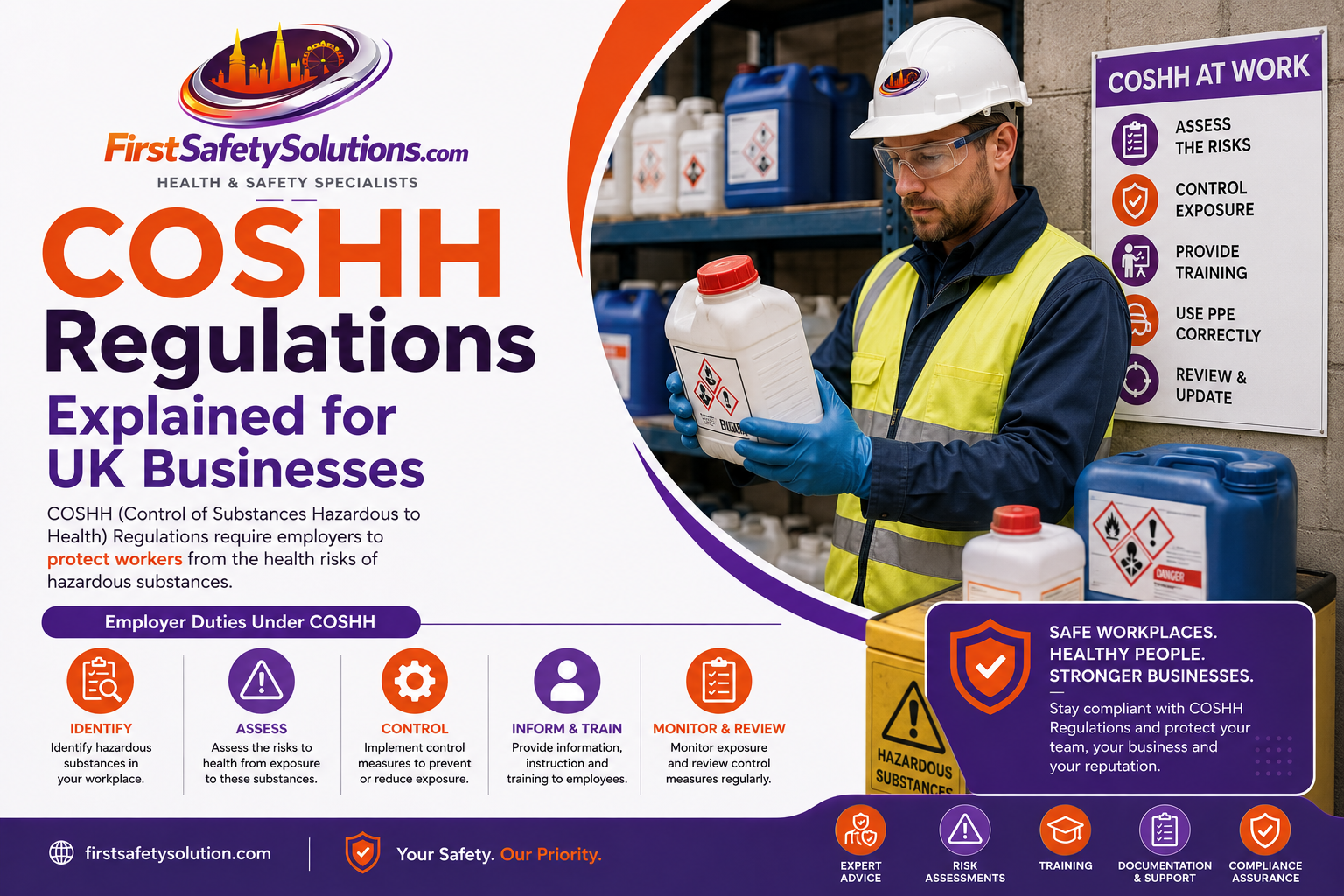
COSHH stands for Control of Substances Hazardous to Health. COSHH regulations are UK workplace safety laws designed to protect workers from hazardous substances that may cause illness, injury, or long-term health problems. These regulations require employers to identify dangerous substances, assess workplace risks, and put safety measures in place to protect employees.
Hazardous substances may include:
- Chemicals
- Dust
- Fumes
- Vapours
- Cleaning products
- Gases
- Biological agents
- Solvents
- Paints
- Industrial materials
COSHH regulations apply to many workplaces, including offices, factories, warehouses, construction sites, hospitals, schools, salons, and cleaning businesses.
Why COSHH Regulations Are Important
Hazardous substances can seriously affect worker health if safety procedures are not followed correctly.
Poor workplace safety management may lead to the following:
- Breathing problems
- Skin irritation
- Burns
- Eye injuries
- Poisoning
- Long-term illnesses
- Occupational diseases
Parents often search online about hazardous workplace conditions because they want family members to work in safe and healthy environments. Businesses that follow COSHH regulations properly usually experience the following:
- Safer workplaces
- Better employee wellbeing
- Fewer accidents
- Improved legal compliance
- Better productivity
- Stronger business reputation
Following COSHH regulations helps protect workers while reducing business risks.
Understanding Hazardous Substances
Many workers are exposed to hazardous substances without fully understanding the dangers.
Hazardous materials may appear in:
- Cleaning products
- Construction materials
- Paints and coatings
- Dust from cutting or drilling
- Industrial chemicals
- Smoke and fumes
- Laboratory products
Some substances can cause immediate injuries, while others may lead to long-term health problems after repeated exposure. Businesses must identify which substances create risks in the workplace.
Employer Responsibilities Under COSHH Regulations
Employers have legal duties under COSHH regulations to protect workers from harmful exposure.
Responsibilities include:
- Identifying hazardous substances
- Conducting risk assessments
- Providing employee training
- Using safety controls
- Supplying PPE
- Monitoring exposure levels
- Maintaining safe storage systems
Employers must take reasonable steps to reduce risks and create safer working environments.
COSHH Risk Assessments Explained
A COSHH risk assessment identifies hazardous substances and explains how exposure risks will be controlled.
Risk assessments may include:
- Identifying dangerous substances
- Understanding exposure risks
- Reviewing work activities
- Evaluating control measures
- Monitoring employee exposure
Good COSHH regulations compliance requires regular risk assessments and updates when workplace conditions change.
Common Industries Affected by COSHH Regulations
COSHH regulations apply to many industries across the UK.
Industries commonly affected include:
- Construction
- Manufacturing
- Cleaning services
- Healthcare
- Engineering
- Warehousing
- Hair and beauty
- Agriculture
- Automotive repair
Even office environments may use cleaning chemicals and substances covered under COSHH regulations.
Construction and Hazardous Substance Risks
Construction workers often face exposure to dangerous materials such as:
- Silica dust
- Cement
- Paint fumes
- Adhesives
- Solvents
- Asbestos
Unsafe exposure may lead to serious respiratory diseases and long-term health problems. Construction businesses should follow COSHH regulations carefully to reduce worker exposure and improve workplace safety.
The Importance of COSHH Training
Employee training is one of the most important parts of workplace safety compliance.
Workers should understand:
- Hazardous substances used at work
- Safe handling procedures
- PPE requirements
- Emergency procedures
- Safe storage methods
- Spill response procedures
Good training improves employee confidence and reduces workplace accidents. Businesses investing in COSHH regulations training usually experience better compliance and safer workplaces.
Personal Protective Equipment (PPE) and COSHH Regulations
PPE helps protect workers from exposure to harmful substances.
Common PPE may include:
- Gloves
- Safety goggles
- Respiratory masks
- Protective clothing
- Face shields
- Safety footwear
Workers should inspect PPE regularly to ensure it remains safe and effective. Employers must provide suitable PPE where exposure risks cannot be fully eliminated.
Safe Storage of Hazardous Substances
Improper chemical storage can create serious workplace dangers.
Businesses should:
- Store chemicals safely
- Use proper labels
- Separate incompatible substances
- Keep storage areas well-ventilated
- Restrict unauthorised access
Safe storage systems are an important part of COSHH regulations’ compliance.
Understanding Safety Data Sheets
Safety Data Sheets provide important information about hazardous substances.
They explain:
- Chemical hazards
- Safe handling methods
- PPE requirements
- Emergency procedures
- First aid information
- Fire safety advice
Workers should know where Safety Data Sheets are located and how to use them.
Controlling Exposure to Hazardous Substances
Employers should reduce employee exposure wherever possible.
Control measures may include:
- Ventilation systems
- Dust extraction
- Safer work methods
- PPE use
- Restricted access
- Spill containment systems
Reducing exposure risks helps businesses comply with COSHH regulations and improve worker health.
Workplace Ventilation and Air Quality
Poor ventilation can increase exposure to harmful dust, fumes, and vapors. Good ventilation systems help remove contaminants from work areas. Businesses should regularly inspect and maintain ventilation equipment to ensure it works effectively. Improved air quality helps workers stay healthier and safer.
Emergency Procedures for Hazardous Substances
Workplaces should have emergency plans for chemical spills and hazardous incidents.
Emergency procedures may include:
- Spill response systems
- Evacuation plans
- Emergency contacts
- First aid arrangements
- Fire safety procedures
Quick responses during emergencies help reduce injuries and environmental damage.
Monitoring Employee Exposure
Some workplaces may require exposure monitoring to ensure workers are not exposed to dangerous substance levels.
Monitoring methods may include:
- Air quality testing
- Health surveillance
- Workplace inspections
- Exposure measurements
Regular monitoring helps businesses maintain compliance with COSHH regulations.
Health Surveillance and Worker Protection
Health surveillance may be necessary for workers exposed to certain hazardous substances. Health checks can help identify early signs of workplace-related illnesses.
Examples may include:
- Lung function tests
- Skin checks
- Hearing tests
- Medical assessments
Early detection helps prevent long-term health problems.
Common Mistakes Businesses Make
Some businesses fail to manage hazardous substances correctly.
Common mistakes include:
- Poor risk assessments
- Inadequate PPE
- Weak training systems
- Unsafe storage
- Missing labels
- Poor ventilation
These mistakes can increase accident risks and lead to legal penalties.
Why Small Businesses Must Follow COSHH Regulations
Some smaller businesses believe COSHH regulations only apply to large companies. However, any workplace using hazardous substances must follow safety requirements.
Strong workplace safety systems help small businesses.
- Protect employees
- Improve compliance
- Reduce accidents
- Build trust
- Improve reputation
Small businesses with good safety management often appear more professional and responsible.
Mental Health and Workplace Safety
Unsafe working environments can also affect employee mental well-being.
Workers may experience:
- Stress
- Anxiety
- Fear of exposure
- Reduced confidence
Safe workplaces help employees feel more secure and supported.
Parents searching online about workplace safety often want reassurance that loved ones are protected physically and mentally.
Why Safety Audits Matter
Safety audits help businesses review workplace safety systems and identify weaknesses.
Audits may review:
- COSHH assessments
- PPE usage
- Employee training
- Storage systems
- Ventilation systems
- Emergency procedures
Regular audits improve compliance and reduce workplace risks.
Technology and Modern Workplace Safety
Modern technology is helping businesses improve hazardous substance management.
Examples include:
- Digital risk assessments
- Online training systems
- Air quality monitoring devices
- Safety management software
- Mobile inspection tools
Technology helps businesses manage COSHH regulations more efficiently while improving communication and safety monitoring.
The Financial Impact of Poor COSHH Compliance
Businesses with weak safety systems may face serious financial consequences.
Poor compliance can lead to:
- Legal penalties
- Compensation claims
- Increased insurance costs
- Lost productivity
- Employee illness
- Reputation damage
Investing in workplace safety and COSHH regulations often saves businesses money in the long term.
Creating a Positive Workplace Safety Culture
A strong safety culture encourages everyone to take workplace safety seriously.
Positive workplace cultures encourage workers to:
- Report hazards
- Follow procedures
- Use PPE correctly
- Support colleagues
- Participate in training
Managers play an important role in encouraging safe behavior and maintaining COSHH regulations compliance.
How COSHH Regulations Protect Families
Workplace accidents and illnesses affect more than employees alone. Families are also impacted emotionally and financially when workers become ill due to hazardous exposure. Parents often search online about COSHH regulations because they want reassurance that loved ones are protected from dangerous workplace substances. Businesses that improve workplace safety and follow COSHH regulations help workers return home safely every day.
Maintaining COSHH Compliance Over Time
Workplace safety management should continue regularly.
Businesses should:
- Update risk assessments
- Conduct refresher training
- Inspect safety systems
- Review hazardous substances
- Improve workplace procedures
Continuous improvement helps businesses maintain compliance and reduce future risks.
Future Trends in Hazardous Substance Safety
Workplace safety expectations continue to increase across industries.
Future trends may include:
- Advanced air monitoring systems
- Digital compliance tracking
- Smart PPE technology
- Improved online training
- Stronger environmental controls
Businesses that invest in workplace safety and COSHH regulations are usually better prepared for future industry changes.
How First Safety Solution Can Help
First Safety Solution supports businesses needing help with COSHH regulations, including:
- COSHH risk assessments
- Workplace inspections
- Safety audits
- Employee training
- Health and safety consultancy
- Compliance support
Professional guidance helps businesses improve workplace safety while reducing hazardous exposure risks and maintaining legal compliance.
Conclusion
COSHH regulations play a major role in protecting workers from hazardous substances in UK workplaces. From chemicals and fumes to dust and industrial materials, many substances can create serious health risks if safety procedures are ignored. Good workplace safety systems, proper PPE, employee training, and regular risk assessments help businesses reduce exposure risks and create safer environments for workers and contractors. Employers must take hazardous substance management seriously to protect employees, support families, improve compliance, and reduce long-term business risks.
Businesses should also follow official guidance from the Health and Safety Executive (HSE) to improve hazardous substance safety and legal compliance.
🔗 Learn more or book at firstsafetysolution.com
📞 Call Now: 02034888123 | 07501170101
📍 Visit Us: Quantum Offices, Mountview House, 212 High Rd, Ilford IG1 1QB