Introduction to SMAS Accreditation
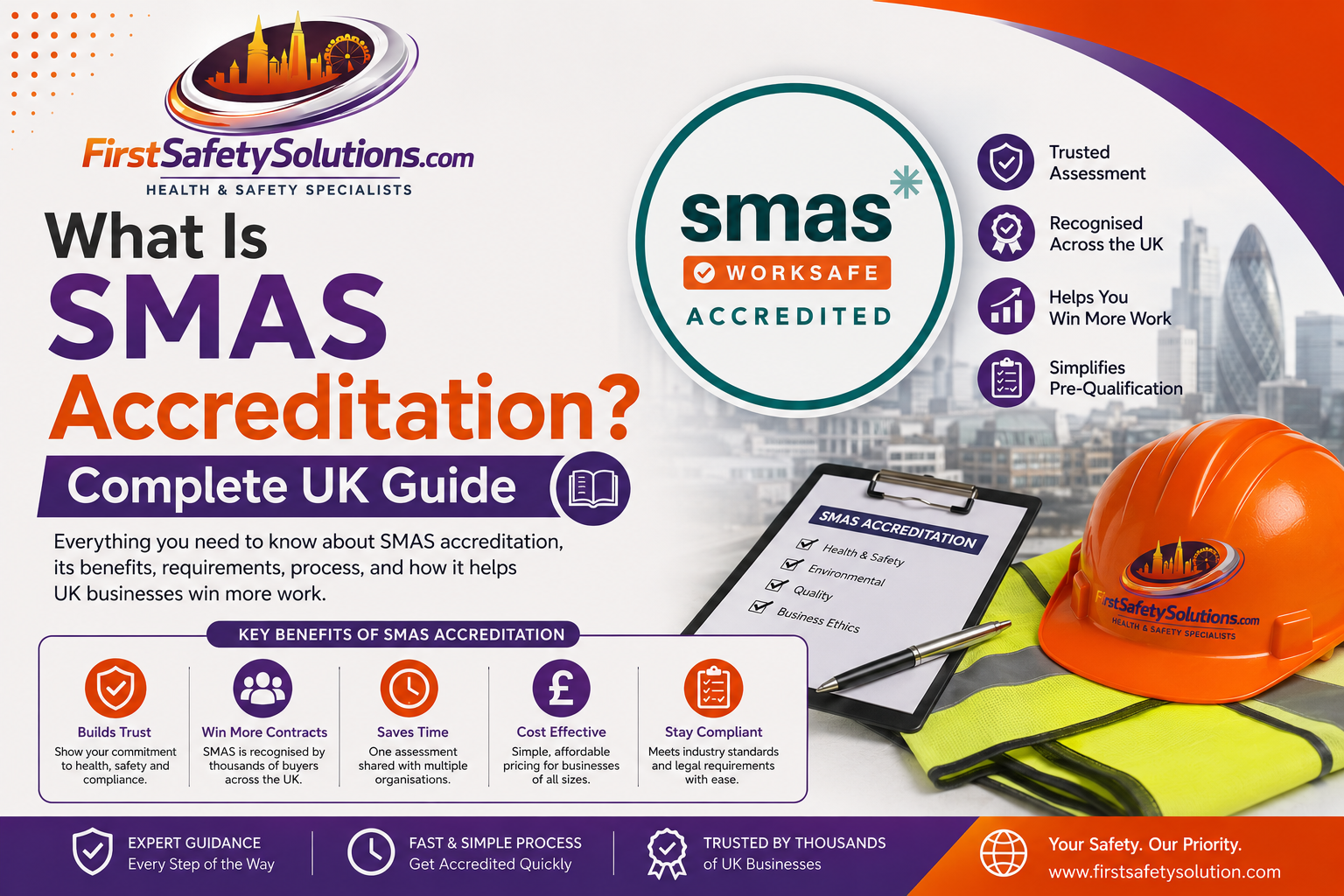
Health and safety is a fundamental part of running a successful business in the UK construction and contractor industry. Clients now expect contractors to demonstrate that they can manage workplace risks effectively and comply with current health and safety legislation before they are awarded contracts. One of the most recognized ways to prove this commitment is by achieving SMAS Accreditation.
SMAS Accreditation is widely recognized throughout the UK and helps contractors demonstrate that they have appropriate health and safety management systems in place. Whether you are a sole trader, a growing small business, or a large organization, obtaining this accreditation can improve your professional reputation, increase opportunities to secure new work, and strengthen your overall compliance. Many public sector organizations, local authorities, principal contractors, housing associations, and private companies include health and safety accreditation as part of their procurement requirements. Businesses that already hold SMAS Accreditation are often viewed as lower-risk contractors because they have successfully completed an independent assessment of their health and safety management systems.
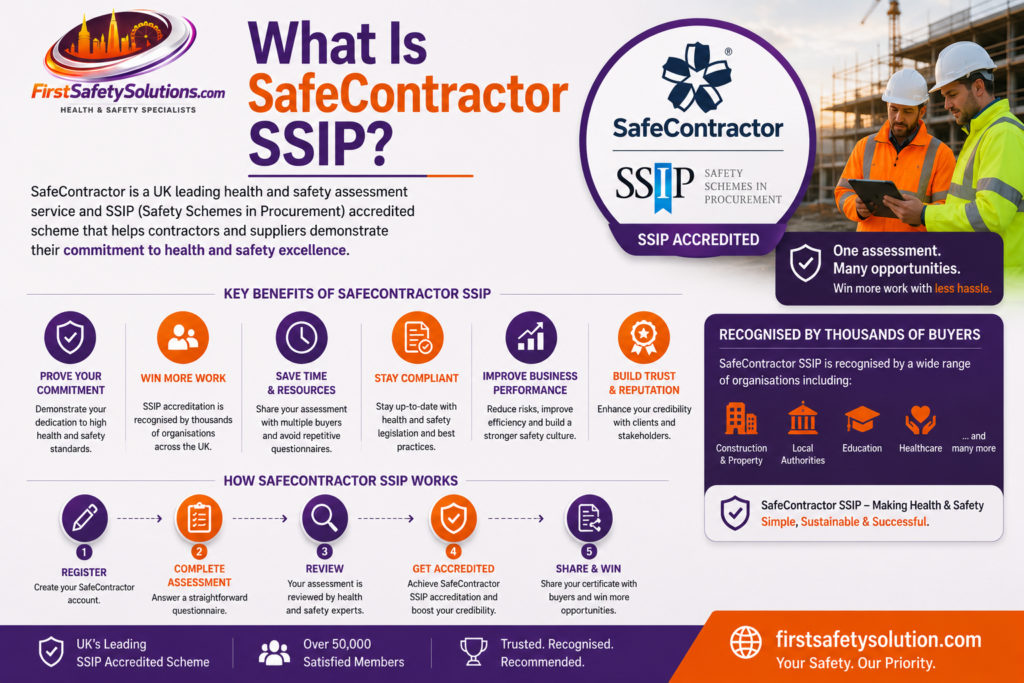
Another major advantage is that SMAS is a member of the Safety Schemes in Procurement (SSIP). This means the accreditation is recognized by many organizations across the UK, helping to reduce repeated health and safety assessments when applying for contracts. If your business regularly works on construction sites or provides services where health and safety are important considerations, understanding SMAS Accreditation can help you improve compliance, increase customer confidence, and create more opportunities for future growth. In this complete guide, you will learn what SMAS Accreditation is, why it is important, who should apply, how the application process works, and what documentation is required for a successful application.
What Is SMAS Accreditation?
SMAS Accreditation is a recognized health and safety certification scheme that independently assesses contractors to ensure they meet accepted industry standards. The scheme helps organizations demonstrate that they have suitable health and safety policies, procedures, and management systems in place to protect employees, clients, subcontractors, and members of the public. SMAS stands for Safety Management Advisory Services and is one of the UK’s leading health and safety assessment providers. It is recognized across many industries and is particularly popular within construction, engineering, maintenance, facilities management, electrical services, plumbing, landscaping, and property maintenance.
One of the key reasons businesses choose SMAS Accreditation is because it provides independent evidence that their health and safety systems have been assessed by competent professionals. Instead of completing separate health and safety questionnaires for every client, accredited businesses can demonstrate that they already meet recognized standards.
Official websites:
SMAS: https://www.smasltd.com/
SSIP: https://www.ssip.org.uk/
The assessment usually reviews:
- Health and safety policies
- Risk assessments
- Method statements
- Employee competency
- Insurance certificates
- Training records
- Accident reporting procedures
- Safe systems of work
- Management responsibilities
Successfully achieving SMAS Accreditation shows that your business takes workplace safety seriously and is committed to maintaining high standards of health and safety management.
Businesses interested in learning about other recognized accreditation schemes can also visit: https://firstsafetysolution.com/accreditation/
Why SMAS Accreditation Is Important
Health and safety compliance has become one of the most important factors when organizations select contractors. Many clients now require recognized accreditation before inviting businesses to quote for work. As competition increases, businesses with SMAS Accreditation are often better positioned because they have already demonstrated compliance with recognized health and safety standards.
Some of the reasons why SMAS Accreditation is important include the following:
- Demonstrates professional health and safety management
- Improves business credibility
- Increases client confidence
- Helps satisfy procurement requirements
- Supports legal compliance
- Improves workplace safety
- Reduces duplication during contractor assessments
- Creates more opportunities to win contracts
Beyond helping businesses secure work, the accreditation process also encourages organizations to regularly review their health and safety procedures. This often leads to improvements in documentation, employee training, risk management, and overall business performance. For many contractors, obtaining SMAS Accreditation becomes an investment that supports long-term business growth rather than simply a compliance requirement.
Who Needs SMAS Accreditation?
Although many people associate SMAS Accreditation with construction companies, the scheme is suitable for a wide variety of industries. Any business that carries out work where health and safety management is important can benefit from becoming accredited.
Typical organizations include:
- Construction companies
- Civil engineering contractors
- Electrical contractors
- Mechanical contractors
- Plumbing companies
- Roofing contractors
- Scaffolding businesses
- Groundwork contractors
- Property maintenance companies
- Facilities management providers
- Cleaning contractors
- Landscaping businesses
- Security companies
- HVAC contractors
- Building maintenance firms
The accreditation is suitable for businesses of all sizes.
Sole Traders
Many sole traders believe accreditation is only intended for larger organizations. In reality, SMAS Accreditation is available to sole traders who can demonstrate that suitable health and safety arrangements are in place for the work they carry out. Holding recognized accreditation can also help sole traders compete for contracts with larger organizations.
Small Businesses
Small businesses often use SMAS Accreditation to improve credibility and compete for contracts that require recognized health and safety certification. Accreditation can also help SMEs strengthen internal management systems while demonstrating professionalism to potential clients.
Medium and Large Organisations
Larger organizations frequently maintain SMAS Accreditation as part of their wider compliance strategy. Accreditation helps demonstrate consistent health and safety management across larger workforces and multiple projects.
Key Features of SMAS Accreditation
The popularity of SMAS Accreditation continues to grow because it offers practical benefits for contractors while supporting recognised health and safety standards.
Some of its main features include:
| Feature | Benefit |
|---|---|
| Independent health and safety assessment | Demonstrates contractor competence |
| SSIP recognised | Accepted by many procurement teams |
| Suitable for businesses of all sizes | From sole traders to large companies |
| Annual renewal | Encourages continuous improvement |
| Industry recognition | Supports tender applications |
| Health and safety compliance | Demonstrates professional standards |
These features make SMAS Accreditation one of the UK’s most trusted contractor accreditation schemes.
How Does the SMAS Accreditation Process Work?
The application process has been designed to assess whether a contractor has suitable health and safety management systems in place. Although every organization is different, the process generally follows the same stages.
Review Your Existing Documentation
Before starting the application, review your existing health and safety documents.
Check that your:
- Health and safety policy is current
- Risk assessments reflect actual work activities
- Method statements are accurate
- Insurance certificates remain valid
- Employee training records are complete
Preparing documentation before beginning the application usually reduces delays later.
Complete the Application
Applicants provide information about:
- Company details
- Business activities
- Workforce
- Health and safety arrangements
- Insurance
- Management systems
Providing accurate information helps ensure the assessment proceeds efficiently.
Upload Supporting Documents
Supporting documentation is uploaded as part of the assessment.
Typical evidence includes the following:
- Health and safety policy
- Risk assessments
- Method statements
- Insurance certificates
- Employee training records
- Accident reporting procedures
Well-organized documentation helps assessors review applications more quickly.
Independent Assessment
Qualified assessors review all submitted information to determine whether the contractor satisfies recognized health and safety standards. If clarification is required, assessors may request additional information before making their decision.
Accreditation Approval
Once the assessment has been completed successfully, the business receives SMAS Accreditation. The accreditation can then be used when tendering for work and demonstrating compliance to clients.
Documents Required for SMAS Accreditation
Preparing suitable documentation is one of the most important steps towards achieving SMAS Accreditation. The quality and accuracy of your documentation can significantly influence how quickly your application is processed. The following documents are commonly required during the assessment.
Health and Safety Policy
A written health and safety policy demonstrates your organization’s commitment to protecting employees, subcontractors, clients, and anyone affected by your work.
The policy should clearly define:
- Management responsibilities
- Employee responsibilities
- Health and safety objectives
- Arrangements for monitoring performance
It should also be reviewed regularly to ensure it reflects current working practices.
Risk Assessments
Risk assessments identify workplace hazards and explain the measures used to control them.
Typical assessments include the following:
- Working at height
- Manual handling
- Electrical safety
- Excavation work
- Hazardous substances
- Fire safety
Assessments should always relate to the actual activities carried out by your business.
Method Statements
Method statements explain how work will be completed safely.
They usually include:
- Sequence of work
- Equipment to be used
- Control measures
- Emergency procedures
- Personal protective equipment requirements
Clear method statements demonstrate that work activities have been properly planned.
Insurance Certificates
Applicants should provide current insurance documentation, including:
- Public Liability Insurance
- Employer’s Liability Insurance (where applicable)
Insurance should be appropriate for the type of work undertaken by the business.
Employee Training Records
Training records demonstrate that employees have received appropriate instruction to carry out their work safely.
Examples include:
- Health and safety awareness
- Manual handling
- Working at height
- First aid
- Plant operation
- Toolbox talks
Keeping training records up-to-date supports both SMAS Accreditation and ongoing legal compliance.
Accident Reporting Procedures
Businesses should maintain documented procedures covering:
- Incident reporting
- Accident investigations
- Corrective actions
- Record keeping
- Continuous improvement
Effective accident reporting demonstrates a proactive approach to workplace safety.
SMAS Accreditation Documentation Checklist
| Document | Purpose |
|---|---|
| Health and Safety Policy | Demonstrates management commitment |
| Risk Assessments | Identifies workplace hazards and controls |
| Method Statements | Explains safe working methods |
| Public Liability Insurance | Demonstrates financial protection |
| Employer’s Liability Insurance | Meets legal requirements |
| Employee Training Records | Shows workforce competency |
| Accident Reporting Procedures | Demonstrates effective incident management |
| Equipment Inspection Records | Confirms equipment safety and maintenance |
Benefits of SMAS Accreditation
Achieving SMAS Accreditation offers far more than simply receiving a recognized certificate. It demonstrates that your business has effective health and safety management systems in place and is committed to maintaining high standards across all areas of its operations. In today’s competitive market, many clients look for accredited contractors before awarding work, making SMAS Accreditation an important investment for businesses that want to grow.
The benefits extend beyond winning contracts. The accreditation process encourages organizations to improve documentation, strengthen risk management, develop safer working practices, and create a culture where health and safety are taken seriously.
Some of the main benefits include:
- Improved health and safety compliance
- Greater credibility with clients
- Increased opportunities to tender for contracts
- Better risk management
- Enhanced company reputation
- Stronger supply chain relationships
- Reduced duplication during procurement
- Continuous improvement of management systems
For many contractors, these advantages continue to provide value long after accreditation has been achieved.
Improved Health and Safety Compliance
One of the greatest advantages of SMAS Accreditation is the opportunity to improve your overall health and safety management. Preparing for assessment encourages businesses to review every aspect of their health and safety procedures, helping to identify areas that require improvement.
This often results in:
- Updated health and safety policies
- Better workplace inspections
- Improved risk assessments
- More detailed method statements
- Enhanced employee training
- Stronger management commitment
These improvements not only support accreditation but also help reduce workplace accidents and improve legal compliance.
Increased Tender Opportunities
Many organizations include health and safety accreditation within their contractor selection process. Holding SMAS Accreditation demonstrates that your business has already been independently assessed, giving procurement teams greater confidence when selecting contractors.
Accreditation can help businesses compete for the following:
- Public sector contracts
- Local authority projects
- Housing association work
- Commercial construction projects
- Facilities management contracts
- Maintenance agreements
While accreditation does not guarantee work, it significantly improves eligibility for many tender opportunities.
Greater Client Confidence
Clients want reassurance that contractors can complete work safely and professionally. SMAS Accreditation provides independent evidence that your organization manages health and safety responsibly.
This can increase confidence among:
- Principal contractors
- Procurement managers
- Commercial clients
- Local authorities
- Housing associations
- Existing customers
Greater trust often leads to stronger business relationships and repeat work.
Enhanced Business Reputation
A strong reputation is one of the most valuable assets any business can develop. Holding SMAS Accreditation demonstrates professionalism, responsibility, and a commitment to recognized industry standards.
Many businesses use their accreditation to promote their commitment to health and safety when:
- Tendering for contracts
- Marketing their services
- Meeting prospective clients
- Developing supplier relationships
Over time, this can strengthen brand reputation and help businesses stand out from competitors.
Better Risk Management
Preparing for accreditation encourages organizations to improve how workplace risks are identified, assessed, and controlled.
Effective risk management helps reduce:
- Workplace accidents
- Employee injuries
- Project delays
- Insurance claims
- Damage to equipment
- Legal issues
Safer working environments also improve employee confidence and productivity.
Reduced Procurement Duplication
Without recognized accreditation, contractors may need to complete separate health and safety assessments for every client. SMAS Accreditation helps reduce this duplication because many procurement teams recognize the independent assessment already completed through the scheme. This saves time for both contractors and clients while simplifying contractor approval processes.
SMAS Accreditation vs CHAS Accreditation
Many businesses compare SMAS Accreditation with CHAS Accreditation before deciding which scheme best suits their needs. Both schemes are recognized members of the Safety Schemes in Procurement (SSIP) and assess contractors against recognized health and safety standards.
| Feature | SMAS Accreditation | CHAS Accreditation |
|---|---|---|
| SSIP Recognised | ✔ | ✔ |
| Independent Health and Safety Assessment | ✔ | ✔ |
| Suitable for Sole Traders | ✔ | ✔ |
| Suitable for SMEs | ✔ | ✔ |
| Suitable for Large Businesses | ✔ | ✔ |
| Supports Tender Applications | ✔ | ✔ |
| Demonstrates Health and Safety Compliance | ✔ | ✔ |
The choice often depends on client preferences and the sectors in which your business operates. Some contractors even choose to hold more than one accreditation to satisfy different procurement requirements.
Common Mistakes When Applying
Many applications are delayed because businesses overlook important details. Understanding these common mistakes can improve your chances of obtaining SMAS Accreditation at the first attempt.
Submitting Incomplete Documentation
Missing policies or supporting evidence are among the most common reasons applications require additional review.
Always check that you have included the following:
- Health and safety policy
- Risk assessments
- Method statements
- Insurance certificates
- Training records
- Accident reporting procedures
Using Generic Documents
Documentation should accurately reflect the work your business carries out. Generic templates downloaded from the internet rarely provide sufficient detail for assessment.
Failing to Update Policies
Health and safety policies should be reviewed regularly. Outdated policies may no longer reflect current legislation or business activities.
Poor Record Keeping
Maintaining organized records makes both the application and future renewal process much easier. Store documents electronically and review them regularly.
Delaying Responses to Assessors
If additional information is requested, responding promptly helps prevent unnecessary delays.
Tips for a Successful SMAS Accreditation Application
Preparing in advance can significantly improve your chances of first-time approval.
Some useful recommendations include:
- Review all documentation before applying.
- Update health and safety policies regularly.
- Complete risk assessments for all work activities.
- Keep employee training records current.
- Organize documents into clearly labeled folders.
- Review insurance certificates before submission.
- Carry out an internal compliance audit.
- Seek professional advice if unsure about any requirements.
Businesses that prepare thoroughly generally experience a smoother assessment process.
How First Safety Solution Can Help
Preparing for SMAS Accreditation requires accurate documentation, effective health and safety management, and ongoing compliance. First Safety Solution provides professional support to help contractors complete the accreditation process confidently and efficiently.
Our experienced consultants can assist with:
- Health and safety policy preparation
- Risk assessment reviews
- Method statement development
- Documentation audits
- Compliance assessments
- Application support
- Ongoing health and safety consultancy
Whether you are applying for accreditation for the first time or preparing for renewal, our team can help ensure your documentation meets recognized industry standards.
Useful resources:
Frequently Asked Questions
What is SMAS Accreditation?
SMAS Accreditation is a recognized health and safety certification that independently assesses contractors to confirm they meet recognised industry standards.
Is SMAS recognized under SSIP?
Yes. SMAS is an approved member of the Safety Schemes in Procurement (SSIP), making it widely recognized across the UK.
Who should apply for SMAS Accreditation?
Sole traders, small businesses, medium-sized organisations, and large contractors across many industries can apply.
What documents are required?
Typical documents include a health and safety policy, risk assessments, method statements, insurance certificates, employee training records, and accident reporting procedures.
How long does the assessment take?
The timescale varies depending on the quality of documentation submitted and whether additional information is required by the assessor.
Does SMAS Accreditation guarantee contracts?
No. Accreditation does not guarantee work, but it helps businesses meet procurement requirements and strengthens tender applications.
How often does SMAS Accreditation need to be renewed?
Accreditation requires regular renewal to demonstrate continued compliance with recognized health and safety standards.
Can First Safety Solution help with my application?
Yes. First Safety Solution provides expert guidance throughout the accreditation process, helping businesses prepare documentation, improve compliance, and complete successful applications.
Conclusion
SMAS Accreditation is one of the most respected health and safety accreditation schemes available to UK contractors. It provides independent confirmation that your organization has appropriate health and safety management systems in place and is committed to maintaining recognized industry standards. From improving compliance and strengthening workplace safety to increasing tender opportunities and enhancing business reputation, SMAS Accreditation delivers long-term value for businesses of every size. It also helps build client confidence, streamline procurement processes, and demonstrate professionalism within competitive industries.
Whether you are a sole trader looking to secure larger contracts or an established company aiming to strengthen your compliance systems, investing in SMAS Accreditation is a practical step towards sustainable business growth. If you need expert assistance with preparing your application, reviewing your documentation, or improving your health and safety management systems, First Safety Solution can help you achieve SMAS Accreditation efficiently and confidently.