Workplace First Aid Requirements UK
Accidents and medical emergencies can happen in any workplace at any time. Whether it is a minor injury, a fall, a burn, or a serious medical incident, quick first aid support can make a major difference in protecting workers and reducing injury severity. This is why workplace first aid requirements are extremely important for businesses across the UK.
Parents often search online about workplace safety because they want reassurance that loved ones working in offices, construction sites, warehouses, factories, schools, and industrial environments are protected during emergencies. Businesses that follow proper workplace first aid requirements create safer and more organized working environments where employees feel supported and protected.
Good first aid planning helps businesses improve emergency preparedness, reduce workplace risks, and maintain legal compliance. Employers who invest in workplace safety often experience fewer serious incidents, stronger employee confidence, and improved business reputation. Professional health and safety consultancy services can help businesses improve workplace first aid requirements and emergency safety procedures. This guide explains everything UK businesses need to know about workplace first aid requirements, including legal responsibilities, training, first aid kits, emergency planning, and accident response procedures.
What Are Workplace First Aid Requirements?
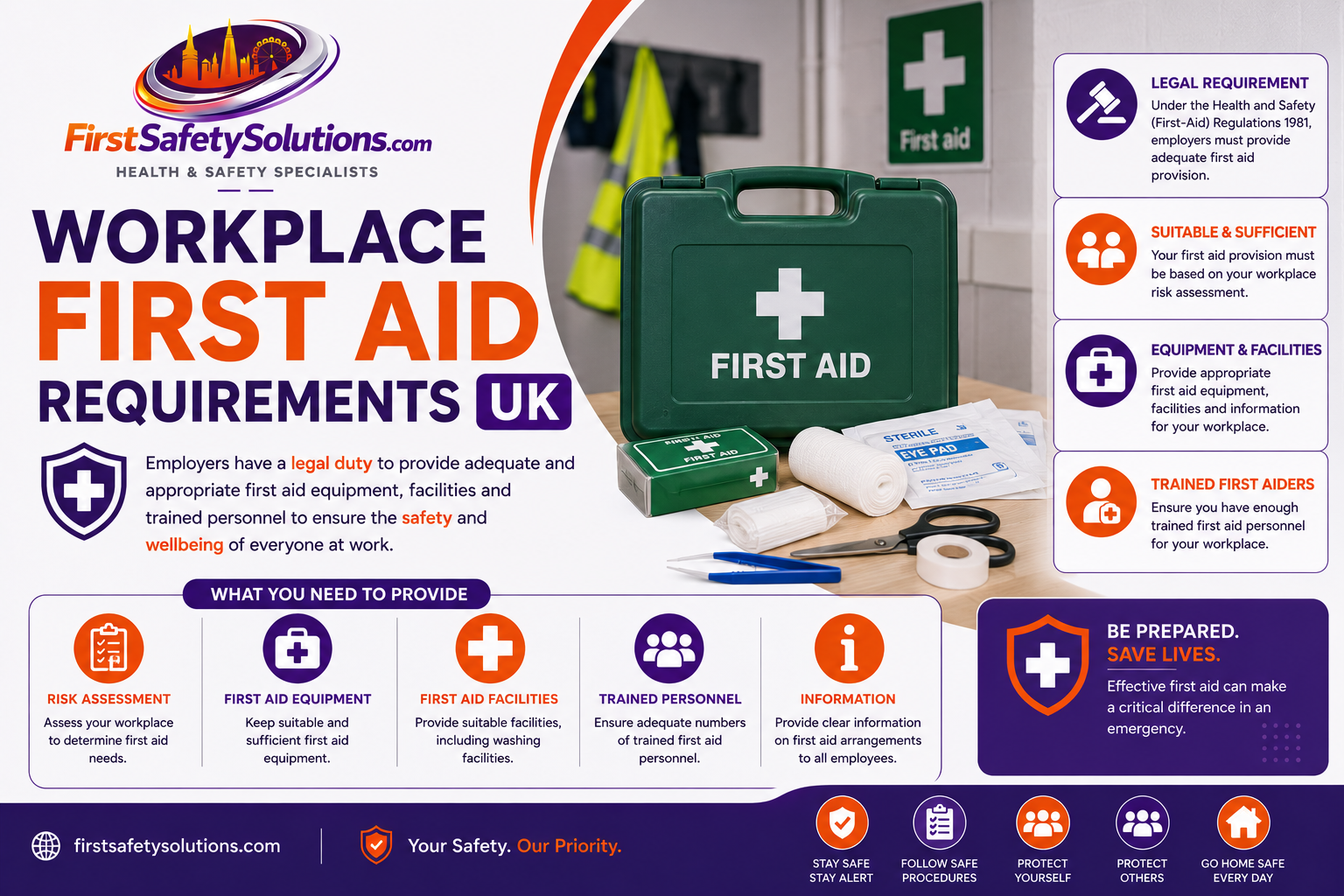
Workplace first aid requirements refer to the legal duties businesses must follow to provide suitable first aid arrangements for employees and visitors. These requirements help ensure workers receive immediate assistance if accidents or medical emergencies occur.
First aid arrangements may include:
- Trained first aiders
- First aid kits
- Emergency procedures
- Accident reporting systems
- Emergency contact information
Every workplace should assess its specific risks and provide appropriate first aid support.
Why Workplace First Aid Requirements Are Important
Workplace accidents can happen unexpectedly.
Common incidents include:
- Slips and falls
- Cuts and burns
- Electrical injuries
- Machinery accidents
- Manual handling injuries
- Chemical exposure
Without proper first aid arrangements, injuries may become more serious. Parents often worry about loved ones working in high-risk environments because delayed emergency response can affect health, recovery, and future well-being.
Businesses that follow workplace first aid requirements usually experience the following:
- Faster emergency response
- Improved worker confidence
- Better workplace safety
- Reduced injury severity
- Stronger legal compliance
UK First Aid Regulations for Businesses
UK employers have legal responsibilities under the Health and Safety (First-Aid) Regulations.
Employers must:
- Provide suitable first-aid equipment
- Appoint trained first aiders where necessary.
- Assess workplace risks
- Inform employees about first aid arrangements.
- Maintain emergency procedures
The level of first aid support required depends on workplace size, hazards, and employee numbers. Businesses should also follow official guidance from the Health and Safety Executive (HSE) to improve workplace first aid requirements and emergency preparedness.
Understanding Workplace Risk Assessments
Risk assessments help businesses determine what first aid arrangements are necessary.
A workplace risk assessment may review:
- Workplace hazards
- Employee numbers
- Accident history
- Work activities
- Shift patterns
- Remote work risks
Higher-risk workplaces may require additional first aid equipment and trained personnel. Good workplace first aid requirements begin with proper risk assessments.
Importance of Trained First Aiders
Trained first aiders play a major role during workplace emergencies.
A trained first aider can:
- Assess injuries
- Provide emergency treatment
- Support injured workers
- Contact emergency services
- Help manage incidents calmly
Businesses should ensure first aiders receive proper training and refresher courses regularly.
What Should Be in a Workplace First Aid Kit?
Every workplace should have suitable first aid equipment available.
A typical first aid kit may include the following:
- Bandages
- Dressings
- Plasters
- Disposable gloves
- Eyewash
- Scissors
- Sterile wipes
- Safety pins
The contents may vary depending on workplace hazards. Construction sites and industrial workplaces may require additional emergency supplies.
Workplace First Aid Requirements for Construction Sites
Construction sites are high-risk environments where accidents can happen quickly.
Construction first aid risks may include the following:
- Falls from height
- Machinery injuries
- Cuts and lacerations
- Electrical accidents
- Crush injuries
Construction businesses should ensure trained first aiders and emergency equipment are always available on-site. Strong workplace first aid requirements help reduce serious injury risks in dangerous environments.
First Aid Training for Employees
Employee training improves workplace emergency preparedness.
Training may include the following:
- CPR
- Emergency response
- Bleeding control
- Burn treatment
- Accident reporting
- Use of first aid equipment
Well-trained workers are more likely to respond effectively during emergencies. Businesses investing in first aid training often improve workplace safety and employee confidence.
Emergency Procedures and Workplace Safety
Every business should have clear emergency procedures.
Employees should understand:
- Emergency contacts
- Evacuation routes
- First aid locations
- Reporting systems
- Assembly points
Quick responses during emergencies can save lives and reduce injury severity.
Accident Reporting Requirements
Businesses should record workplace accidents properly.
Accident reporting systems help businesses:
- Identify hazards
- Improve safety procedures
- Maintain compliance
- Prevent future incidents
Employees should know how and when to report workplace injuries.
Importance of Clear Communication
Good communication is essential during emergencies.
Businesses should ensure workers know:
- Who the first aiders are
- Where first-aid kits are located
- How to contact emergency support
- What to do during emergencies
Clear communication improves emergency response and workplace confidence.
Workplace First Aid Requirements for Offices
Office environments may appear low risk, but accidents still happen.
Office hazards may include:
- Slips and trips
- Electrical injuries
- Minor cuts
- Medical emergencies
Office businesses should still provide suitable first aid arrangements and emergency procedures.
First Aid Requirements for Warehouses
Warehouses often involve manual handling, machinery, and fast-moving equipment.
Warehouse first aid risks may include:
- Lifting injuries
- Forklift accidents
- Falling objects
- Slips and trips
Warehouse employers should assess workplace hazards carefully and provide suitable emergency support.
Mental Health First Aid
Mental health support is becoming increasingly important in workplaces.
Employees may experience:
- Stress
- Anxiety
- Fatigue
- Emotional pressure
Some businesses now provide mental health first aid training to help support employee well-being. Safe workplaces protect both physical and mental health.
Fire Safety and Emergency Response
Workplace emergencies may also involve fires and evacuations.
Employees should understand:
- Fire alarm procedures
- Emergency exits
- Evacuation plans
- Assembly points
First aid arrangements should work alongside workplace fire safety systems.
Common Mistakes Businesses Make
Some businesses fail to manage workplace first aid requirements properly.
Common mistakes include:
- Expired first-aid supplies
- Lack of trained first aiders
- Poor emergency communication
- Missing accident records
- Inadequate risk assessments
These mistakes can increase injury risks and reduce emergency preparedness.
PPE and First Aid Safety
Personal protective equipment also supports workplace emergency safety.
Useful PPE may include:
- Gloves
- Face protection
- Respiratory masks
- High-visibility clothing
First aiders should use suitable PPE when assisting injured workers.
Why Small Businesses Must Follow Workplace First Aid Requirements
Some small businesses believe first aid rules only apply to large companies. However, all workplaces must provide suitable emergency arrangements. Strong workplace first aid requirements help small businesses:
- Protect employees
- Improve compliance
- Reduce injury severity
- Build worker confidence
- Improve business reputation
Small businesses with good workplace safety systems often appear more professional and responsible.
Safety Audits and Workplace Inspections
Safety audits help businesses identify weaknesses in workplace systems.
Audits may review:
- First aid equipment
- Emergency procedures
- Accident records
- Training certificates
- Workplace hazards
Regular inspections improve workplace first aid requirements and workplace safety compliance.
Technology and Modern Workplace Safety
Modern technology is improving emergency preparedness across workplaces.
Examples include:
- Digital accident reporting
- Emergency alert systems
- Online first aid training
- Smart monitoring devices
- Mobile safety apps
Technology helps businesses improve workplace first aid requirements more effectively while improving communication and response times.
The Financial Impact of Workplace Accidents
Workplace injuries can become very expensive for businesses.
Accidents may lead to:
- Compensation claims
- Insurance increases
- Lost productivity
- Legal penalties
- Employee absence
- Reputation damage
Investing in strong workplace first aid requirements often saves businesses money in the long term.
Creating a Positive Workplace Safety Culture
A strong workplace safety culture encourages everyone to take responsibility for safety.
Positive workplace cultures encourage workers to
- Report hazards
- Participate in training
- Follow emergency procedures
- Support colleagues
- Maintain workplace safety
Managers play an important role in encouraging safe behavior and maintaining workplace first aid requirements.
How Workplace First Aid Requirements Protect Families
Workplace accidents affect more than employees alone. Families are also impacted emotionally and financially when workers are injured. Parents often search online about workplace first aid requirements because they want reassurance that loved ones are protected during emergencies. Businesses that improve workplace safety help workers return home safely every day.
Maintaining Workplace First Aid Compliance
Workplace safety management should continue regularly.
Businesses should:
- Inspect first aid kits
- Update emergency procedures
- Conduct refresher training
- Review workplace hazards
- Improve communication systems
Continuous improvement helps businesses maintain workplace first aid requirements and reduce future risks.
Future Trends in Workplace First Aid Safety
Workplace safety expectations continue to increase across industries.
Future trends may include:
- Digital emergency systems
- Advanced workplace monitoring
- Online first aid certification
- Smart emergency response technology
- Improved safety communication tools
Businesses that invest in workplace first aid requirements are usually better prepared for future workplace safety challenges.
How First Safety Solution Can Help
First Safety Solution supports businesses needing help with workplace first aid requirements, including:
- Workplace risk assessments
- Safety audits
- Employee training
- Emergency planning
- Health and safety consultancy
- Compliance support
Professional guidance helps businesses improve workplace safety while reducing emergency risks and maintaining legal compliance.
Conclusion
Workplace first aid requirements play a major role in protecting employees, visitors, and businesses during emergencies. From trained first aiders and emergency procedures to first aid kits and workplace inspections, every safety measure helps reduce injury severity and improve workplace protection. Employers must take workplace first aid requirements seriously to improve compliance, protect workers, support families, and create safer working environments for everyone.
🔗 Learn more or book at firstsafetysolution.com
📞 Call Now: 02034888123 | 07501170101
📍 Visit Us: Quantum Offices, Mountview House, 212 High Rd, Ilford IG1 1QB